

Record bee losses expose the rising cost of keeping U.S. crops pollinated


Contents
U.S. honey bee losses eased in the latest reporting year, but the improvement has done little to resolve concerns about the reliability and cost of pollination for American agriculture.
Beekeepers lost an estimated 39.9% of their managed colonies between April 1, 2025, and April 1, 2026, according to the U.S. Beekeeping Survey. That was down from a record 55.6% the previous year, when losses reached the highest level since national annual tracking began in 2010. The latest rate was also slightly below the 15-year average of 42.3%, although losses varied widely between states, ranging from 12.3% to 82.3%.
The record season caused particularly severe damage to commercial operators. Industry surveys estimated that about 1.6 million colonies were lost between June 2024 and March 2025, with commercial beekeepers reporting average losses of about 62%. The Honey Bee Health Coalition estimated the associated damage at more than USD 600 million, including lost honey and pollination revenue and the cost of rebuilding colonies.
Those figures matter beyond the beekeeping industry. Managed honey bees increase the value of U.S. agricultural production by at least USD 18 billion annually, according to the U.S. Department of Agriculture. Almonds, berries, tree fruits, vegetables, melons, and seed crops are among the agricultural products that depend heavily on commercial pollination services.
Colony numbers can conceal weaker hives
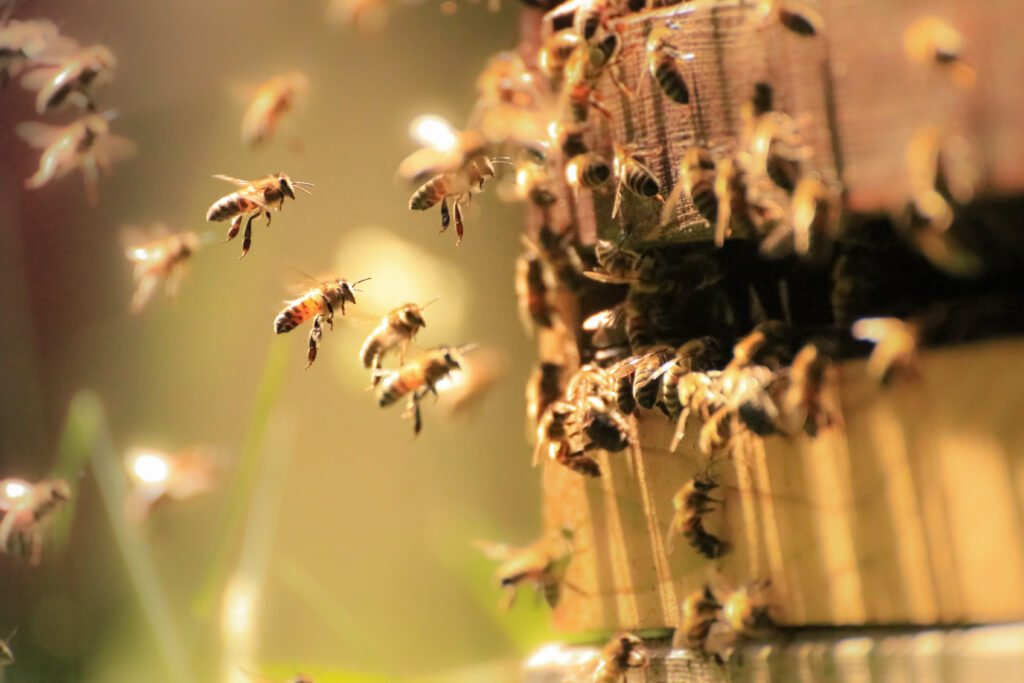
Annual loss rates do not mean the U.S. permanently loses the same share of its total honey bee population. Commercial beekeepers routinely replace dead colonies by dividing surviving hives, installing new queens and purchasing packages or nucleus colonies.
USDA data showed that hundreds of thousands of colonies were added during 2025, helping prevent total colony numbers from falling as sharply as the loss rate might suggest. But newly created colonies may initially be smaller and less productive than the mature hives they replace.
“The public should not look only at the number of hives,” said Bob Gilbert, a board-certified entomologist and staff entomologist at Blue Sky Pest Control. “The better question is whether those hives are strong enough to do the work agriculture needs.”
A replacement colony may lack the adult bee population, brood strength, queen quality and food reserves of a mature hive, Gilbert said. Rebuilding also requires additional labor, feed, queens, disease treatment and time, increasing costs for beekeepers that may ultimately be reflected in pollination fees charged to growers.
“If beekeepers lose colonies and must rebuild at high cost, growers may face fewer strong colonies, higher pollination fees and more uncertainty,” he said.
The distinction is important because crop pollination depends not merely on the presence of a hive but on the number and condition of foraging bees available during a relatively short flowering window. A weak colony delivered to an orchard may carry the same numerical weight in national statistics as a vigorous colony, while providing substantially less pollination capacity.
Varroa mites and viruses lead a stack of pressures
Gilbert described the losses as a “stacked-stress problem,” in which parasites, viruses, insufficient nutrition, pesticide exposure, transportation and extreme weather interact rather than operate independently.
Varroa destructor mites remain one of the most serious threats. The parasites feed on honey bees and transmit viruses that can spread rapidly within colonies.
USDA Agricultural Research Service scientists examining the 2025 collapses found unusually high levels of deformed wing virus and acute bee paralysis virus. Researchers also detected signs of resistance to amitraz, a widely used mite-control chemical, in virtually all of the Varroa samples collected from affected colonies.
The finding raised concern that one of the beekeeping industry’s primary tools for controlling mites was becoming less reliable.
Poor forage can further reduce colonies’ capacity to withstand parasites and disease. Honey bees require varied sources of pollen and nectar to raise brood and maintain immune function. Colonies placed in landscapes with limited flowering plants, long gaps between bloom periods or prolonged drought may become nutritionally weakened.
“Healthy landscapes produce healthy bees, and ultimately a more resilient food supply,” said Jennifer Lytle, co-owner of Oregon-based Bee-Licious Honey, which produces honey and works with domestic and international suppliers.
Pesticide exposure can add to the pressure, particularly when applications coincide with flowering periods. Gilbert said pesticides should not be viewed as the sole cause of colony collapse, but exposure can become more damaging when colonies are already weakened by mites, viruses or limited nutrition.
Application timing, drift control, compliance with product labels and communication between growers and beekeepers can therefore affect colony survival. The combined nature of the problem means that no single treatment or farm-management change is likely to reverse the losses.
Managed bees fill a growing pollination gap
The mobility of honey bee colonies has made them indispensable to modern agriculture. Commercial operators can transport thousands of hives into a production region when a crop begins flowering, providing pollination at a scale that cannot always be supplied by local insects.
That model has helped growers maintain yields as populations of wild bees and other pollinators have declined. But relying more heavily on managed honey bees also concentrates agricultural risk in a single species that is itself facing high mortality.
“Managed honeybee hives have become essential to modern agriculture, but that reality comes with tradeoffs,” said Kara Brown, a Maryland beekeeper and founder of Bee Inspired. “They help farmers maintain crop yields and provide reliable pollination. At the same time, they’re often filling a gap left by the decline of hundreds of native pollinator species that once performed these roles naturally.”
Brown said she has observed a visible decline in the diversity of bees, butterflies and other beneficial insects around flowering areas during her more than a decade of beekeeping on Maryland’s Eastern Shore.
“When fewer species are doing the work, the entire system becomes more vulnerable,” she said.
Honey bees are effective generalist pollinators, meaning they can collect pollen and nectar from a wide range of plants. Some native species, however, are better suited to particular crops.
Bumblebees and certain solitary bees, for example, can perform buzz pollination, in which vibrations release pollen held tightly inside a flower. The behavior can improve pollination in crops, including tomatoes and blueberries, and is not performed in the same way by honey bees.
“Honey bees are livestock. Native bees are wildlife,” Lytle said. “Farmers can bring managed hives into an orchard, but they can’t replace the thousands of native pollinator species that help keep ecosystems healthy.”
Pollination costs could rise before food supplies fall
The immediate agricultural effect of high colony mortality is more likely to appear through higher operating costs and uneven pollination quality than through an abrupt national food shortage.
Commercial beekeepers can rebuild operations, move colonies between regions and adjust stocking rates. Growers can also rent more hives where available. Those responses make the pollination system flexible, but they require money and labor.
Repeated losses raise expenses for mite treatments, supplemental feed, replacement queens, equipment and transportation. They may also reduce honey production because beekeepers must devote colony resources to rebuilding rather than harvesting surplus honey.
For farmers, the consequences could include higher hive-rental rates, tighter availability during peak bloom periods and greater competition for strong colonies. Crops that require concentrated pollination over a short period would be particularly exposed.
Over time, less effective pollination can affect fruit set, size, uniformity and marketable quality, even when total production does not collapse. That creates the potential for higher costs throughout the supply chain and greater price volatility for consumers.
Honey imports mask pressure on domestic production
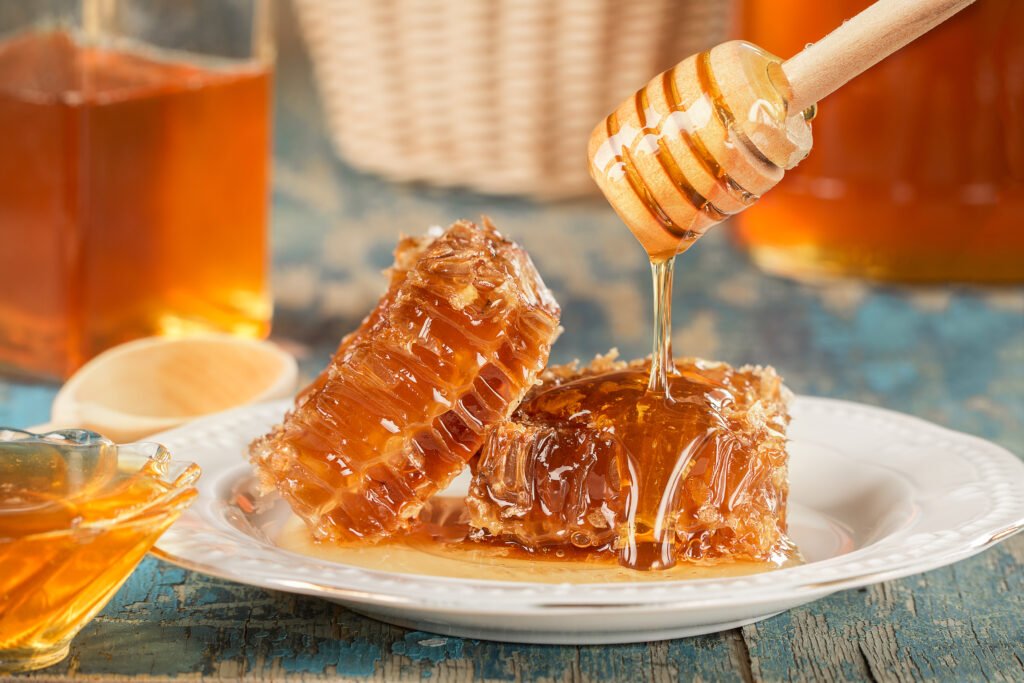
The ecological strains facing bees are also visible in the U.S. honey market.
U.S. honey production totaled 134 million pounds in 2024, down 4% from the previous year, despite a 3% increase in the number of colonies producing honey. Average yield fell 6% to 51.7 pounds per colony.
Longer-term data show a widening gap between domestic production and consumption. U.S. honey output has fallen by roughly half since 1987, while domestic utilization has continued to rise, according to USDA’s Economic Research Service.
Imports supplied 78% of the U.S. honey market in 2025, with India, Argentina, Brazil and Vietnam among the leading origins. Another USDA measure, based on total use supply, put the import share at 82%. The difference reflects the agencies’ use of different supply calculations, but both measures show that the U.S. market depends heavily on foreign honey.
Brown said growing attention to tariffs and supply chains had encouraged consumers to ask more questions about honey origin, production practices and sourcing transparency.
Lytle said weather, forage availability and environmental conditions affect both the amount of honey available and the financial position of beekeepers. Because Bee-Licious Honey works with U.S. and international suppliers, it sees how production problems in one region can influence sourcing decisions elsewhere.
Imports can keep retail shelves supplied when domestic output falls, but they do not replace the pollination services provided by colonies operating within the U.S. agricultural system. Honey availability and agricultural pollination are connected economically, yet they are not interchangeable.
Farms need diversity as well as more hives
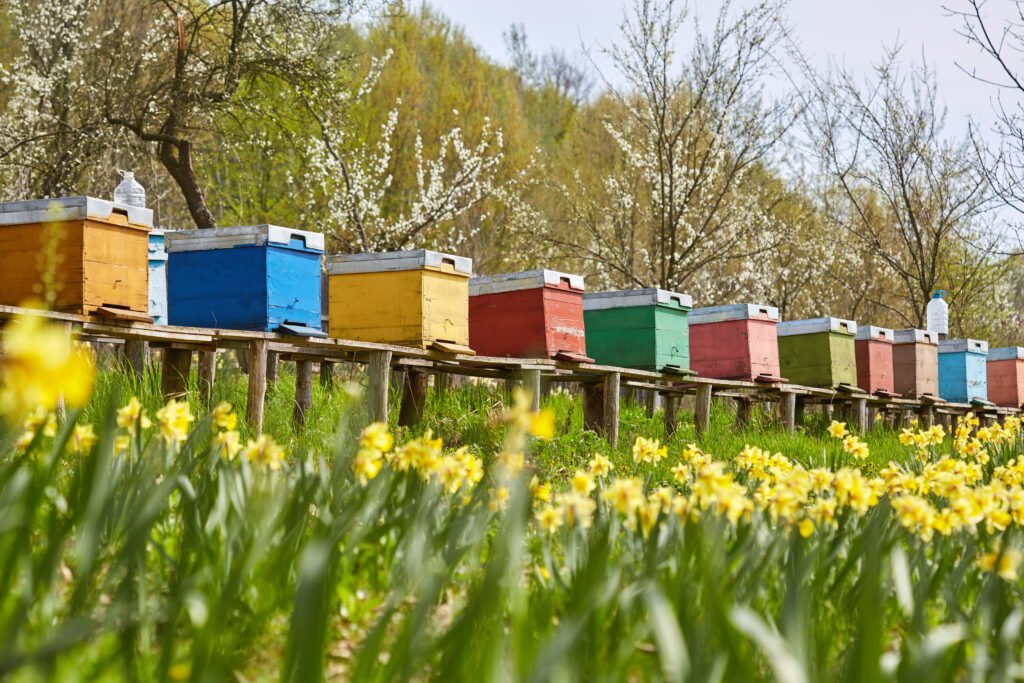
Experts said strengthening the pollination system will require actions beyond simply replacing lost honeybee colonies.
For managed hives, priorities include monitoring Varroa populations, rotating or combining control methods, improving disease surveillance, supporting queen health and providing adequate nutrition before and after major pollination events.
At the farm and landscape level, habitat measures can provide food and nesting areas for both managed and wild pollinators. These can include flowering field margins, hedgerows, cover crops, reduced mowing, preservation of natural areas and planting species that bloom at different points in the season.
Pesticide risk can be reduced by avoiding applications when bees are actively foraging, limiting drift and notifying beekeepers before treatments. Growers may also benefit from integrating pollinator considerations into pest-management decisions rather than treating bee protection as a separate conservation measure.
“For long-term food security, we need to think beyond simply increasing hive numbers,” Brown said. “Managed honeybees play an important role, but I see them as part of the solution rather than the entire solution.”
The latest decline in annual losses offers some relief after the record 2024-2025 season. However, a loss rate of nearly 40% still requires beekeepers to replace a large portion of their operations each year.
The ability to rebuild has so far kept commercial pollination functioning. The growing concern is whether that recovery process can remain economically viable as mites become harder to control, forage becomes less reliable and agriculture depends increasingly on managed hives to replace ecological functions once supplied by a broader range of pollinators.

Enjoyed this story?
Every Monday, our subscribers get their hands on a digest of the most trending agriculture news. You can join them too!



Discussion0 comments