

Fertilizer Recommendation Support Tool expands to 2,828 trials across 44 states

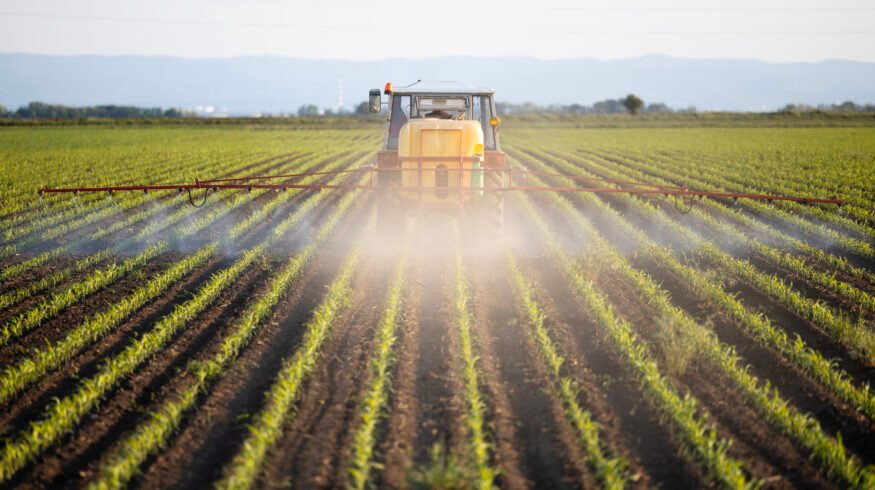

A review published in the August 2026 issue of CSA News highlights the Fertilizer Recommendation Support Tool (FRST), a publicly accessible database that now encompasses 2,828 nitrogen and phosphorus field trials across 44 U.S. states. The tool, developed by the Soil Science Society of America and a consortium of land-grant universities, represents the most comprehensive attempt to build a unified, data-driven framework for fertilizer guidance in the United States.
Why fertilizer recommendations vary so widely
Fertilizer recommendations in the United States have historically been developed state by state, often by individual university extension programs using local trial data accumulated over decades. The result is a patchwork: a corn grower in Iowa may receive a substantially different nitrogen recommendation than a grower with identical soil conditions 50 miles across the border in Illinois. These differences are not always rooted in agronomic science — they often reflect differences in methodology, data age or institutional philosophy.
The FRST consortium set out to address this fragmentation by pooling trial data from cooperating states into a single, searchable database. Researchers can compare response curves, optimal rates and economic thresholds across regions using consistent statistical methods. The August CSA News article describes FRST as a step toward fertilizer recommendations that follow the data rather than state boundaries.
What FRST contains and how it works
The database includes nitrogen response trials for corn, wheat and other major crops, as well as phosphorus trials documenting soil-test-to-yield relationships. Each trial records yield response at multiple fertilizer rates along with soil test results, weather data and management practices. The tool applies a standardized economic analysis to determine the most profitable rate — the rate where the last unit of fertilizer applied still pays for itself.
FRST is publicly accessible through the Crop Nutrient Data platform maintained by the Science Societies. Users can filter by state, crop, soil type and fertilizer source. The tool does not replace state extension recommendations but gives agronomists and researchers a way to benchmark local guidance against a broader dataset.
Implications for precision agriculture and NUE
The review also discusses how FRST data can feed into precision agriculture platforms. Variable-rate application technology is already widely adopted, but the algorithms behind it often rely on proprietary models with limited transparency. A public, peer-reviewed dataset covering thousands of trials offers a counterweight — one that farmers and independent agronomists can verify.
For the fertilizer industry, FRST has implications for nitrogen use efficiency (NUE) targets. If the data show that optimal rates are lower than current state recommendations in some regions, adoption could reduce total nitrogen demand. Conversely, where current recommendations are conservative, FRST may support higher application rates. The net effect on fertilizer volumes is an open question the consortium has not yet quantified.
The review notes that FRST is expanding to include potassium trials and is developing tools for phosphorus removal-based recommendations, which some states are beginning to adopt as an alternative to the traditional soil-test-threshold approach.
The work complements other recent fertilizer efficiency initiatives, including the NYU discovery of the HHO5 nitrogen-sensing protein, which targets efficiency at the plant genetic level rather than the field management level.
Source: Science Societies

Enjoyed this story?
Every Monday, our subscribers get their hands on a digest of the most trending agriculture news. You can join them too!







Discussion0 comments