

India Opens 1.7M-Tonne Urea Tender as Q4 Prices Rebound



India has returned to the global urea market with a new tender for 1.7 million metric tons, setting up another major test for nitrogen prices just as global benchmarks have started to rebound from their summer lows.
Indian Potash Limited (IPL) issued the tender on September 23, seeking 1.0 million tonnes of granular or prilled urea for ports on India’s west coast and 700,000 tonnes for the east coast. Bids are due on October 7, with shipments scheduled through December 15.

The timing makes the tender particularly important for the fourth-quarter urea market. India’s previous procurement round in August cleared below $395 per tonne CFR, but international urea prices have since moved higher across several major origins and destinations.
India seeks 1.7 million tonnes of urea ahead of rabi demand
According to the official Indian Potash Limited tender notice, the latest procurement is split between India’s two coasts:
| Destination | Volume sought |
|---|---|
| West coast ports | 1.0 million tonnes |
| East coast ports | 700,000 tonnes |
| Total | 1.7 million tonnes |
The tender accepts both granular and prilled urea from producers, manufacturers and trading companies. The bidding deadline is October 7 at 11:30 a.m. Indian time.
The purchase will help rebuild and maintain fertilizer availability for India’s rabi season, when crops including wheat, mustard and pulses increase demand for nitrogen fertilizers.
India’s urea imports have more than doubled in 2026
India has already sharply increased urea imports this year even as domestic production has risen.
Industry data cited by The Economic Times show that India imported approximately 4.75 million tonnes of urea during April-August 2026, compared with 2.04 million tonnes during the same period of 2025 — an increase of about 133%.
Domestic urea production increased by approximately 4.4% over the same period to 12.54 million tonnes.
| India urea indicator | Apr-Aug 2025 | Apr-Aug 2026 | Change |
|---|---|---|---|
| Urea imports | 2.04 Mt | 4.75 Mt | +133% |
| Domestic production | — | 12.54 Mt | +4.4% |
At the same time, domestic urea sales declined by about 5.9% year on year during April-August, partly because rainfall shortages weakened fertilizer demand in several agricultural regions.
This combination — higher imports, higher domestic production and weaker sales — means India is entering the rabi procurement period with a stronger supply buffer than it had during the severe price spike earlier in 2026.
Fertilizer Daily reported last week that India’s landed urea import cost had fallen to around $406 per tonne by mid-September from approximately $947 per tonne in May, substantially reducing pressure on the country’s fertilizer subsidy bill.
The new tender follows a dramatic collapse in Indian import prices
India’s tender prices have changed dramatically during 2026.
| Procurement round | Volume | Indicative CFR India price | Market context |
|---|---|---|---|
| April — IPL | ~2.5 Mt | $935-959/t | Severe supply disruption and exceptionally high prices |
| June — NFL | 1.7 Mt sought | ~$445-449/t | Supply recovered and China returned to export markets |
| August — RCF | ~1.78 Mt awarded | ~$390-394/t | Large Chinese participation pushed prices lower |
| September — IPL | 1.7 Mt sought | TBD | Global urea prices are rising again |
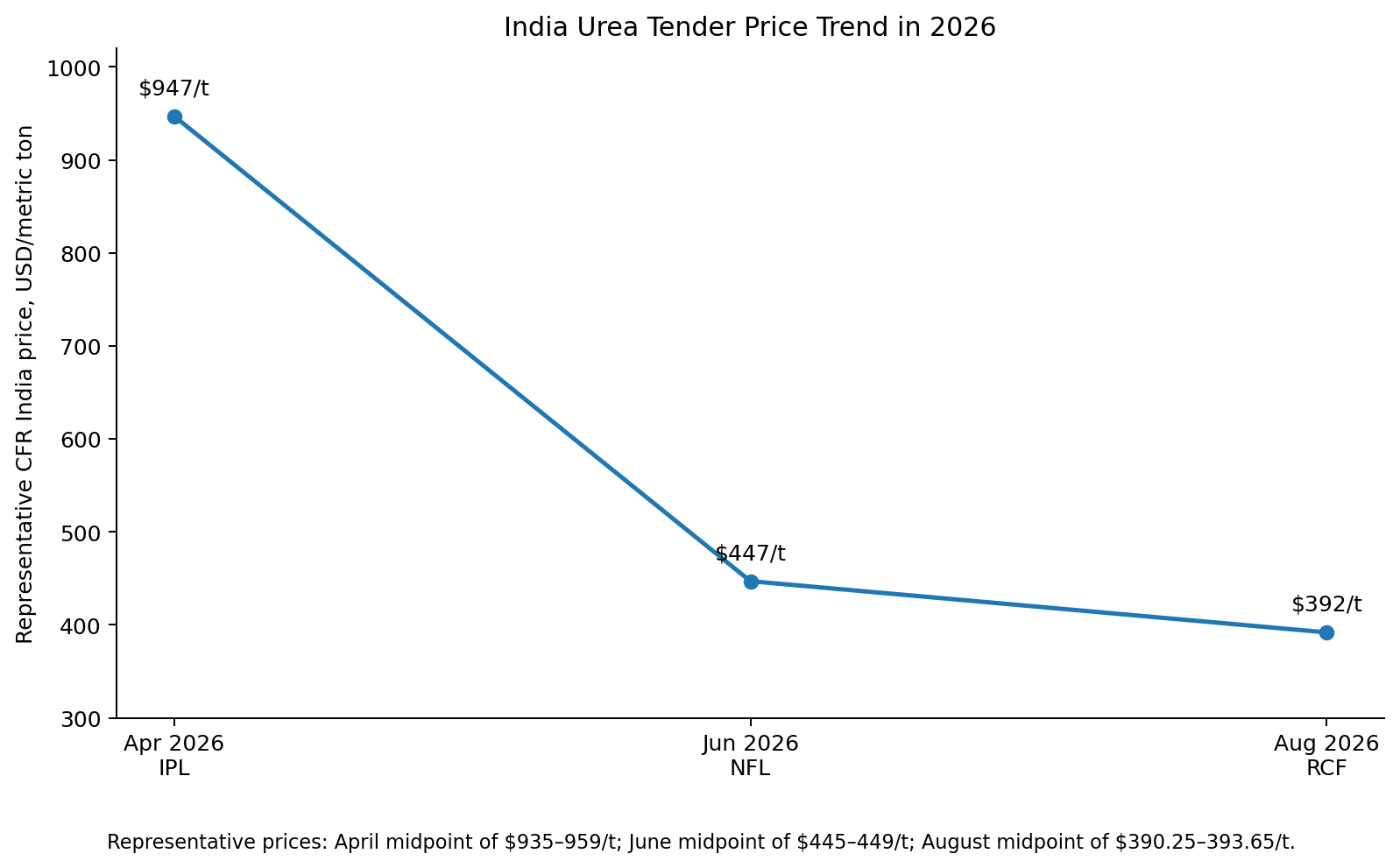
India’s June tender marked the first major reversal in pricing, with bids near $449 per tonne CFR — less than half the April level.
The correction accelerated in August. RCF eventually awarded approximately 1.78 million tonnes, with market indications below $395 per tonne CFR India.
The new IPL tender will show whether those sub-$400 prices can be repeated or whether the market has already moved into a firmer fourth-quarter pricing environment.
Global urea prices are higher than during India’s August tender
The international market has strengthened since India’s previous buying round.
As of September 25, physical market assessments showed:
| Urea market | Latest price | Basis |
|---|---|---|
| Middle East granular | ~$465/t | FOB |
| Brazil granular | ~$485/t | CFR |
| China granular | ~$428/t | FOB |
| China prilled | ~$372/t | FOB |
| Middle East prilled | ~$453/t | FOB |
The benchmarks are not directly interchangeable because they cover different product forms and delivery terms, but they show that much of the global market has moved above the levels seen during India’s August procurement.
Fertilizer Daily reported in mid-September that tightening granular supply and stronger Latin American demand had already pushed global urea benchmarks higher.
China could determine the tender price again
China is likely to be one of the most important variables in the October tender.
Profercy reported that Chinese suppliers committed approximately 1.6 million tonnes of the 1.799 million tonnes lined up under India’s previous August purchasing round, with the remainder coming from the Middle East and Malaysia.
That supply was critical in driving Indian CFR prices below $395 per tonne.
Earlier Fertilizer Daily coverage showed how China’s return to international urea exports became the dominant factor behind the sharp decline from India’s April crisis-era prices.
The challenge this time is the divergence between Chinese prilled and granular urea.
Profercy assessed Chinese granular values around $450-455 per tonne FOB in late September, sharply above levels below $390 in mid-August. Chinese prilled urea, however, remained considerably cheaper at around $380 per tonne FOB.
Because the IPL tender accepts both granular and prilled product, the amount of Chinese prilled urea available for export could again determine the clearing price.
Why this tender matters beyond India
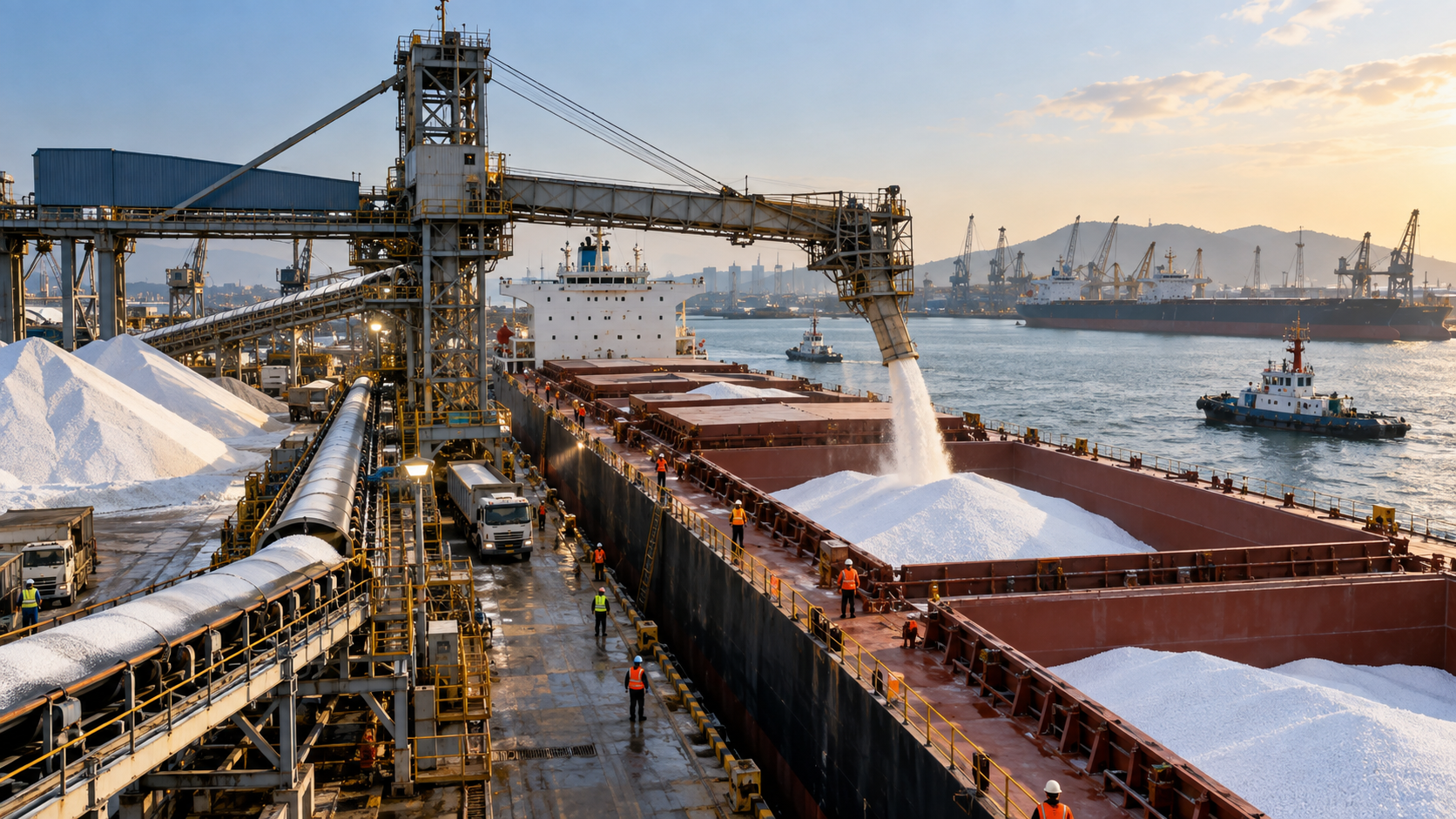
A 1.7-million-tonne procurement round is large enough to influence trade flows across several regions.
If Chinese suppliers again commit more than one million tonnes, cargoes that might otherwise move to Southeast Asia or other markets could be redirected to India.
If Chinese availability is insufficient, India may have to compete more aggressively for tonnes from:
- the Middle East;
- Russia and the Baltic/Black Sea region;
- Malaysia and Southeast Asia;
- North African producers;
- other opportunistic exporters.
That competition would matter because other buyers are already active. Brazil remains a major source of granular urea demand, while Australia and other Asian markets have also been securing additional supplies.
A stronger Indian clearing price could therefore provide support to international urea benchmarks heading into the fourth quarter.
The October 7 result could become a Q4 pricing benchmark
India’s large import tenders often function as global reference points because of the size of the volumes involved and the number of competing suppliers.
The August tender helped establish a market floor below $400 per tonne CFR India after the dramatic decline from April’s record levels.
The October tender will answer a different question: how much of that price collapse can survive after international urea benchmarks have rebounded?
Three outcomes are particularly important:
- Below $400/t CFR: would indicate that abundant Chinese prilled supply can still offset higher granular prices elsewhere.
- Around $400-450/t CFR: would confirm that India is now paying a moderate premium to August but remains well below the crisis levels seen earlier this year.
- Above $450/t CFR: would indicate that tighter global supply and stronger Q4 demand have materially changed the market balance.
These are market scenarios rather than forecasts. Actual offers will depend on origin, product form, freight, supplier availability and the amount of volume India ultimately decides to award.
India has more negotiating room than it did in April
One important difference from the April crisis is India’s current inventory and import position.
The country has already imported substantially more urea than it had at the same point last year, domestic production has increased, and recent government data indicate significantly stronger fertilizer stocks.
That reduces the urgency that contributed to extremely high procurement prices earlier in the year.
India also has more sourcing options because Chinese exports have returned and shipping conditions have improved compared with the most severe period of the Persian Gulf disruption.
This does not guarantee a low tender result, but it gives buyers greater flexibility to reject offers if traders attempt to price too aggressively.
What to watch on October 7
When commercial offers open, the most important indicators will be:
- the lowest CFR prices for India’s east and west coasts;
- the total volume offered versus the 1.7-million-tonne requirement;
- how much Chinese prilled urea is available;
- participation from Middle Eastern and Russian suppliers;
- freight costs to Indian ports;
- whether India awards the entire tendered volume;
- the difference between granular and prilled offers.
The final award will also show whether the global urea rally seen in September is strong enough to survive India’s considerable buying power.
Frequently asked questions
Indian Potash Limited is seeking up to 1.7 million tonnes: 1 million tonnes for ports on India’s west coast and 700,000 tonnes for east coast ports.
Bids are due on October 7, 2026. The tender allows shipments through December 15.
India’s August RCF procurement cleared at roughly $390-394 per tonne CFR, substantially below the prices paid during the April supply crisis.
Global availability improved, China returned to the export market and suppliers competed aggressively for India’s large tenders. This pushed prices down from approximately $935-959 per tonne CFR in April to below $400 per tonne by August.
India is seeking a large volume at a time when granular urea prices have already increased in the Middle East, Brazil and other regions. If Chinese prilled supply is insufficient, India may need to compete with other buyers for more expensive tonnes.
India imported approximately 4.75 million tonnes during April-August 2026, compared with 2.04 million tonnes during the same period of 2025.
Sources: Indian Potash Limited, The Economic Times, Profercy, CommodityScope

Enjoyed this story?
Every Monday, our subscribers get their hands on a digest of the most trending agriculture news. You can join them too!






Discussion0 comments