

Yara opens Europe’s largest carbon capture facility at Sluiskil, storing 800,000 metric tons of CO₂ per year

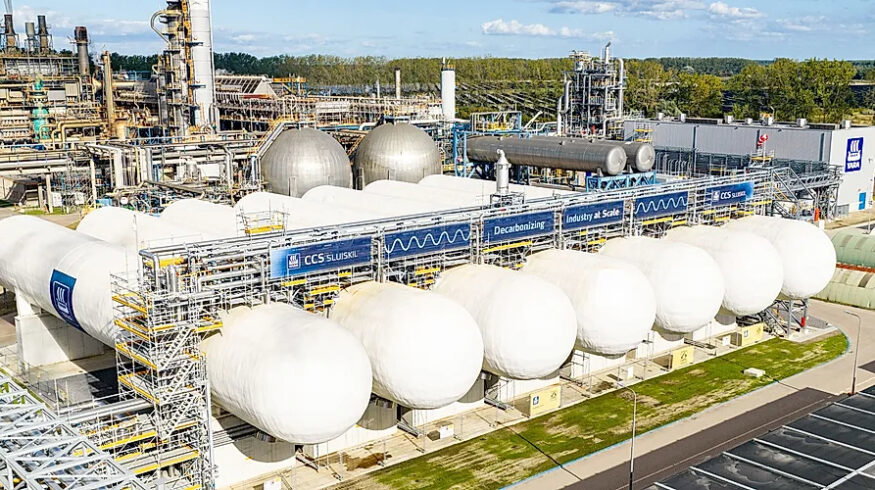

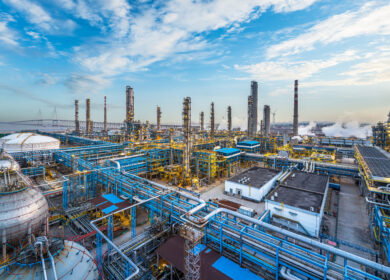
Yara International inaugurated Europe’s largest industrial carbon capture facility on September 7 at its ammonia and fertilizer plant in Sluiskil, the Netherlands. The installation can capture and liquefy up to 800,000 metric tons of CO₂ annually from ammonia production, establishing the first complete cross-border carbon capture and storage chain linking an industrial site in one country with permanent geological storage in another.
Norwegian Prime Minister Jonas Gahr Støre, Dutch Prime Minister Rob Jetten, and European Commissioner for Climate Wopke Hoekstra attended the ceremony. The EU Commission described the project as direct proof of the EU-Norway Green Alliance signed in 2023, noting that the EU’s Connecting Europe Facility helped fund the Northern Lights CO₂ transport and storage infrastructure.
Captured CO₂ at Sluiskil will be liquefied on site and transported by ship to the Northern Lights facility at Øygarden on the Norwegian coast, where it will be injected 2,600 meters beneath the seabed of the Norwegian continental shelf for permanent storage. Over 15 years, the project is expected to store approximately 12 million metric tons of CO₂.
“The carbon capture facility in Sluiskil proves that large-scale industrial decarbonization is possible today,” Yara CEO Svein Tore Holsether said. Conventional ammonia production generates roughly 1.6 metric tons of CO₂ per metric ton of ammonia, making fertilizer manufacturing one of the most carbon-intensive industrial processes. By avoiding carbon taxation on captured volumes, Yara expects the Yara carbon capture Sluiskil operation to improve the long-term competitiveness of its European operations.
The Sluiskil plant is Europe’s largest ammonia and fertilizer production site. Its CCS project follows Northern Lights’ first injection in August 2025, using CO₂ from Heidelberg Materials’ cement plant in Brevik, Norway. The Yara link is the chain’s first cross-border segment.
The inauguration comes weeks after Chile approved an $11 billion HNH Energy green ammonia project and as the green ammonia sector shifts from ambition to execution, underscoring a broader push across the fertilizer industry to reduce production-stage carbon emissions through both CCS and renewable hydrogen pathways.

Enjoyed this story?
Every Monday, our subscribers get their hands on a digest of the most trending agriculture news. You can join them too!


Discussion0 comments