

Green ammonia moves into the execution phase as lower electrolyzer costs and stronger policy support help launch the first commercial projects

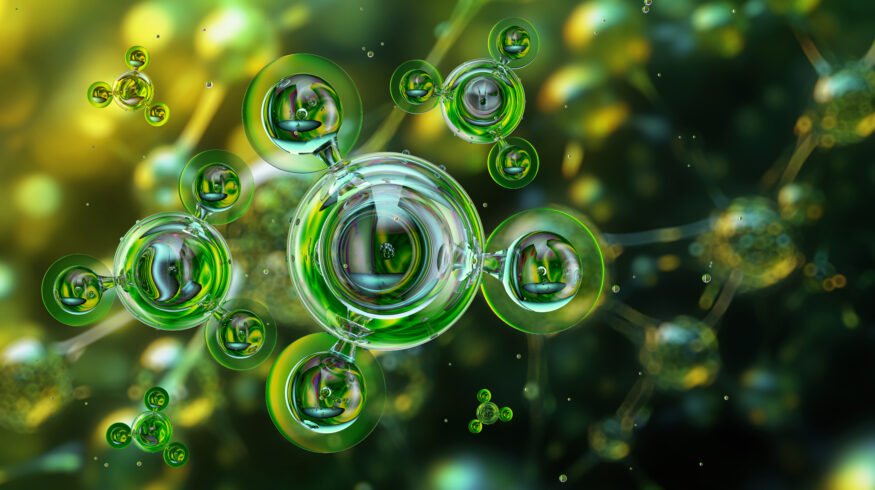

In 2026, the global green ammonia industry entered a new phase, moving from years of pilot projects and policy announcements to the construction of large-scale projects. Developers are now focused on installing electrolyzers, connecting renewable power systems, and producing the first commercial batches of low-carbon ammonia, rather than primarily seeking funding or government support.
This change is the result of several long-term trends coming together. Electrolyzer costs have dropped sharply over the past five years, and renewable electricity is now more competitive in key production areas. Governments have also finalized incentive programs, which have given investors more confidence. At the same time, geopolitical disruptions, especially the 2026 Strait of Hormuz crisis, have raised concerns about the resilience of global fertilizer supply chains and strengthened the case for domestic green ammonia production.
Falling costs and policy certainty reshape investment decisions
The economics of green hydrogen have improved a lot since the industry began. Estimates show that capital costs for alkaline and proton exchange membrane (PEM) electrolyzers have dropped by about 40% to 60% per megawatt compared to 2021, removing one of the biggest cost barriers to commercial use.
Renewable electricity is now the cheapest power source in regions with lots of sun and wind, such as Australia, the Middle East, and North Africa. Because electricity accounts for most of the cost of producing green hydrogen, these changes have made projects much more financially attractive.
Government policies have changed along with technology. The European Union is now giving out production subsidies through its Hydrogen Bank, and the United States has finalized rules for the Section 45V clean hydrogen production tax credit under the Inflation Reduction Act. Saudi Arabia, the United Arab Emirates, Australia, and India have also launched or are completing national incentive programs to accelerate investment in green hydrogen and ammonia production.
All these changes have shifted investors’ focus from whether projects are possible to how well they can be carried out.
Construction becomes the industry’s primary challenge
Although it is now easier to get financing, developers face the harder job of building these new types of facilities on time and within budget.
Traditional ammonia plants run continuously under stable conditions, but green ammonia facilities must work with renewable electricity, which can be unpredictable. Designing systems that can handle changes in solar and wind power makes engineering more complex and requires more equipment.
Supply chain issues remain a major challenge. Manufacturers of large electrolyzers cannot keep up with demand, and it often takes 18 to 24 months to fill major orders. There is also more competition for specialty membranes, electrical equipment, transformers, switchgear, and structural steel across many industries.
Because of these issues, many projects that were supposed to start in 2025 and 2026 have been delayed by one or two years. This shows how hard it is to build up a new industrial supply chain.
Fertilizer production emerges as the leading commercial market
Green ammonia is being considered for use as a marine fuel, in electricity generation, and for transporting hydrogen. However, fertilizer manufacturing is now seen as the most promising first commercial use for the industry.
Ammonia is already the second-most-produced chemical in the world and the main ingredient in nitrogen fertilizers. The existing production plants, storage systems, global trade networks, and steady demand make it less risky commercially than new energy uses.
Demand for low-carbon fertilizers is rising in markets where carbon reduction rules make these products more valuable. Buyers in Europe and Japan, especially, are looking for green ammonia and green urea to meet regulations and sustainability goals.
Recent projects show this trend. Australia’s renewable energy agency, ARENA, has shortlisted Perdaman Commercial Developments’ 750-megawatt Karratha project for the second round of its Hydrogen Headstart program. This project is one of the few large green hydrogen developments in the country focused on making green urea.
In Europe, Fertiberia has started making green fertilizers under its Impact Zero brand at its Puertollano facility in Spain, which it calls Europe’s first large-scale green ammonia plant. At the same time, OCI Global and Yara are working on green ammonia supply deals to help decarbonize fertilizer and industrial markets.
Strait of Hormuz disruption strengthens supply security argument
The 2026 disruption in the Strait of Hormuz brought a new geopolitical factor into green ammonia investment decisions.
About 30% of the world’s traded fertilizers usually pass through this key waterway. The conflict showed how fragile international fertilizer supply chains are, leading to sharp increases in ammonia and urea prices and disrupting shipments to many importing regions.
Even though prices have gone down since the June ceasefire, governments and investors are now more focused on reducing their reliance on production in just a few locations.
The disruption has made fertilizer-importing countries more interested in making green ammonia at home. It has also encouraged sovereign wealth funds and institutional investors to consider export projects in regions perceived as less geopolitically risky.
For many governments, energy security and food security are now almost as important as cutting emissions when they consider investing in green ammonia.
Commercial scale expected by the end of the decade
Experts expect the first large green ammonia plants to start steady commercial production in 2027 and 2028. Many of the first operating plants are likely to be in Australia, Saudi Arabia, and Northern Europe.
Green ammonia is expected to account for only a small share of global supply by 2030, but its role should grow steadily as more renewable power becomes available and electrolyzer production increases.
For the industry, the next 18 months will be more about getting projects built than announcing new ones. Developers need to show they can finish facilities on time, run them reliably with fluctuating renewable power, and produce green ammonia at prices that can compete in a global fertilizer market growing more unpredictable.
Source: PV Magazine India

Enjoyed this story?
Every Monday, our subscribers get their hands on a digest of the most trending agriculture news. You can join them too!



Discussion0 comments