

U.S. Fertilizer Prices Rise Again: 7 of 8 Above 2025 Levels



U.S. retail fertilizer prices have turned mostly higher again in mid-September after several weeks of declines, with six of the eight major products tracked by DTN rising compared with a month earlier.
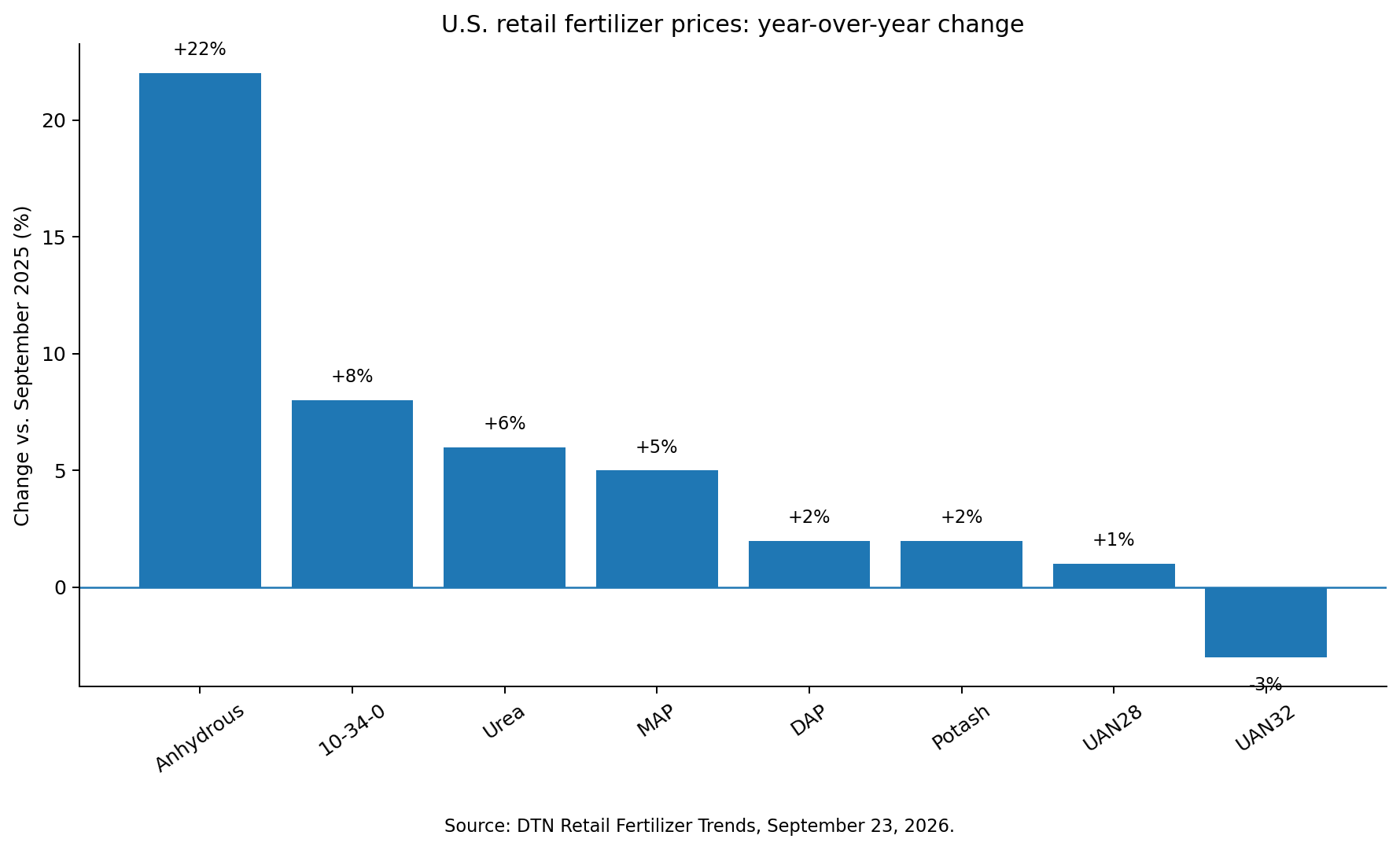
The increases remain modest, but the broader cost picture is still challenging for farmers: seven of eight major fertilizers are now more expensive than they were a year ago, led by anhydrous ammonia, which is running approximately 22% above September 2025 levels.
The latest movement comes as U.S. growers prepare for fall fertilizer application and as farm production costs remain elevated across the country.
Six of eight U.S. fertilizer prices moved higher
According to the latest DTN Retail Fertilizer Trends report, six major fertilizers were priced slightly higher in the second full week of September compared with one month earlier.
| Fertilizer | Average U.S. retail price | Year-over-year change |
|---|---|---|
| DAP | $925/ton | +2% |
| MAP | $967/ton | +5% |
| Potash | $495/ton | +2% |
| Urea | $659/ton | +6% |
| 10-34-0 | $718/ton | +8% |
| Anhydrous ammonia | $945/ton | +22% |
| UAN28 | $421/ton | +1% |
| UAN32 | $458/ton | -3% |
DAP, MAP, potash, 10-34-0, anhydrous ammonia and UAN32 all moved higher compared with the previous month. Urea and UAN28 were slightly cheaper.
Importantly, none of the eight products moved by 5% or more month over month. DTN uses that threshold to distinguish a significant price move from ordinary market fluctuations.
Seven of eight fertilizers remain more expensive than a year ago
The month-to-month changes are relatively small, but the year-over-year comparison shows that fertilizer costs remain elevated.
Anhydrous ammonia has seen the largest increase, at approximately 22% above its level in September 2025. Other increases include 10-34-0 at 8%, urea at 6% and MAP at 5%.
UAN32 is the only fertilizer among the eight tracked products currently priced below its year-earlier level.
This follows a summer correction in U.S. fertilizer prices. Fertilizer Daily reported earlier in September that six of eight major nutrients had been declining as the market unwound part of the sharp price increases seen earlier in 2026.
Nitrogen prices have fallen from spring peaks but remain elevated
The current market is significantly cheaper than at the height of the spring fertilizer rally, particularly for nitrogen products.
DTN data show that urea averaged approximately $866 per ton in late April and early May before falling to $659 per ton by mid-September. That represents a decline of roughly 24% from the spring high.
Anhydrous ammonia peaked around $1,118 per ton in late May and has since retreated to $945 per ton, a decline of approximately 15%.
| Nitrogen fertilizer | 2026 spring high | Mid-September price | Approx. decline |
|---|---|---|---|
| Urea | $866/ton | $659/ton | -24% |
| Anhydrous ammonia | $1,118/ton | $945/ton | -15% |
| UAN28 | $530/ton | $421/ton | -21% |
| UAN32 | $595/ton | $458/ton | -23% |
The decline from the spring peaks is significant, but it has not returned fertilizer prices to last year’s levels.
That distinction is important for U.S. farmers: fertilizer is cheaper than it was during the 2026 price spike, but in most cases it is still more expensive than during the same period in 2025.
Anhydrous remains the cheapest nitrogen source per pound
Measured on a cost-per-pound-of-nitrogen basis, anhydrous ammonia remains the least expensive of the four nitrogen fertilizers tracked by DTN.
| Product | Cost per pound of nitrogen |
|---|---|
| Anhydrous ammonia | $0.58/lb N |
| Urea | $0.72/lb N |
| UAN32 | $0.72/lb N |
| UAN28 | $0.76/lb N |
This does not mean anhydrous is the cheapest option for every farm. Application equipment, labor, storage, timing, agronomic conditions and regional availability all affect the final cost of a nitrogen program.
However, the price-per-pound comparison helps explain why anhydrous ammonia remains important for large corn-growing regions preparing for fall application.
Phosphate remains one of the tightest parts of the fertilizer market
DAP and MAP have been considerably more stable than nitrogen fertilizers during the summer, but both remain expensive.
MAP averaged $967 per ton in mid-September, the highest price among the eight products tracked by DTN, while DAP averaged $925 per ton.
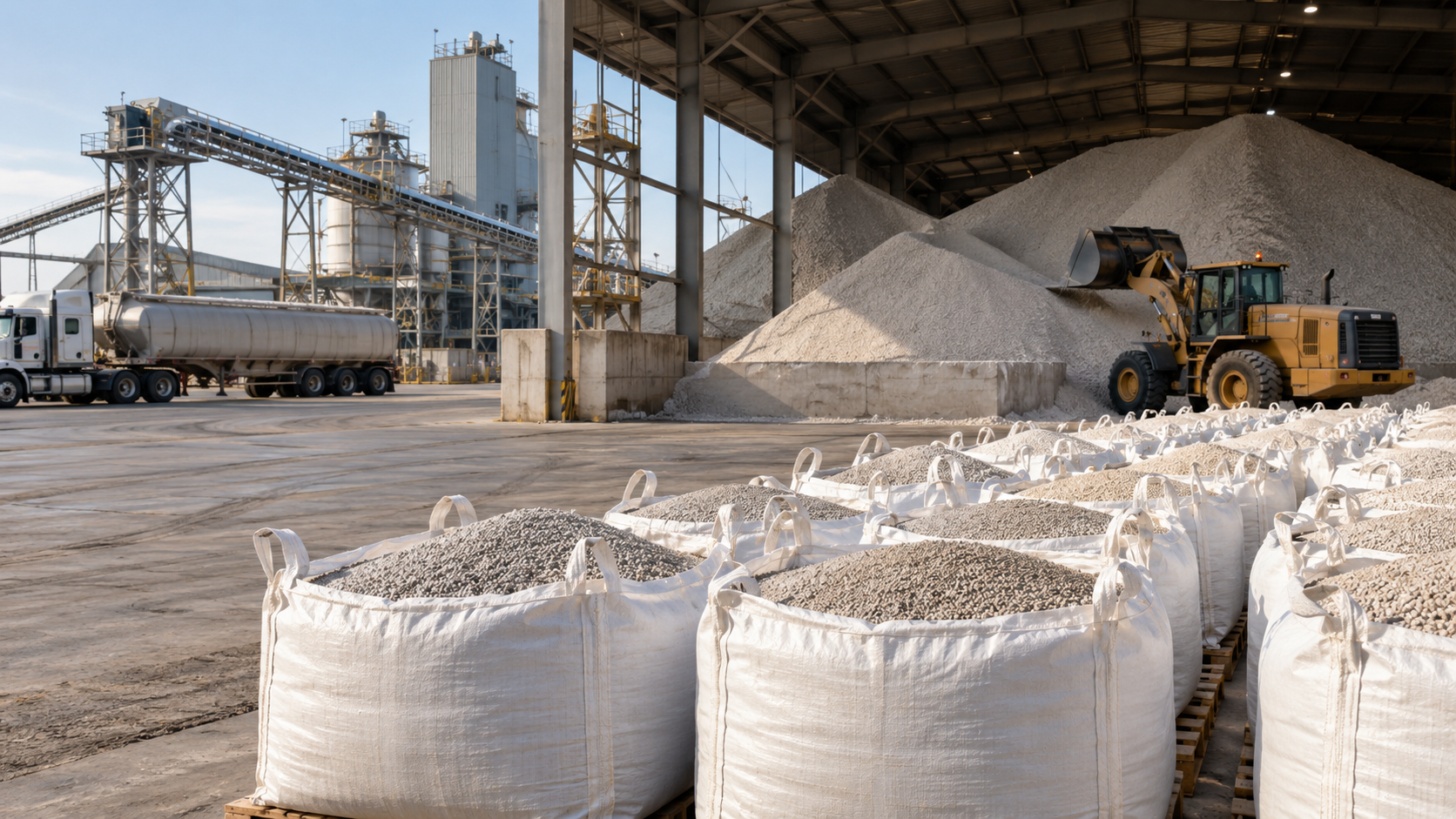
The phosphate market continues to face pressure from raw-material supply and production constraints. Fertilizer Daily recently reported that U.S. lawmakers raised concerns over a sulfur shortage affecting domestic phosphate production in Florida.
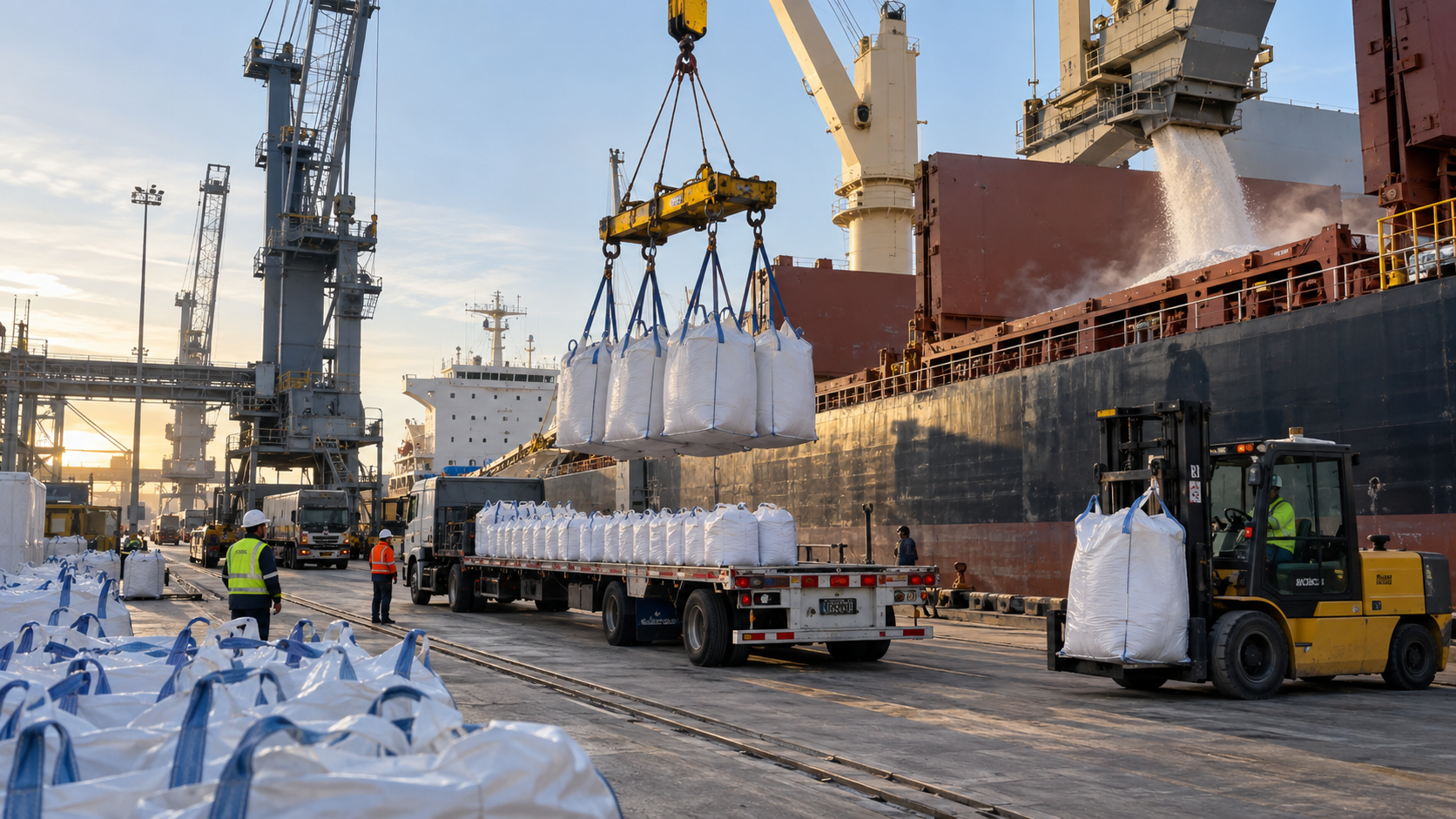
At the same time, the United States has temporarily opened additional supply channels for imported phosphate. Moroccan OCP shipments have resumed under an eight-month duty suspension intended to increase fertilizer availability for American farmers.
The combination of domestic supply constraints and additional imports will be important in determining whether DAP and MAP prices can ease during the coming months.
Potash remains comparatively stable
Potash has been one of the least volatile major fertilizer products in 2026.
The latest U.S. retail average of $495 per ton is only around 2% higher than one year ago and is almost unchanged from prices recorded throughout much of the summer.
This contrasts sharply with nitrogen and phosphate fertilizers, which have been more exposed to energy costs, sulfur availability and global shipping disruptions.
Fertilizer Daily previously examined the importance of Canadian potash to U.S. agriculture. Canada remains the dominant external supplier to the American market, making trade and logistics developments an important factor for future potash pricing.
U.S. fertilizer spending is forecast to rise 15.3% in 2026
The latest retail fertilizer data also fit into a broader increase in farm production costs.
The USDA Economic Research Service forecasts total U.S. farm production expenses at $492.8 billion in 2026, up $21.2 billion, or 4.5%, from 2025.
Within that total, spending on fertilizer, lime and soil conditioners is expected to increase by $5.3 billion, or 15.3%.
| U.S. farm cost indicator | 2026 forecast |
|---|---|
| Total production expenses | $492.8 billion |
| Increase vs. 2025 | +$21.2 billion |
| Fertilizer, lime and soil conditioner expense increase | +$5.3 billion |
| Fertilizer-related percentage increase | +15.3% |
USDA also forecasts inflation-adjusted net farm income to decline by 5.5% in 2026, increasing the importance of input-cost management for crop producers.
What U.S. farmers should watch this fall
The next several weeks will be particularly important as fall fertilizer application begins across parts of the Corn Belt.
The main market indicators to watch include:
- anhydrous ammonia demand during fall application;
- the direction of global urea prices;
- phosphate availability and sulfur costs;
- MAP and DAP imports into the United States;
- potash supply and North American logistics;
- natural gas prices and nitrogen production economics;
- dealer inventories purchased earlier in the year at higher prices.
Retail fertilizer prices often lag changes in wholesale markets because agricultural retailers must first work through existing inventories.
This means a decline in global or wholesale fertilizer prices does not necessarily translate immediately into lower prices for farmers.
What the latest price move means
The mid-September increase does not yet represent another major fertilizer price spike. Month-over-month changes across all eight products remain below DTN’s 5% threshold for a significant move.
The more important signal is that the summer correction has so far failed to eliminate the year-over-year cost increase.
Seven of eight major fertilizer products remain more expensive than a year ago, while USDA expects total fertilizer-related farm spending to rise sharply in 2026.
For U.S. growers heading into fall application planning, the market therefore presents a mixed picture: fertilizer prices are well below their spring peaks, but overall nutrient costs remain elevated compared with 2025.
Frequently asked questions
Mostly, yes. Six of the eight major fertilizers tracked by DTN were slightly higher in mid-September compared with one month earlier. However, none increased by 5% or more, so the latest movement remains relatively modest.
Anhydrous ammonia has the largest year-over-year increase among the eight products tracked by DTN, at approximately 22% above September 2025.
The average retail urea price was approximately $659 per ton during the second full week of September 2026.
Yes. Several nitrogen fertilizers have fallen substantially from their spring highs. Urea is approximately 24% below its late-April/early-May peak, while anhydrous ammonia is around 15% below its late-May high.
Based on DTN’s latest retail averages, anhydrous ammonia is the cheapest at approximately $0.58 per pound of nitrogen, compared with $0.72 for urea, $0.72 for UAN32 and $0.76 for UAN28.
Retail prices reflect a combination of global fertilizer supply, energy and raw-material costs, transportation, dealer inventories, import availability and seasonal demand. USDA currently forecasts U.S. spending on fertilizer, lime and soil conditioners to rise 15.3% in 2026.
Sources: DTN Progressive Farmer, USDA Economic Research Service

Enjoyed this story?
Every Monday, our subscribers get their hands on a digest of the most trending agriculture news. You can join them too!







Discussion0 comments