

Recycled Fertilizers From Human Waste Can Match Conventional Fertilizers, Meta-Analysis Finds



Fertilizers recovered from source-separated human urine and fecal material can perform as well as conventional mineral fertilizers under many agricultural conditions, according to a new international meta-analysis examining more than 450 datasets from 32 countries.
The study, published in Frontiers in Environmental Science and highlighted by researchers on October 13, evaluated nutrient composition, contaminants, hygienic safety and crop performance across a wide range of fertilizers produced from resource-oriented sanitation systems.
Researchers found no systematic crop-yield disadvantage for the recycled fertilizers compared with conventional mineral fertilizers. However, performance varied by product, nutrient form, crop and soil conditions, while important knowledge gaps remain around pharmaceutical residues, PFAS and long-term field use.
Researchers analyzed more than 450 datasets from 32 countries
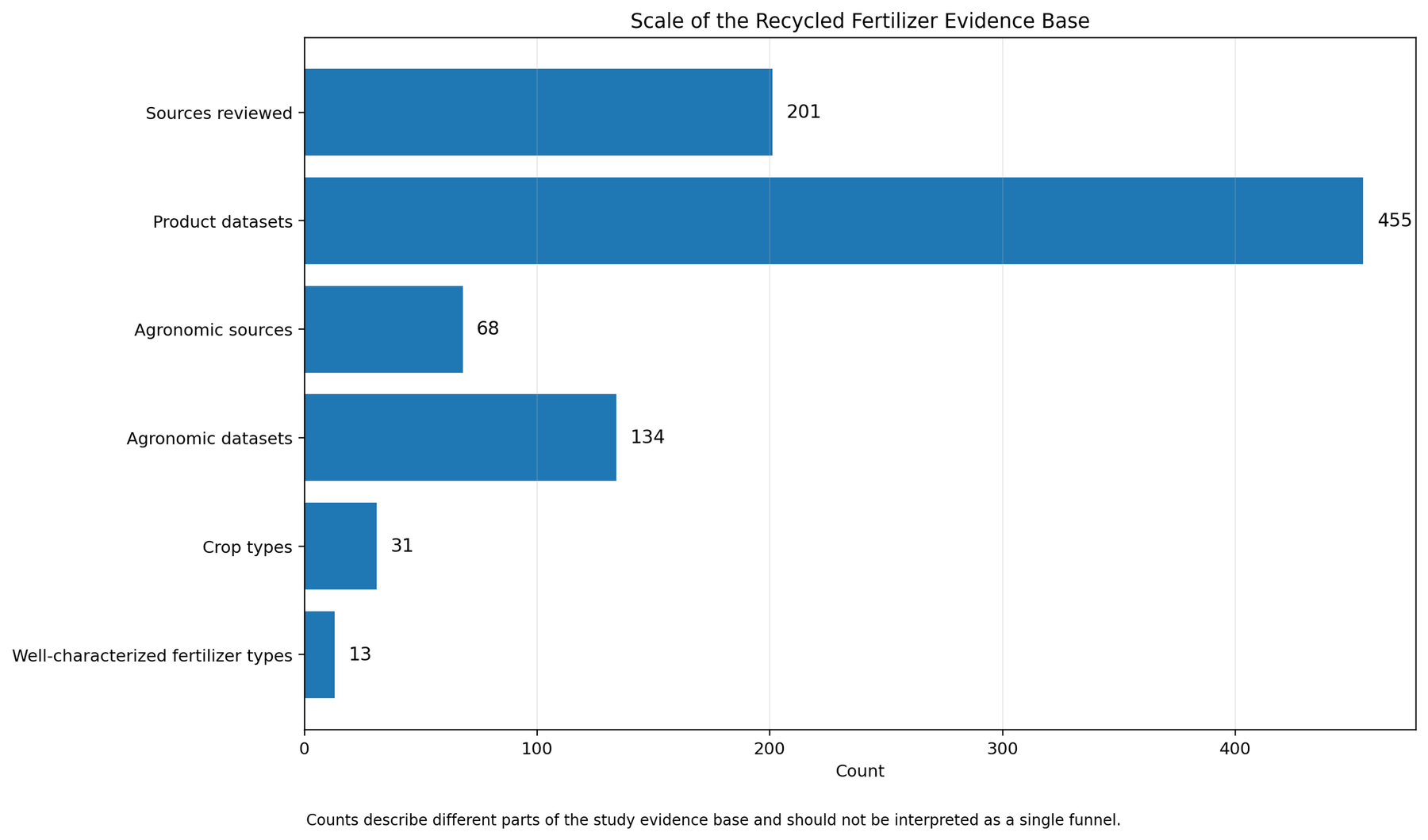
The study combined a systematic literature review with a quantitative meta-analysis.
Researchers collected 455 datasets from 201 published and unpublished sources covering fertilizer products derived from source-separated urine, feces and mixed human excreta.
The evidence came from 32 countries, making the study one of the broadest product-level assessments of sanitation-derived fertilizers published to date.
| Study metric | Evidence base |
|---|---|
| Total datasets collected | 455 |
| Sources reviewed | 201 |
| Countries represented | 32 |
| Well-characterized fertilizer types | 13 |
| Agronomic datasets used in meta-analysis | 134 |
| Agronomic sources | 68 |
| Crop types | 31 |
The United States accounted for 15 references in the evidence base, behind Germany, China and Switzerland but ahead of many other countries represented in the study.
Thirteen recycled fertilizer products had enough data for detailed analysis
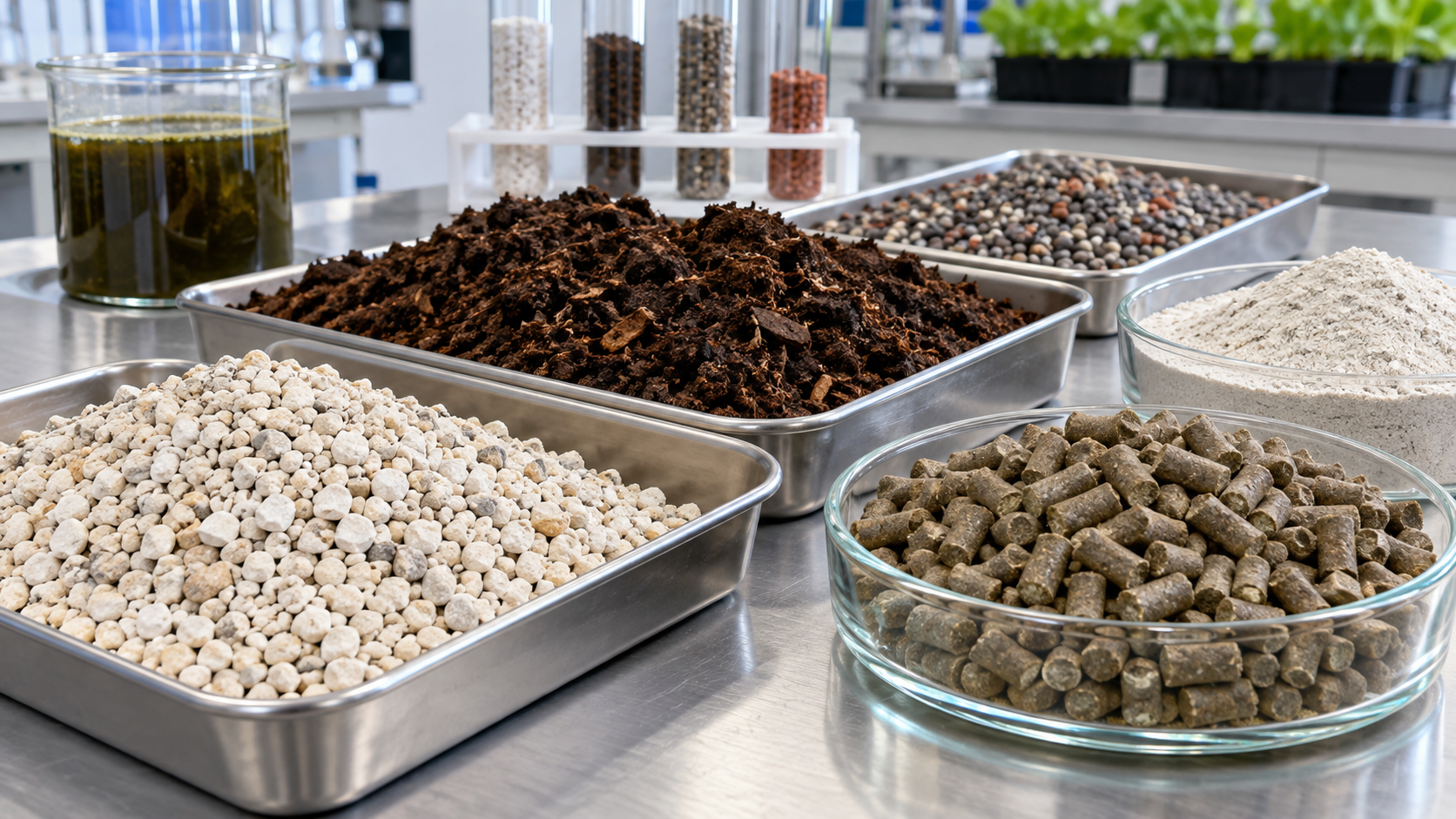
The researchers identified 13 fertilizer types with sufficient information for detailed product-level characterization.
These included:
- stored urine;
- nitrified urine fertilizers;
- alkaline dried urine;
- magnesium-based precipitates;
- calcium-based precipitates;
- calcium-magnesium precipitates;
- compost;
- vermicompost;
- biochar;
- digestate;
- dried fecal sludge;
- other treated feces-derived products;
- products derived from mixed excreta.
The researchers found that many of these products can be evaluated using the same basic agronomic framework already used for mineral, organic and organo-mineral fertilizers.
No systematic yield disadvantage versus mineral fertilizer
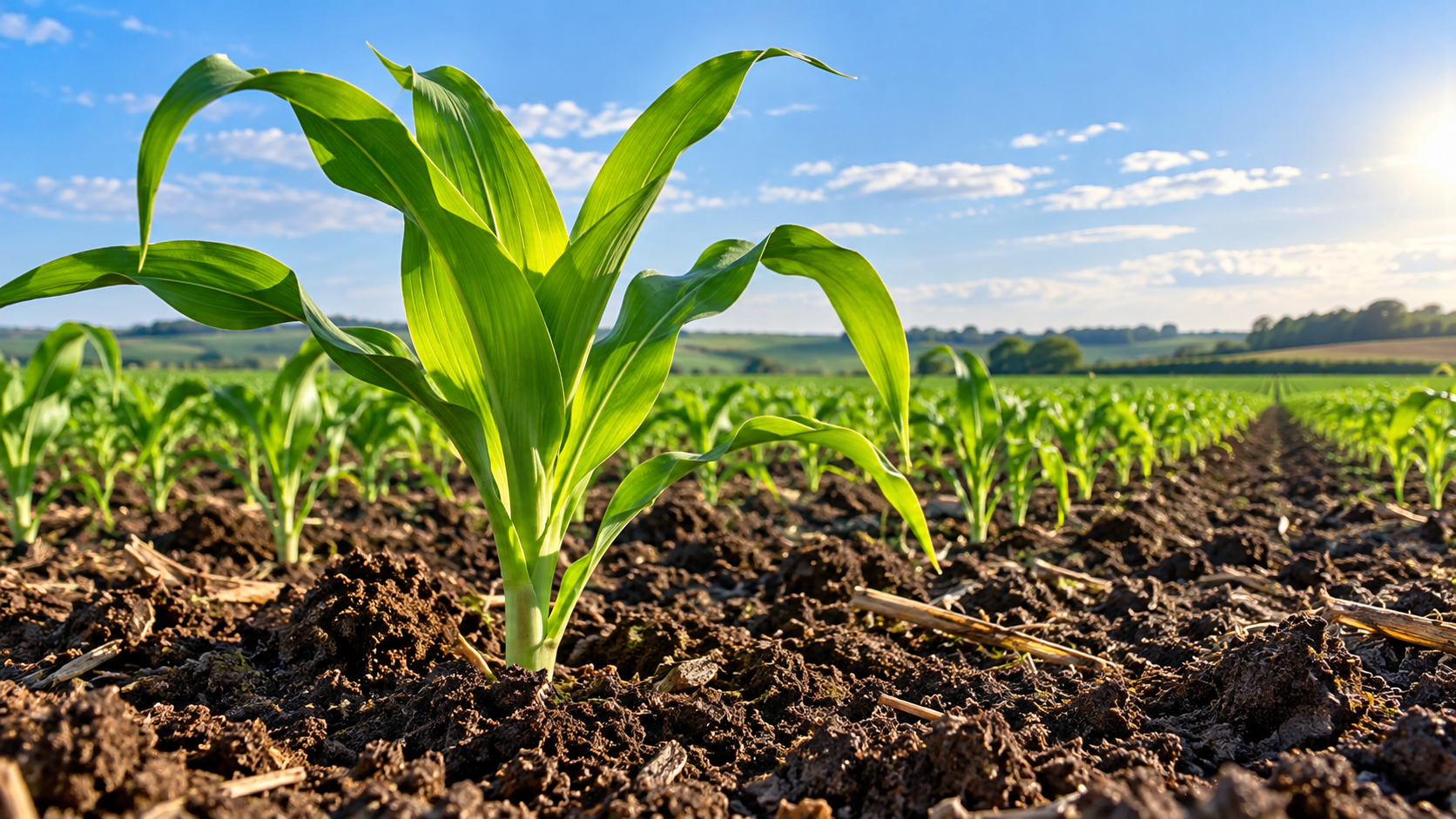
The strongest practical finding came from the agronomic meta-analysis.
Researchers analyzed 134 datasets from 68 sources covering 31 crop types, including field, pot and hydroponic experiments.
Across the recycled fertilizer products studied, there was no systematic yield disadvantage compared with conventional mineral fertilizer.
Yields were also generally substantially higher than in unfertilized controls.
“Recycled fertilizers derived from separately collected material streams are not second-class fertilizers.”
— Martina Winker, Institute for Social-Ecological Research
Winker, a co-author of the study, emphasized that fertilizer performance should be evaluated by agronomic properties rather than by the origin of the raw material.
The study does not mean every recycled fertilizer performs identically
The overall result should not be interpreted as evidence that all recycled fertilizers are interchangeable with conventional products.
Performance depends on several factors:
- nutrient concentration;
- chemical form of nitrogen, phosphorus and potassium;
- nutrient-release rate;
- soil properties;
- crop type;
- application method;
- processing technology;
- management conditions.
The researchers concluded that differences between urine-derived and feces-derived products are often better understood as differences between mineral-like and organic fertilizer behavior rather than simply differences in waste origin.
Urine-derived fertilizers behave more like mineral fertilizers
Human urine contains a substantial share of the nitrogen and phosphorus excreted by people, but relatively little organic matter compared with feces.
After appropriate collection and processing, urine-derived fertilizers can contain nutrients in forms that become available to crops relatively quickly.
Products such as nitrified urine fertilizer and alkaline dried urine therefore behave more like concentrated mineral fertilizers than traditional compost.
This allows them to be applied according to nutrient-management principles similar to those used for conventional nitrogen fertilizers.
Feces-derived products behave more like organic amendments
Products made from fecal material typically contain more organic matter and release nutrients more slowly.
They can therefore function more like compost, digestate or other organic fertilizers.
These products may contribute not only nutrients but also organic carbon and soil-conditioning benefits.
The trade-off is that nutrient availability can be less immediate and more dependent on biological mineralization in the soil.
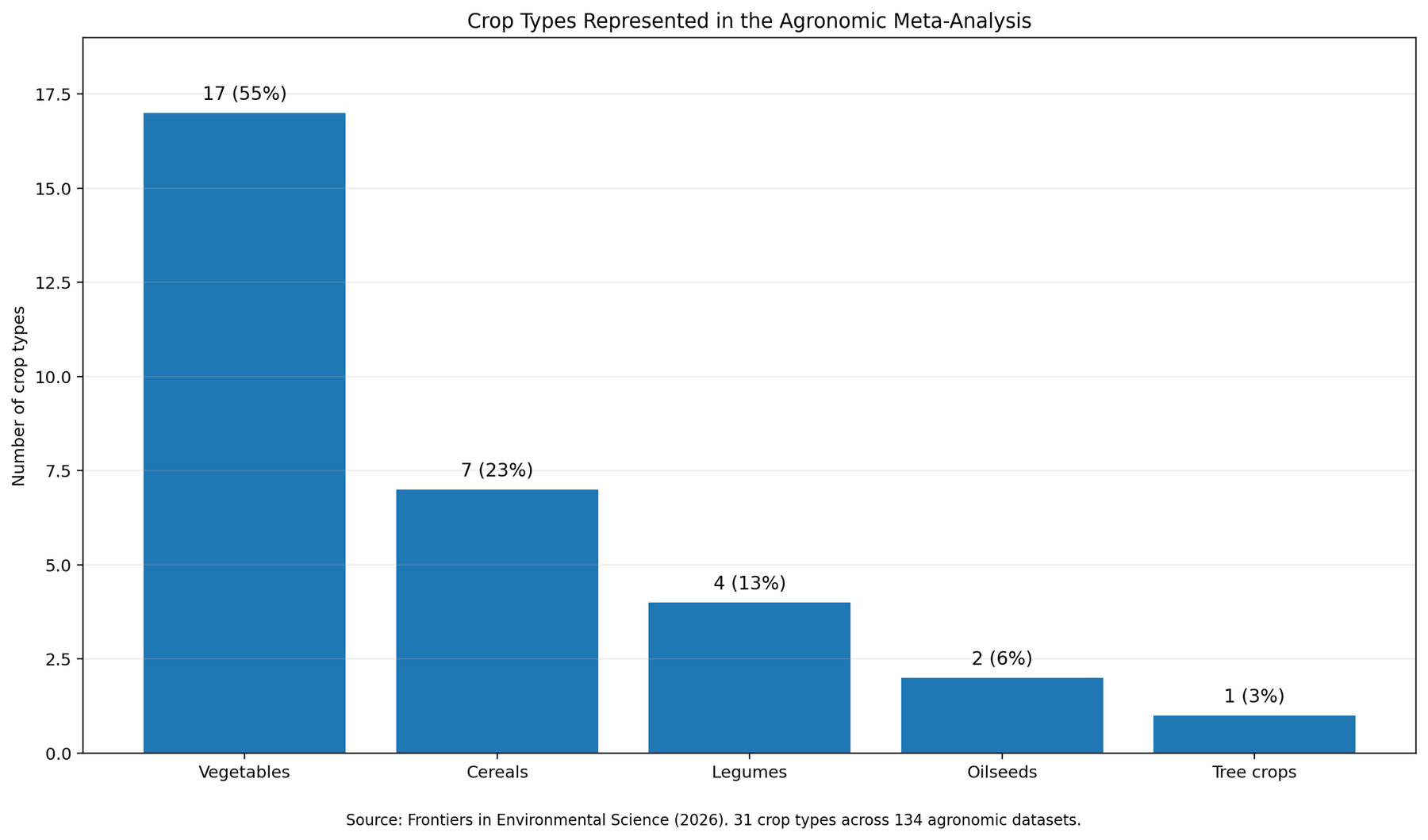
The study included 31 crop types
The agronomic evidence covered a broad range of crops rather than a single experimental species.
| Crop group | Number of crop types represented |
|---|---|
| Vegetables | 17 |
| Cereals | 7 |
| Legumes | 4 |
| Oilseeds | 2 |
| Tree crops | 1 |
Most experiments focused primarily on nitrogen fertilization, although many also supplied phosphorus, potassium and secondary nutrients.
Only nine studies specifically evaluated phosphorus fertilization, meaning the evidence base for recovered phosphorus products remains smaller than the evidence for nitrogen-rich products.
The geographic evidence base is already international
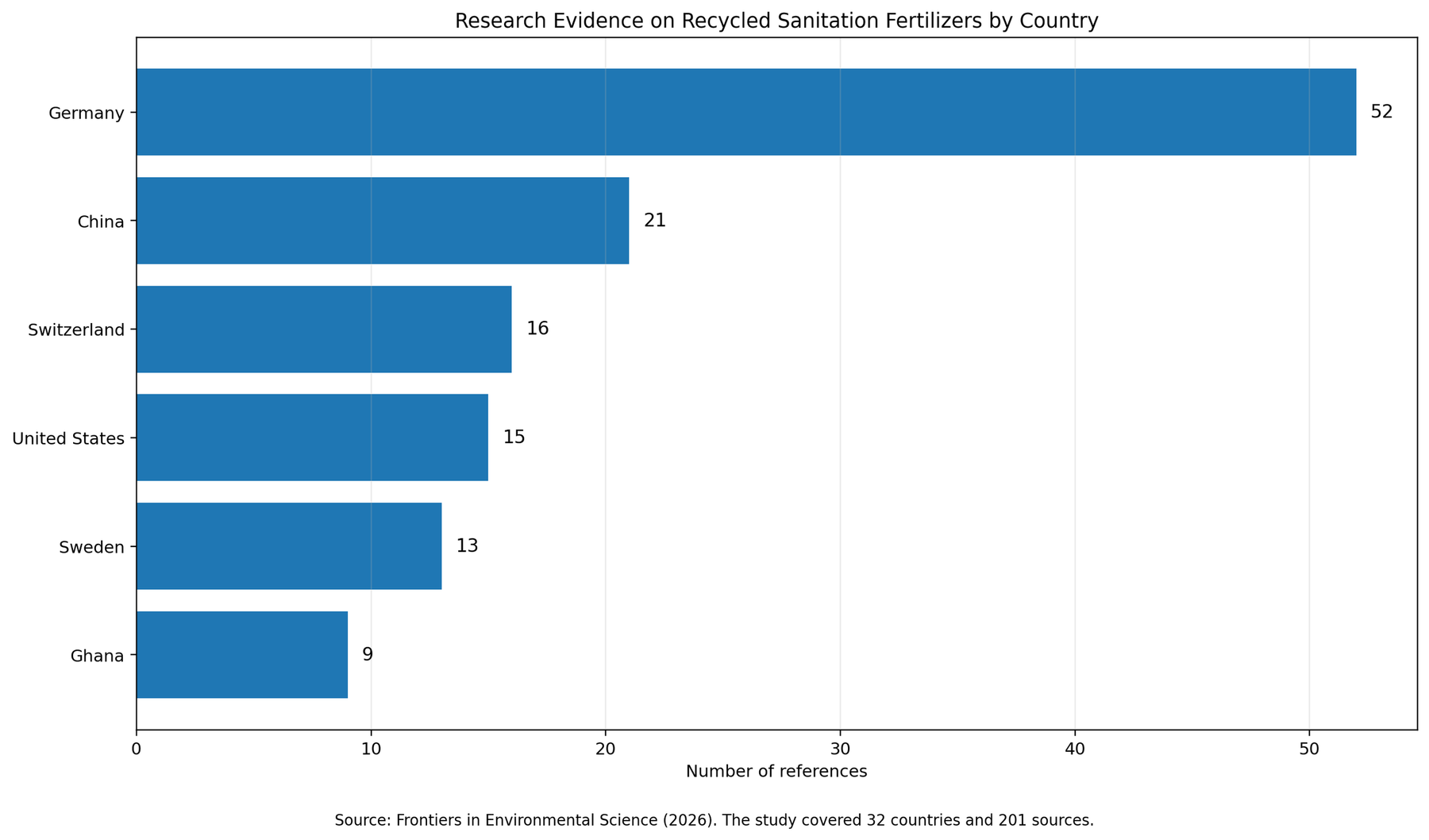
The study identified research from 32 countries.
Germany contributed the largest number of references, followed by China, Switzerland and the United States.
| Country | References identified |
|---|---|
| Germany | 52 |
| China | 21 |
| Switzerland | 16 |
| United States | 15 |
| Sweden | 13 |
| Ghana | 9 |
This geographical spread suggests that nutrient recovery from sanitation systems has moved well beyond a small number of pilot projects, although commercial and regulatory adoption remains uneven.
“We compiled more than 450 data sets from over 200 sources across 32 countries.”
— Ariane Krause, Network for Sustainable Sanitation Systems
Why nutrient recovery is attracting more attention
Modern agriculture depends heavily on nitrogen, phosphorus and potassium fertilizers.
Each nutrient has a different supply challenge.
Nitrogen fertilizer production requires large amounts of energy, primarily to produce ammonia. Phosphorus comes largely from mined phosphate rock concentrated in a limited number of countries. Potassium fertilizer similarly depends on geographically concentrated potash deposits.
Human waste streams contain all three nutrients.
Conventional sanitation systems usually dilute these nutrients with large volumes of water before wastewater treatment, making recovery technically more complex.
Resource-oriented sanitation systems attempt to capture nutrient-rich streams closer to the source.
What is a resource-oriented sanitation system?
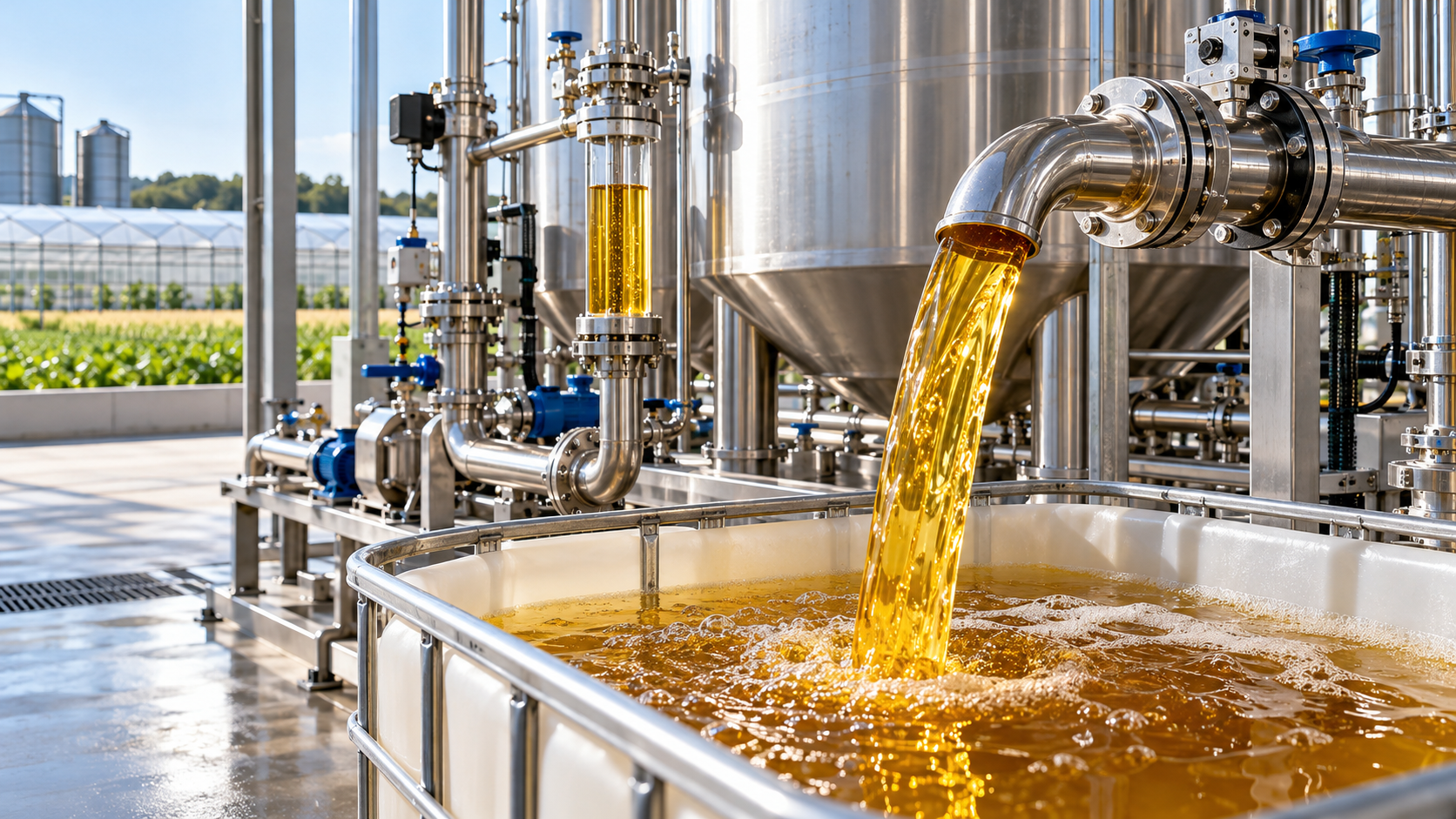
Resource-oriented sanitation, or ROS, is designed to collect human excreta as a recoverable resource rather than treat it exclusively as waste.
Systems can separate urine, feces or both before those materials are heavily diluted with wastewater.
The collected streams can then undergo processes including:
- storage;
- nitrification;
- drying;
- precipitation;
- composting;
- anaerobic digestion;
- thermal treatment;
- biochar production.
The objective is to convert the nutrients into products with predictable composition, safe handling characteristics and useful fertilizer value.
The fertilizer is not simply untreated human waste
One of the most important distinctions in the study is between untreated excreta and processed fertilizer products.
The researchers evaluated fertilizers that had undergone defined treatment processes.
Raw human waste can contain pathogens and chemical contaminants and should not be treated as equivalent to a characterized fertilizer product.
Processing is therefore central to both nutrient recovery and safety.
Heavy metal concentrations were generally low
The study found that measured heavy metal concentrations were generally low and comparable with those found in established fertilizer products.
This partly reflects the benefit of source separation.
Human excreta collected separately can avoid some industrial and urban contaminants that enter mixed municipal wastewater streams.
However, contaminant levels still depend on the source material and treatment process.
Hygienic safety depends strongly on treatment
Pathogens are one of the most obvious concerns when fertilizers originate from human excreta.
The study found that hygienic safety depends strongly on treatment conditions and product type.
Processes involving storage, elevated pH, drying, composting or thermal treatment can substantially reduce biological risk when properly designed and monitored.
The researchers therefore argue that products should be evaluated using measurable safety criteria rather than automatically accepted or rejected solely because of their origin.
PFAS and pharmaceutical residues remain a major knowledge gap
The evidence is less complete for organic contaminants.
The researchers specifically identified pharmaceutical residues and per- and polyfluoroalkyl substances, or PFAS, as areas where available data remain insufficient across many fertilizer products.
This is important because nutrient-recycling systems need to demonstrate not only crop performance but also long-term safety.
The absence of a systematic yield disadvantage does not resolve questions around persistent contaminants.
U.S. regulators are already paying closer attention to PFAS in recycled waste products
The U.S. Environmental Protection Agency regulates land application of treated sewage sludge, commonly known as biosolids, under federal rules including 40 CFR Part 503.
EPA states that properly treated biosolids can be recycled as fertilizer or soil amendments.
However, the agency is now paying increasing attention to PFAS contamination in biosolids.
On July 1, 2026, EPA released draft guidance aimed at reducing risks from PFOA and PFOS in sewage sludge applied to land.
That regulatory debate is relevant to nutrient recycling more broadly, although source-separated sanitation fertilizers and conventional wastewater biosolids are not the same material streams.
Source-separated urine occupies a different U.S. regulatory position
In the United States, source-separated human urine does not simply fall under the same federal framework as treated sewage sludge.
Under the FDA Produce Safety Rule, source-separated urine is not covered by EPA’s Part 503 biosolids framework and is treated differently when used in production of covered produce.
This illustrates one of the regulatory problems identified by the new study: fertilizer technologies can advance faster than the legal categories used to regulate them.
Researchers say regulation is now one of the main barriers
The study’s authors argue that technical feasibility is no longer the only major challenge.
Several sanitation-derived fertilizer products now have enough agronomic evidence to justify a shift toward questions of product standards, quality assurance and market integration.
“The real challenge… is how it can be practically integrated into existing quality assurance and regulatory processes.”
— Martina Winker, ISOE
The researchers say regulators need consistent testing methods and product-quality criteria that account for nutrient value, contaminants and hygiene.
Product quality may matter more than feedstock origin
Ariane Krause of NetSan argues that fertilizer regulation should increasingly focus on measurable product characteristics.
“The quality of the product should be the deciding factor—not the origin of the raw material.”
— Ariane Krause, NetSan
That approach would place recovered fertilizer products into the same regulatory logic applied to other mineral and organic fertilizers: nutrient content, nutrient availability, contaminants, safety and agronomic performance.
This could create a new source of recycled nitrogen
Nitrogen recovery is particularly interesting because conventional ammonia production remains energy-intensive.
Recovering nitrogen already present in sanitation streams does not eliminate the need for industrial fertilizer production, but it can reduce nutrient losses from the food system.
Urine-derived fertilizers are especially relevant because urine contains a large proportion of the nitrogen excreted by humans.
At local scale, recovering that nitrogen can reduce both fertilizer demand and the nutrient load entering wastewater treatment systems.
Recovered phosphorus may become more strategically important
Phosphorus has a different strategic value.
Unlike atmospheric nitrogen, phosphorus cannot be manufactured from air and must ultimately come from mineral deposits or recycled biological materials.
Recovering phosphorus from human waste can therefore return a finite nutrient resource to agriculture rather than allowing it to accumulate in wastewater residuals or be lost from the agricultural nutrient cycle.
The current meta-analysis found less phosphorus-specific agronomic evidence than nitrogen evidence, suggesting that additional field research is still needed.
Resource recovery could also reduce wastewater treatment loads
Removing nutrients before they enter conventional wastewater treatment can reduce the amount of nitrogen and phosphorus that treatment plants must subsequently remove.
Nitrogen removal from wastewater can require substantial aeration and energy, while phosphorus often needs biological or chemical removal.
Source separation therefore creates a potential two-sided benefit:
- recover nutrients for fertilizer;
- reduce nutrient loads entering wastewater treatment.
But economics will determine whether the technology scales
Agronomic effectiveness alone does not guarantee commercial adoption.
Recovered fertilizer systems also need viable economics for:
- collection;
- storage;
- treatment;
- quality testing;
- transport;
- application;
- regulatory compliance.
Conventional fertilizer production benefits from enormous industrial scale and established logistics.
Sanitation-derived products may be most competitive where nutrient-rich waste streams can be collected and used relatively close to agricultural demand.
Concentrated products are easier to transport
Raw urine contains valuable nutrients but also a large amount of water.
Transporting untreated liquid over long distances can therefore be economically inefficient.
Processes such as nitrification, evaporation and alkaline drying can create more concentrated fertilizer products with lower transport costs and more predictable nutrient content.
This is one reason the study emphasizes individual fertilizer products rather than treating all sanitation-derived materials as one category.
Long-term field evidence is still limited
The researchers identified another important limitation.
Much of the current evidence comes from short-term field, pot and greenhouse experiments.
Long-term field trials remain comparatively scarce.
That means important questions still need more research, including:
- long-term soil nutrient accumulation;
- soil microbiology;
- persistent contaminants;
- salinity;
- crop rotation effects;
- repeated application;
- soil carbon changes.
The headline finding should not be interpreted as universal equivalence
The statement that recycled fertilizers can match conventional fertilizers describes the overall evidence base.
It does not mean every recycled product produced the same yield as every mineral fertilizer in every experiment.
The researchers found substantial variation between fertilizer types and agricultural conditions.
Product selection and nutrient management therefore remain essential.
Public acceptance may become another barrier
Even if agronomic and safety standards are met, fertilizers produced from human excreta may face resistance from farmers, food companies or consumers.
The researchers’ product-focused approach attempts to separate measurable fertilizer quality from the psychological response to the source material.
Commercial adoption will likely depend on transparent standards, independent testing and clear communication of treatment and safety requirements.
What the study means for fertilizer producers
For the fertilizer industry, nutrient recovery should not necessarily be viewed as a direct replacement for conventional fertilizer production.
Instead, it represents an additional nutrient source that could become part of a broader fertilizer portfolio.
Future markets could include:
- concentrated urine-derived nitrogen fertilizers;
- recovered phosphorus products;
- organically derived soil amendments;
- specialty circular fertilizers;
- local fertilizer systems linked to municipal sanitation infrastructure.
What happens next?
The researchers argue that the next stage is no longer simply proving that fertilizer can be produced from sanitation streams.
The more important questions are now how products should be characterized, standardized, regulated and integrated into agricultural nutrient management.
Key research and policy priorities include:
- more long-term field trials;
- better PFAS and pharmaceutical-residue data;
- standardized contaminant testing;
- clear nutrient-labeling rules;
- pathogen standards;
- regulatory pathways for source-separated products;
- commercial-scale demonstration projects.
Frequently asked questions
Yes, when human excreta are appropriately processed into defined fertilizer products. The new meta-analysis found no systematic crop-yield disadvantage compared with conventional mineral fertilizer.
No. The study evaluated processed fertilizer products. Raw human waste can contain pathogens and contaminants and should not be treated as equivalent to a certified fertilizer.
Human excreta contain nitrogen, phosphorus, potassium and other plant nutrients. The amounts and chemical forms depend on whether the source is urine, feces or mixed excreta and on the treatment process.
The study found that measured heavy metal concentrations were generally low and comparable to established fertilizers, although results varied by product.
PFAS and pharmaceutical residues remain areas where the researchers say available evidence is incomplete. More systematic testing and long-term research are needed.
The researchers compiled 455 datasets from 201 sources. The agronomic meta-analysis used 134 datasets from 68 sources covering 31 crop types.
Research and pilot projects involving nutrient recovery from source-separated urine have taken place in the United States, but regulatory pathways remain different from those used for conventional biosolids and commercial mineral fertilizers.
Sources: Frontiers in Environmental Science, ISOE, U.S. Environmental Protection Agency, U.S. Environmental Protection Agency

Enjoyed this story?
Every Monday, our subscribers get their hands on a digest of the most trending agriculture news. You can join them too!






Discussion0 comments