

Roundup cancer trial: Bayer wins key test after 2026 court ruling

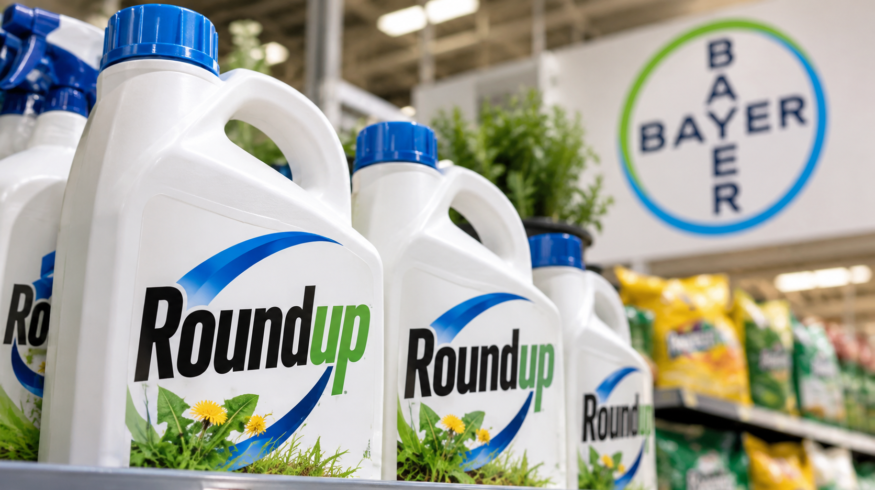

Bayer won a Roundup cancer trial on October 29, when a St. Louis jury unanimously rejected claims by three women who said the weedkiller caused their non-Hodgkin lymphoma. The verdict is the first trial outcome since the U.S. Supreme Court ruled in June that federal pesticide-labeling law limits state failure-to-warn lawsuits against the product.
The decision gives Bayer an early test of its argument that the Supreme Court ruling also makes other legal theories difficult to pursue. The company continues to face about 65,000 claims in U.S. state and federal courts, while a separate Missouri court reviews its proposed $7.25 billion settlement of other Roundup lawsuits.
Roundup cancer trial tests claims after Supreme Court ruling
The plaintiffs — Theresa Aretino, Cynthia Fernandez and Betty Larkin — sued Bayer unit Monsanto in 2020. They said they had used Roundup regularly and later developed non-Hodgkin lymphoma. Their attorneys argued that the product was defectively designed and unreasonably dangerous and that Monsanto was negligent in selling it.
The jury rejected the design-defect and negligence claims. Larkin died before the trial began. None of the three women was participating in Bayer’s proposed settlement, according to Reuters.
Bayer’s U.S. general counsel and global head of litigation, Bill Dodero, said the verdict showed the challenges plaintiffs would face in cases brought after the Supreme Court decision, known as the Durnell ruling.
“This verdict should send a strong signal that plaintiffs who wish to pursue claims in the court system following the Durnell ruling will face significant challenges both in demonstrating they have viable claims and putting forth the necessary evidence to prove them in court,” Dodero said in a statement.
Markus Manns, a portfolio manager at Union Investment, described the result as one of Bayer’s most important trial wins. He said the plaintiffs had failed to establish that the company ignored glyphosate risks during the product’s development.
Bayer still faces 65,000 Roundup claims
The Supreme Court’s June decision blocked the failure-to-warn argument that had underpinned most Roundup lawsuits. The court ruled that federal law requires herbicide manufacturers to use the exact product label approved by the U.S. Environmental Protection Agency. The EPA has concluded that Roundup’s label does not require a cancer warning.
Bayer has argued that the ruling also forecloses other claims, including allegations of defective design and negligence. Plaintiffs’ attorneys have maintained that those legal theories are not covered by the decision. The St. Louis verdict is an early jury outcome in litigation testing that dispute.
Bayer has denied that Roundup causes cancer, saying decades of studies show that glyphosate, its active ingredient, is safe. The EPA previously concluded that glyphosate was probably not carcinogenic, although the agency is conducting a new safety review.
The International Agency for Research on Cancer reached a different assessment in 2015, classifying glyphosate as “probably carcinogenic” to humans. Bayer has disputed that conclusion, calling it an outlier based on flawed methodology.
$7.25 billion settlement remains under review
Separately, Bayer is seeking to resolve tens of thousands of other Roundup cases through a proposed $7.25 billion settlement. A Missouri state court judge in St. Louis is reviewing the proposal. The three plaintiffs in the latest trial are not part of that agreement.
Bayer shares rose 4% on Thursday, reaching a one-month high during the session, as investors assessed the verdict. The company’s litigation liabilities have weighed on its finances and share price since its 2018 acquisition of Monsanto.
The verdict does not resolve the wider litigation or the scientific debate over glyphosate. The next key developments are the Missouri court’s decision on the proposed settlement, the EPA’s ongoing review and further trials testing which claims remain viable after the Supreme Court ruling.
Related: U.S. Supreme Court supports Bayer in landmark Roundup decision, limiting cancer warning lawsuits.
Source: Reuters

Enjoyed this story?
Every Monday, our subscribers get their hands on a digest of the most trending agriculture news. You can join them too!







Discussion0 comments