

Corteva launches new Lortama herbicide in Portugal as EU tightens pesticide regulations

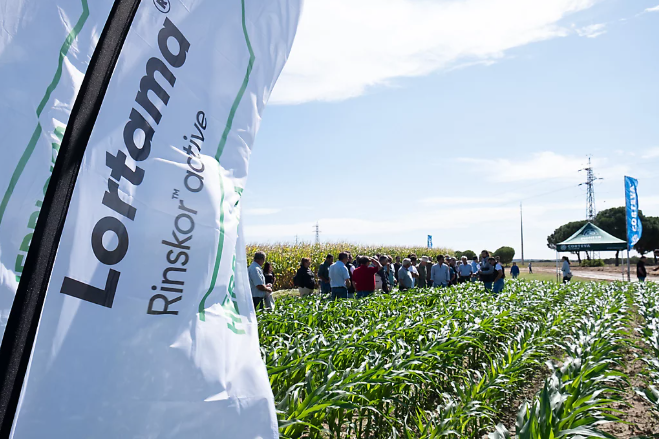

Corteva Agriscience has introduced Lortama, a new corn herbicide featuring its proprietary Rinskor active ingredient, during the Agroglobal 2025 exhibition in Portugal. The launch comes as European Union pesticide regulations continue to restrict available active ingredients, narrowing options for growers managing increasingly resistant weed populations.
Set for commercial release in 2026, Lortama is designed to control major weed species in corn production. According to Corteva, the formulation offers an extended application window, tank-mix compatibility with other herbicides and foliar fertilizers, crop selectivity across corn hybrids, and flexibility in crop rotation.
The herbicide’s technical foundation lies in Rinskor (florpyrauxifen-benzyl), a synthetic auxin categorized under Group 4 of the Herbicide Resistance Action Committee system. It acts by disrupting cell division and elongation in susceptible plants through inhibition of very-long-chain fatty acid elongase enzymes. The active ingredient, first introduced globally in 2017, is one of few new herbicide modes of action developed in recent years.
Corteva demonstrated Lortama during field trials at Quinta da Alorna, near Santarém, where the company maintains corn hybrid test plots. Agronomists presented comparative weed control results with existing products in the company’s portfolio, including Hector, Emir, and Dragster. The demonstrations emphasized early post-emergence applications between the two- and four-leaf stages to maximize weed sensitivity and reduce competition for soil nutrients and moisture.
Addressing herbicide resistance pressures
Rinskor provides activity against both grass and broadleaf weeds, including those resistant to acetolactate synthase (ALS) and acetyl-CoA carboxylase (ACCase) inhibitors. These resistance patterns have become widespread across European agricultural regions. In Iberian corn systems, Italian ryegrass (Lolium multiflorum) has shown resistance to multiple herbicide groups, posing increasing management challenges.
The introduction of new active ingredients like Rinskor offers an opportunity to diversify weed control strategies. However, industry experts warn that ongoing regulatory withdrawals of older chemistries limit the overall number of available herbicide modes of action, heightening the risk that resistance will develop even to newer products.
Regulatory backdrop
The Lortama launch occurs within the broader framework of the European Green Deal and its Farm to Fork Strategy, which seeks to halve chemical pesticide use and associated risks by 2030. While the goals have been endorsed as part of the EU’s sustainability agenda, farming groups argue that the targets are difficult to achieve without compromising productivity due to the slow pace of alternative product development.
EU lawmakers rejected the initial Sustainable Use of Pesticides Regulation proposal in late 2023, but revised versions remain under discussion. Member states have pursued independent measures: France has extended deadlines for its Ecophyto pesticide reduction plan, Germany has restricted glyphosate and neonicotinoids, and Portugal continues to promote integrated pest management and biological control under its national pesticide strategy.
Industry challenges and innovation
Since 2009, more than 70% of active ingredients once approved in the EU have been withdrawn following regulatory reviews emphasizing hazard-based criteria such as carcinogenicity or environmental persistence. Herbicides have been particularly affected, reducing the diversity of chemical tools available to farmers.
Developing new active ingredients has become increasingly difficult. Industry estimates place the average cost of bringing a new molecule to market at over €280 million, with approval timelines extending up to 12 years. These economics have concentrated innovation within large multinationals like Corteva, while smaller firms have shifted toward biological inputs with less onerous regulatory pathways.
With Rinskor, Corteva has positioned Lortama as both a response to regulatory attrition and a technical advancement in resistance management. Its forthcoming introduction to European markets underscores the tension between environmental policy goals and the agricultural sector’s need for effective, modern weed control solutions.

Enjoyed this story?
Every Monday, our subscribers get their hands on a digest of the most trending agriculture news. You can join them too!




Discussion0 comments