

U.S. Senate holds first fertilizer industry hearing as urea prices raised 40% in 2026

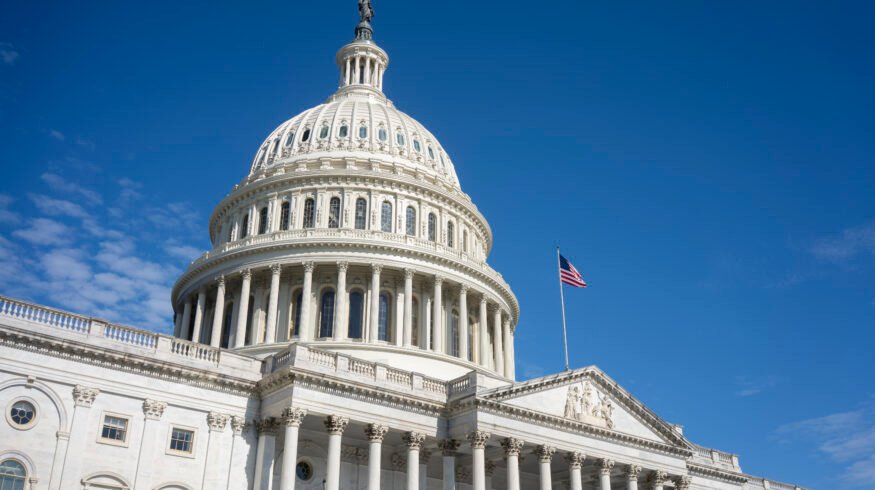

The Senate Agriculture, Nutrition and Forestry Committee held its first dedicated hearing on the U.S. fertilizer industry on May 12, taking testimony from farmers, commodity group leaders and the head of the Fertilizer Institute as lawmakers pressed for action on pricing transparency and domestic production capacity.
Senator John Boozman (R-AR) chaired the session at 106 Dirksen Senate Office Building. Ranking Member Amy Klobuchar (D-MN) called for passage of two bipartisan bills: the Fertilizer Transparency Act — co-authored with Senator John Thune (R-SD) — which would require USDA to publish weekly fertilizer price data from manufacturers, and the Homegrown Fertilizer Act, co-authored with Senator Roger Marshall (R-KS), which would create a USDA grant and loan program for domestic production and storage expansion.
Witnesses included Trent Kubik, president of South Dakota Corn Growers; Eddie Melton, president of the Kentucky Farm Bureau; Corey Rosenbusch, president and CEO of the Fertilizer Institute; and Joshua Westling, CEO of J. Westling & Co. Their testimony emphasized that four companies controlled 77% of U.S. nitrogen fertilizer sales in 2024, leaving farmers with limited market information and few supply alternatives when disruptions hit.
The hearing opened against a backdrop of urea at $865 per tonne, anhydrous ammonia at $1,116 per tonne, and DAP at $914 per tonne — all elevated by the U.S.-Iran conflict and the partial closure of the Strait of Hormuz since late February. The American Farm Bureau Federation told the committee that 86 farms filed for Chapter 12 bankruptcy in Q1 2026 alone, and that USDA’s forecast for total U.S. farm production expenses in 2026 stands at a record $478 billion, calculated before the latest fertilizer and fuel price surge.
Klobuchar said the Department of Justice had opened an antitrust probe into the fertilizer sector in March and the Supreme Court and U.S. Court of International Trade had both ruled against the administration’s use of tariff authorities, adding to the legal and policy pressure on input markets. “We know there are many reasons that fertilizer prices are astronomically high,” she said in her opening statement.
Source: U.S. Senate Agriculture Committee
Key Facts About the U.S. Senate Fertilizer Hearing
Two bipartisan bills were central to the discussion. The Fertilizer Transparency Act (Thune-Klobuchar) would require USDA to publish weekly price data from fertilizer manufacturers rather than the current annual release, giving farmers and co-ops timelier market information. The Homegrown Fertilizer Act (Klobuchar-Marshall) would provide USDA grants and loans to small and mid-sized domestic fertilizer producers to expand production and improve storage capacity. Both bills are in the Senate Agriculture Committee.
According to testimony at the hearing, four companies controlled 77% of U.S. nitrogen fertilizer sales in 2024, while all domestic potash and phosphate production is similarly concentrated. Witnesses said this consolidation limits farmers’ ability to comparison-shop or negotiate, and makes the domestic supply chain fragile when global disruptions occur. The Department of Justice opened an antitrust investigation into the fertilizer sector in March 2026 following media reports on pricing practices.
According to Senator Klobuchar’s opening statement, urea prices spiked more than 40% since the conflict with Iran began in late February. Anhydrous ammonia and DAP have also risen sharply. The Strait of Hormuz runs through or adjacent to the supply chains of several major fertilizer exporters, including UAE-based Fertiglobe and the major Saudi producers Ma’aden and SABIC. Even before the conflict, IEEPA tariffs had added an estimated $1 billion to U.S. input costs for fertilizer, seed, machinery and chemicals between February and October 2025, according to a North Dakota State University analysis.
The American Farm Bureau Federation told the committee that 86 farms filed for Chapter 12 bankruptcy in Q1 2026, including 25 in the Southeast. USDA forecast total U.S. farm production expenses at a record $478 billion in 2026 — and that was before the latest fertilizer surge. Total farm sector debt is projected to reach $624.7 billion in 2026, driven by larger operating loans taken out to cover elevated input costs. The AFBF survey of more than 5,700 farmers found that 70% said they could not afford full fertilizer applications for the 2026 crop.
The Trump administration waived the Jones Act to allow non-U.S.-flagged vessels to ship fertilizer between domestic ports, reducing logistical bottlenecks. USDA has signaled it is evaluating whether to lift countervailing duties on Moroccan phosphate imports, which Texas A&M researchers estimated cost U.S. farmers $6.9 billion between 2021 and 2025. A multi-agency fertilizer plan was also flagged for announcement in mid-May 2026. The administration has not, however, suspended the Iran conflict that is the most direct proximate cause of the current price spike.

Enjoyed this story?
Every Monday, our subscribers get their hands on a digest of the most trending agriculture news. You can join them too!





Discussion0 comments