

Strait of Hormuz now runs on a bilateral permit system: here is how fertilizer shipments are navigating it



Since the Strait of Hormuz closed to most commercial shipping in late February, Iran’s Islamic Revolutionary Guard Corps has established a bilateral clearance system for vessels seeking to transit the waterway — a new operational reality reshaping how fertilizer cargoes move out of the Persian Gulf and which nations can access them.
Under the system, ship owners must first contact Iran’s Foreign Ministry to request transit permission. The ministry forwards the request to the Supreme National Security Council, which assesses it based on the vessel’s flag, cargo, ownership chain and the diplomatic standing of the requesting country. Once cleared, the IRGC provides coordinates, a clearance window and escort instructions for passage through the strait.
Countries that have established bilateral arrangements move faster. India, which imports roughly 90% of its oil needs, uses its embassy in Tehran to liaise directly with Iranian authorities and the IRGC Navy, according to a Reuters report citing a shipping ministry official. Russia- and China-linked vessels have faced fewer delays, reflecting Tehran’s preferential treatment of ally-aligned traffic. U.S.-flagged or -linked vessels and those from close Western allies face higher scrutiny and longer waits.
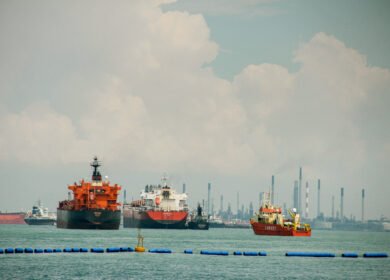
The IRGC reported coordinating between 25 and 35 transits per day in late May 2026 — a fraction of the approximately 95 vessels that transited daily before the crisis. Of the 1,550-plus vessels stranded in and around the strait at the peak of the blockade, only a trickle has been cleared each day. Argus Media tracked 27 vessels loaded with approximately 1.24 million tonnes of urea still floating in the Persian Gulf as of late May.
The practical effect for global fertilizer trade is a tiered access system based on geopolitics rather than commercial terms. Nations with closer diplomatic ties to Tehran — or willing to establish them — can move cargoes. Nations aligned with Washington face the most friction. As of May 26, the U.S. and Iran were reported to be converging on a 14-point memorandum of understanding that could formally end the conflict and reopen the strait within 30 days of signing. Until that deal is finalized and implemented, the IRGC permit system remains the only route out for the Persian Gulf’s stranded fertilizer fleet.
Source: Al Jazeera

Enjoyed this story?
Every Monday, our subscribers get their hands on a digest of the most trending agriculture news. You can join them too!





Discussion0 comments