

Organic nitrogen substitution reduces emissions without compromising wheat and maize yields, says recent study

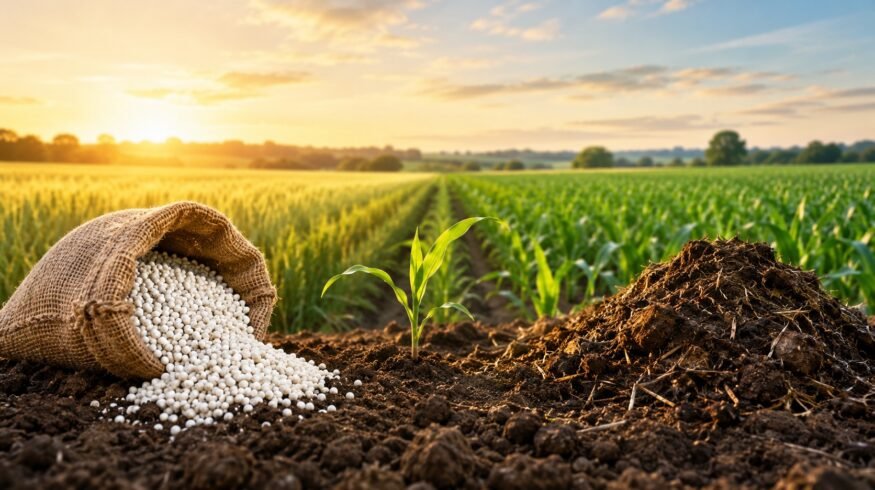

A study published in April 2026 examining winter wheat–summer maize rotations found that replacing up to 45% of synthetic nitrogen fertilizer with organic inputs maintains wheat and maize yields while reducing annual nitrous oxide emissions.
The research demonstrated that partial substitution of synthetic nitrogen with organic fertilizer improves soil quality, enhances nitrogen cycling, and increases nitrogen use efficiency compared to conventional full-rate synthetic fertilizer programs. The study also reported significantly lower annual emissions of nitrous oxide (N₂O), a greenhouse gas with a warming effect approximately 300 times greater than carbon dioxide over a 100-year period. Agriculture is estimated to contribute about 70% of anthropogenic N₂O emissions globally.
Researchers emphasized that the benefits depend on balancing synthetic and organic nutrient sources, rather than solely reducing fertilizer rates. Yields remained stable when synthetic nitrogen reductions were kept below the 45% threshold; however, crop productivity declined when substitution rates exceeded this level. “Reducing synthetic nitrogen by less than 45% while applying organic fertilizer can maintain productivity without increasing emissions,” Professor Siddique, who led the study, stated in the paper.
These findings are particularly relevant as growers contend with elevated fertilizer costs, with global urea prices remaining significantly above pre-conflict levels in key markets. The study contributes to ongoing efforts to optimize nitrogen management strategies that address both economic and environmental objectives. Additionally, it supports increasing commercial interest in organic nitrogen products such as manure, digestate, and compost-based fertilizers, which are gaining traction as alternatives to high-priced synthetic nitrogen inputs.
Source: Phys.org

Enjoyed this story?
Every Monday, our subscribers get their hands on a digest of the most trending agriculture news. You can join them too!






Discussion0 comments