

Scientists believe chloroplast genome editing enhances photosynthesis and plant growth

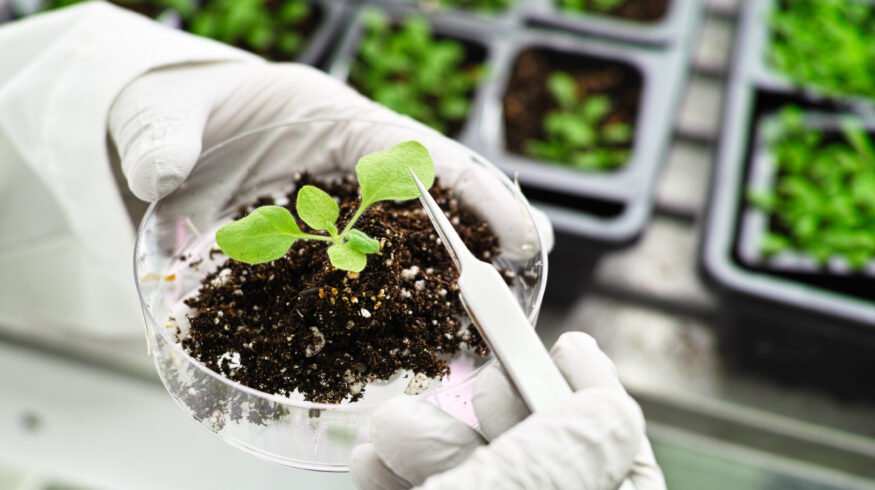

Scientists have developed a chloroplast genome editing technique that significantly improves photosynthesis and plant growth by introducing precise changes to the Rubisco enzyme, which is a key but relatively inefficient protein involved in plant carbon fixation. The research, published in Nature Communications, demonstrated that targeted edits increased photosynthetic performance, biomass production, and water-use efficiency in the model plant Arabidopsis thaliana. These findings highlight a potential pathway for developing more productive crops under future climate conditions.
By employing chloroplast base-editing technology, the researchers introduced single amino acid substitutions into the Rubisco large subunit without incorporating foreign DNA into the plant genome. Two specific mutations, M309I and D397N, enhanced the enzyme’s catalytic activity, allowing plants to assimilate more carbon under both current and projected elevated atmospheric carbon dioxide concentrations. The edited plants exhibited increased shoot and root size, expanded leaf area, and higher seed yields while maintaining normal Rubisco and chlorophyll content.
These findings address a longstanding challenge in plant biotechnology. Although Rubisco is central to photosynthesis, its relatively slow catalytic rate has limited crop productivity for decades. Previous attempts to redesign or replace the enzyme often disrupted its assembly or reduced plant growth. In contrast, this study demonstrates that small, targeted modifications to the existing Rubisco gene can enhance its performance while preserving normal plant development.
The researchers also observed that the modified plants achieved higher intrinsic water-use efficiency, as photosynthesis increased without necessitating greater stomatal opening. Cryo-electron microscopy revealed that the mutations altered the flexibility of regions surrounding Rubisco’s active site, offering new insights into how subtle structural changes can improve enzyme function.
The study authors note that the targeted amino acid positions are highly conserved across many agricultural crops, indicating that this approach could be broadly applicable beyond Arabidopsis. As atmospheric CO₂ concentrations continue to rise, Rubisco variants with faster catalytic rates may enable crops to maintain productivity while using water more efficiently under increasingly challenging growing conditions.
Because the chloroplast editing process does not leave foreign DNA in the final plants after breeding, the researchers suggest that this technology could circumvent certain regulatory barriers associated with conventional genetically modified crops in countries that recognize gene-edited, transgene-free plants under emerging non-GMO frameworks.
Source: Nature Communications

Enjoyed this story?
Every Monday, our subscribers get their hands on a digest of the most trending agriculture news. You can join them too!








Discussion0 comments