

Researchers witnessed how abandoned farmland became a wildflower meadow without seeding

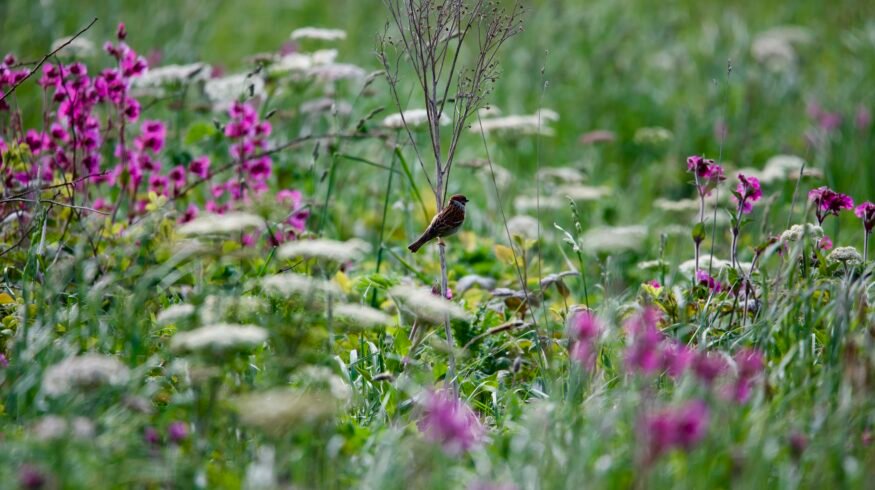

A former arable field in eastern England naturally developed into a species-rich wildflower meadow within 10 to 15 years without the use of commercial seed mixes, according to a study published in Restoration Ecology. Researchers from University College London monitored vegetation between 2011 and 2022 on a 2-hectare (5-acre) field in Norfolk that had been abandoned after its final crop in 2005 and managed only through traditional annual hay cutting.
The study found that plant diversity steadily increased throughout the monitoring period, with the average number of species recorded in individual survey plots doubling from about 10 in 2011 to nearly 20 by 2022. Researchers documented the arrival of several locally rare species, including southern marsh orchid, greater tussock-sedge, yellow rattle, and common centaury, while orchid populations eventually became too numerous to count. The findings suggest that natural regeneration can produce genetically diverse, locally adapted wildflower meadows while avoiding the costs and labor associated with sowing commercial seed mixtures.
The researchers said the results challenge the widespread practice of restoring species-rich grasslands through seeding, an approach commonly supported by government conservation programs. With more than 90% of the UK’s wildflower meadows lost since World War II and large areas of abandoned farmland targeted for ecological restoration across the UK and Europe, the study suggests that allowing natural recovery—supported by consistent hay management—could provide a scalable and cost-effective strategy for rebuilding biodiversity, improving pollinator habitat, and enhancing ecosystem resilience.
Source: Phys.org

Enjoyed this story?
Every Monday, our subscribers get their hands on a digest of the most trending agriculture news. You can join them too!






Discussion0 comments