

Ranchbot brings satellite water monitoring to California’s drought-stressed farms


California’s agricultural economy depends on moving large volumes of water across long distances and applying it precisely when crops need it. The state’s farmers irrigate more than 9 million acres with roughly 34 million acre-feet of water in an average year, according to the California Department of Water Resources. As hotter conditions, reduced snowpack and more volatile precipitation make supplies less predictable, preventing avoidable losses is becoming nearly as important as securing the water itself.
Ranchbot, a company best known for monitoring water systems on cattle ranches, is positioning its satellite-connected technology for a broader role in California agriculture. Its existing equipment can monitor wells, reservoirs, storage tanks, pumps, flow rates, line pressure and liquid fertilizer inventories without relying on cellular or Wi-Fi coverage.
Ryan Nelson, Ranchbot’s National Head of Direct Sales, said the technology could give crop producers a quantified view of water moving through remote parts of their operations while reducing the time employees spend driving between pumps, tanks and irrigation infrastructure.
“You can’t manage what you can’t measure,” Nelson said in an interview with Fertilizer Daily. “We’re allowing these producers to measure water usage and make management decisions based upon that quantified data.”
From cattle country to California crop fields
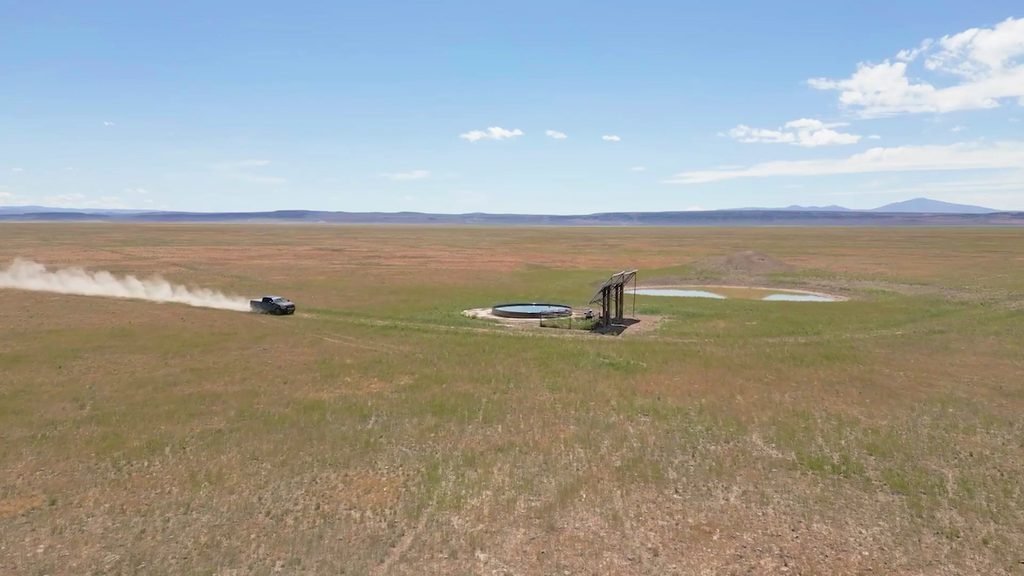
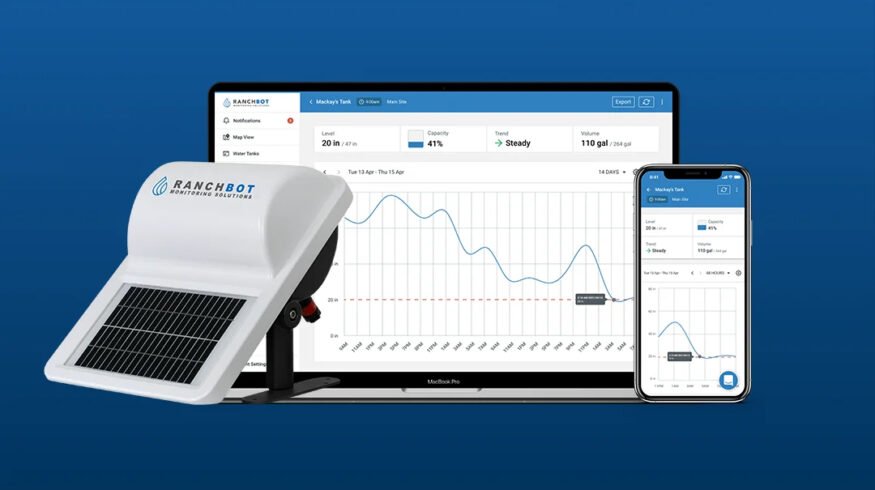
Ranchbot’s core system consists of field sensors connected to a central monitor that transmits information by satellite to the MyRanchbot platform. Farmers can view assets on a map, establish custom thresholds, receive text or email alerts and give access to multiple employees or managers.
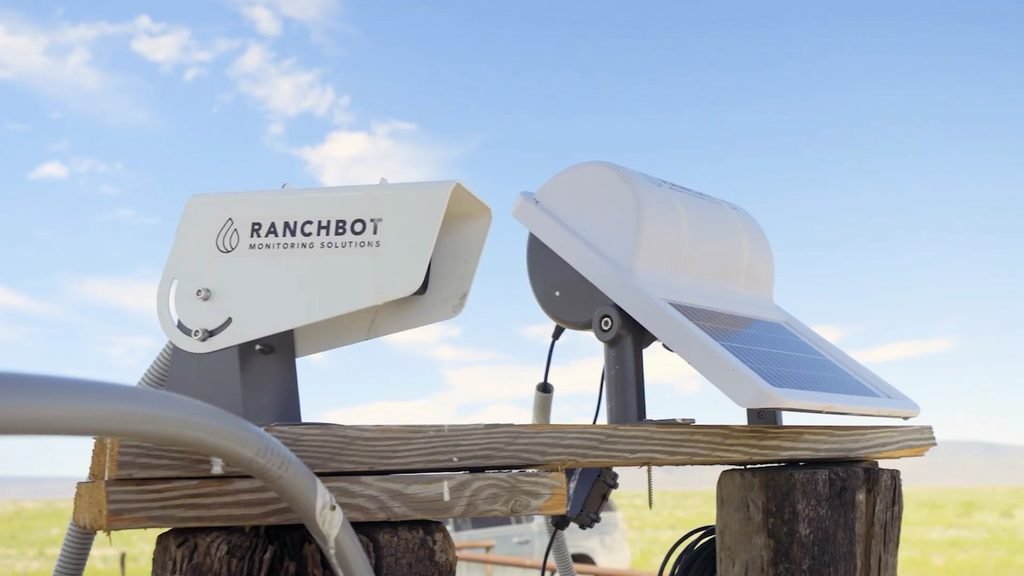
The company says its primary Ranchbot monitor is solar-powered, maintains continuous satellite connectivity and can connect with as many as five wired and 10 wireless sensors. A smaller battery-powered version is designed for standalone installations and can operate for as long as four years, according to Ranchbot’s website. The company says more than 12,000 ranchers use its technology, though its customer base remains concentrated in livestock operations.
For California crop farms, the satellite connection may be one of the system’s more important attributes. Wells, reservoirs and pumping stations are frequently located outside reliable communications coverage, particularly on large properties or in foothill and rangeland areas.
“If it can see the sky, it’ll work,” Nelson said. “It doesn’t need cell service, and it doesn’t need Wi-Fi.”
The technology does not determine how much water a crop requires or replace an irrigation agronomist. Instead, it adds visibility to the infrastructure that stores and distributes water. For growers, that distinction makes Ranchbot primarily an operational monitoring system rather than a complete irrigation-management platform.
Measuring groundwater under SGMA
One of Ranchbot’s most relevant applications in California is well monitoring. A sensor lowered into a well can track water levels, drawdown during pumping and subsequent recharge, with the readings recorded on the company’s platform.
That information could become increasingly valuable as California implements the Sustainable Groundwater Management Act. SGMA requires local groundwater sustainability agencies in high- and medium-priority basins to implement plans intended to prevent chronic overdraft and other undesirable effects within 20 years. The state has emphasized that accessible monitoring data is necessary for agencies and water users to make informed management decisions.
Nelson said Ranchbot already has customers outside the livestock sector using well monitors to support groundwater management and reporting. Historical readings can help a grower understand how quickly a well declines under pumping, how it responds after irrigation stops and whether its performance is changing from one season to another.
The records should not be treated as automatic proof of regulatory compliance. Measurement specifications and reporting obligations differ among groundwater agencies, water-right permits and individual basins. However, a continuous history of well behavior can provide farmers with information that periodic manual measurements may miss.
Ranchbot also monitors ponds and reservoirs, allowing users to compare water levels over several months or years. California’s Senate Bill 88 requires people diverting at least 10 acre-feet of water annually under certain permits or licenses to measure diversions, maintain records and report them to the State Water Resources Control Board. A reservoir-level sensor may support broader record-keeping, though growers must still ensure their equipment and reporting methods comply with applicable regulations.
Catching leaks before the water disappears
The immediate economic case for remote monitoring may be simpler than regulatory reporting: a broken pipe or malfunctioning pump can release thousands of gallons before an employee reaches the site.
Ranchbot’s flow sensors report gallons per minute and aggregate water use, while allowing customers to set high- and low-flow alerts. Its pressure sensors track changes in a line and can warn of conditions that may indicate pump trouble, a blockage, a damaged pipe or an impending infrastructure failure.
Nelson described a hypothetical 10,000-gallon tank that begins falling rapidly after a pipe breaks. An early alert might allow the operator to close a valve after losing 1,000 gallons rather than discovering an empty tank later.
“That’s less groundwater pumping and less waste,” he said. “We want that water to go directly onto the crop. We don’t want to dump it on the ground unnecessarily.”
Pump control adds an automated response. The system can start a pump when a connected tank reaches a customer-defined low level and stop it after the tank reaches its upper threshold. Ranchbot says its controller works with diesel, solar and grid-powered pumps and sends alerts when a pump starts, stops or reports an error.
That arrangement can prevent a common form of waste: an operator setting a pump to run for an estimated period, only for the tank to fill sooner and overflow. It may also reduce electricity or fuel consumption and limit unnecessary wear on pumps.
Ranchbot has not completed a controlled study quantifying the percentage of water saved on crop farms, Nelson said. The company’s website states that, according to its customer survey, Ranchbot solutions reduced the average time spent checking water by more than 50%.
Extending monitoring to fertilizer tanks
Ranchbot’s liquid-level technology also has a potential role in fertigation and fertilizer logistics.
Sensors can monitor the volume held in liquid fertilizer tanks and alert users when inventory approaches a low threshold. That can help farms schedule replenishment before a tank runs empty while avoiding unnecessary delivery trips to locations where sufficient product remains.
Farmers can also establish an acceptable rate of inventory decline. A faster-than-expected drop may indicate excessive application, a leak or another operational problem, while slower movement could suggest that fertilizer is not entering the irrigation system as planned.
“If it gets outside that acceptable range, you’re going to get alerted so that you know you’re either using too much fertilizer or not enough,” Nelson said.
The system currently measures quantity rather than nutrient concentration or water chemistry. It cannot determine the nitrogen content of a solution, assess salinity or measure calcium, magnesium, sodium, chloride, alkalinity and other parameters that influence fertilizer performance.
“We are 100% analyzing quantity, not quality,” Nelson said. “We’ve had customers say they want to be able to test water quality, but we’re not there yet.”
That limitation means the technology can identify an abnormal change in fertilizer volume but cannot confirm whether a fertigation mixture has the correct composition. Laboratory analysis and dedicated water-quality sensors would still be required for nutrient-management decisions.
Local weather data for a more volatile climate
Ranchbot has also integrated a Davis Instruments weather station into its satellite network. The station measures rainfall, temperature, humidity, dew point, wind speed and direction, barometric pressure and delta T, sending hourly readings to the same dashboard used for water monitoring.
For growers, field-level weather information can provide a more accurate picture than a regional forecast or a rain gauge located several miles away. Rainfall can vary substantially within a farming area, while wind, humidity and temperature influence irrigation timing, crop water demand and spraying conditions.
Nelson said farmers are increasingly dealing with what he described as “wetter wets and drier dries,” including periods when meaningful rainfall is followed by several dry weeks during what would normally be the rainy season.
Ranchbot cannot alter those patterns, but it can combine local weather readings with information about stored water, flow and infrastructure performance. California water officials expect climate change to produce greater weather extremes, reduced snowpack and more precipitation falling as rain rather than snow, creating additional challenges for supply reliability.
Reducing the labor cost of checking water
The system’s value is not limited to the water itself. Manual inspection requires labor, fuel and vehicle time, often without producing a problem that needs fixing.
Nelson said some Ranchbot customers previously spent between an hour and half a day making routine rounds. With remote monitoring, they can review the operation over coffee, identify which assets require attention and send employees directly to a leak, pump failure or low tank.
“They can spend five minutes making sure everything is okay and then attack the real to-do list,” he said. “We’re helping them become more efficient with both their water use and their time.”
For California growers, those savings may be particularly relevant where wells and pumping stations are spread across multiple parcels. Fewer inspection trips can reduce fuel consumption and allow irrigation employees to focus on maintenance and crop management rather than routine observation.
However, monitoring alone does not reduce crop evapotranspiration or change the biological water requirement of an orchard, vineyard or vegetable field. The amount ultimately saved will depend on the farm’s existing infrastructure, the frequency of leaks and overflows, and whether managers act on the information provided.
Ranchbot keeps evolving with its clients
Ranchbot is also developing remote valve control, which would allow a farmer to open or close a valve from a phone rather than traveling to the site. Nelson said Ranchbot is examining additional farm-security and camera products but declined to provide details.
Integration remains another area for development. Ranchbot currently connects with the livestock-management platforms AgriWebb and CattleMax, allowing water-monitor data to appear within those systems. The company may be working on equivalent integrations with crop-focused farm management platforms as a logical next step.
California’s water scarcity cannot be solved by sensors alone. Long-term resilience will also depend on groundwater recharge, innovative desalination efforts, delivery infrastructure, crop selection, irrigation design and difficult decisions about how limited supplies are allocated. But as each acre-foot becomes more valuable and more closely documented, the ability to identify where water is stored, where it is moving and where it is being lost could give farmers a practical first line of defense.

Enjoyed this story?
Every Monday, our subscribers get their hands on a digest of the most trending agriculture news. You can join them too!





Discussion0 comments