

New fungicide chemistry targets 99% control as critical Mancozeb faces bans

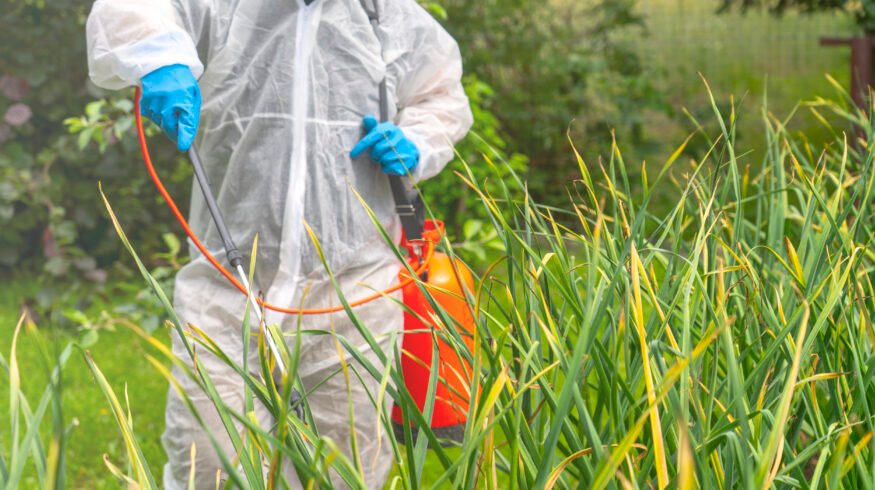

New fungicide chemistry from Ichor Ag can deliver 99% disease control at half the Mancozeb load, the company says, a claim aimed squarely at the regulatory squeeze closing around the crop protection industry’s most durable resistance-management tool.
Mancozeb has anchored fungicide resistance management for sixty years. The European Union has already banned it, and the U.S. Environmental Protection Agency has proposed banning it for specific uses in grapes and potatoes. Ichor noted in a recent paper that even where registrations survive, environmental and public perception pressures are pushing a narrative that legacy chemistries should be phased out.
The problem for growers is what replaces it. Mancozeb’s value is its multisite mode of action, disrupting several metabolic pathways in a pathogen at once, which makes resistance far harder to develop. Strip that out and growers fall back on single-site fungicides that resistance defeats faster and that must be applied more often, raising cost and environmental load in the same move.
How the new fungicide chemistry works
Ichor’s platform rests on photodynamically active xanthene chemistry, roughly a decade in development. Applied to the plant, the compound absorbs light and generates highly reactive oxygen species, and it is the reactive oxygen that does the damage to the pathogen.
“You get leaky membranes in the fungi, and that’s what ultimately causes death,” said Jeff Barnes, vice president of research and development at Ichor, who added that the compound attacks other targets inside the fungal cell as well, which is why the company calls it a multisite inhibitor.
That is the crux of the pitch. Ichor is not selling a Mancozeb substitute. It is selling a mixture partner. Barnes says the compound can stand alone but that its value sits in a mixture, both because most modern fungicides are sold in mixtures to protect actives from resistance, and because adding the Ichor compound makes the other ingredients more effective and cuts the total chemical volume needed per application.
Chief executive Matt Crisp frames it as a portfolio play rather than a product launch, pointing to patent extendability, brand extendability and improved efficiency as the value propositions for an incumbent. Barnes describes the goal as taking existing compounds, lifting their activity, improving control of resistant fungi, extending the commercial life of other fungicide products and generating new intellectual property along the way.
Why investors see an exit
The timing argument is straightforward. The fungicide pipeline is thin, resistance is spreading and regulators are tightening. Novel modes of action are scarce, and agribusiness consultant Garth Hodges notes that new disease-control chemistries are hard to discover in the first place. Hodges said Ichor’s field results and product attributes moved the opportunity from interesting to strategically important, and that the platform looked capable of drawing competitive industry interest earlier than usual.
Alison Sunstrum, managing partner of NYA Ventures and an Ichor investor, said that if the platform validates through continued development it could be strategically relevant to virtually every major crop protection company, given the industry’s need for novel fungicide modes of action and resistance-management tools.
Collin Philip, chief executive of fellow investor Verdex Capital, was more specific about the destination, describing a logical path in which a Bayer or a Corteva takes the technology on through licensing or acquisition. He argued the company has solved the supply chain gap where many startups stumble, because the value runs through the chain rather than stopping at the farmer.
A deliberately small capital base
Crisp makes a point of the capital efficiency, saying Ichor does not need to raise $20 million to $30 million to get a shot on goal. His framing is a monetization event with venture-style returns that does not require a billion-dollar outcome, achieved by being deliberate about milestones and asking hard questions early.
That is a pointed contrast with the crop protection R&D cost curve. Fertilizer Daily reported in May that crop protection R&D costs had climbed to $307 million per product as regulatory burden lengthened development timelines, the economics that make a mixture-partner strategy attractive to an incumbent looking to defend an existing registration rather than fund a new one.
What to watch
Ichor has active trials in the United States and Canada and is planning experimental use permit trials in Brazil in soybeans, the largest single fungicide market in the world by treated area. The company has tested the chemistry on 16 crops so far and has one lead product in active research, with Barnes describing the platform as capable of supporting more.
The claim to interrogate is the 99% figure at half the Mancozeb load. It is a company statement, not a peer-reviewed or regulator-verified result, and photodynamic chemistry depends on light, which raises questions about performance under canopy, at depth and in low-light conditions that the company has not publicly addressed. The Brazilian soybean trials are the next real test.
Source: AgFunderNews

Enjoyed this story?
Every Monday, our subscribers get their hands on a digest of the most trending agriculture news. You can join them too!







Discussion0 comments