

U.S. farmers turn to wind royalties and other side income as farm economics tighten

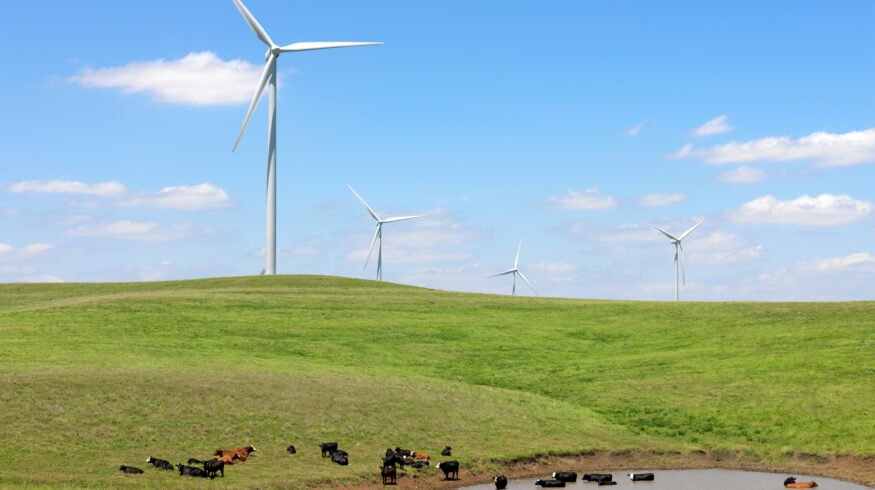

U.S. farmers and ranchers are increasingly looking beyond crops and livestock for additional sources of income as volatile commodity markets, higher input costs and weather risks make agricultural revenues less predictable. A West Texas rancher’s experience illustrates how renewable-energy leases can provide a steady stream of cash while allowing farming and ranching operations to continue.
John E. Davis, a fifth-generation rancher who owns a family property near the Concho County-Menard County line with his brother, initially rejected proposals to install wind turbines on the ranch. The brothers eventually agreed to host seven turbines as part of the 148-MW Cactus Flats wind project developed by RES. The turbines were installed in 2018 and began generating payments for the family in 2019.
A predictable income stream
Davis said the wind royalties have become a critical source of cash flow as the ranch faces fluctuations in livestock prices, drought and rising feed expenses. The lease includes minimum royalty payments that are adjusted upward every five years, giving the ranch a more predictable revenue stream than livestock sales.
The payments help cover workers, animal feed, fencing, water equipment and repairs. Davis continues to operate the ranch, which includes about 200 nanny goats, 200 Dorper ewes and roughly 30 cows, alongside Wagyu cattle and other livestock.
The arrangement highlights a broader challenge facing U.S. agriculture: land can remain productive while generating income from activities outside traditional farming. For landowners, energy leases can effectively diversify revenues without requiring them to abandon agricultural production.
From turbines to rural development
The additional income has also given Davis room to invest in a separate community project in Menard, Texas. He converted a two-acre former Exxon property into the Menard station, combining an EV charging station with livestock, a farm stand, a music stage and a book exchange. The project is also being developed to include a beer garden and Wagyu beef products.
Davis said the wind development has provided other practical benefits. Roads built for the turbines significantly reduced travel time across the property, from about 25 minutes to roughly three and a half minutes, according to the report.
For Davis, the experience has ultimately become less about wind energy itself than about maintaining the economic viability of a family ranch. He argues that landowners should be free to decide whether wind, solar or other infrastructure can generate additional income from their property.
The strategy reflects a growing reality for agricultural landowners: in an increasingly uncertain farm economy, revenue diversification can be as important as production itself. Leasing land for energy infrastructure, agritourism, direct-to-consumer sales, farm stands and other nontraditional activities can provide cash flow that helps farms and ranches absorb volatility in their core businesses.
Source: The Times of India

Enjoyed this story?
Every Monday, our subscribers get their hands on a digest of the most trending agriculture news. You can join them too!




Discussion0 comments