Skip to content
  • Professionals
  • Gardeners
 
Search
Log in
EN
RU
  • Trade & Policy
  • Markets
  • AgTech & Research
  • Corporate
  • Sustainability
  • Interviews
  • Rankings
  • Events
  • Stock Quotes
  • Business Directory
Trending topic:

sulfur

Featured company:
 
RU
  • Professionals
  • Gardeners
Sections
    Events
    Stock Quotes
    Business Directory
    Trending topic:

    sulfur

    Featured company:
    Follow us...
    Helpful information
    • About
    • Team
    • Advertise
    • Contacts
    • Submit a Tip
    • Privacy Policy
    • Terms of Service
    • Site Map
    Sections
      Seasonal tips
      • Spring
      • Summer
      • Autumn
      • Winter
      Trending topics
      • compost
        26
      • garlic
        2
      • lemon
        1
      • potato
        16
      Follow us...
      Helpful information
      • About
      • Team
      • Advertise
      • Contacts
      • Submit a Tip
      • Privacy Policy
      • Terms of Service
      • Site Map
      Copyright © 2014-2026 DigitalTree LLC. All rights reserved.
      We deliver content lightning-fast thanks to the managed cloud WordPress hosting with CDN.
      16+

      Home / AgTech & Research

      Soil microbiome predators boost plant biomass 53% and may cut nitrogen fertilizer need, study finds

      Timothy Bueno avatar Timothy Bueno
      September 10, 2026, 1:00 pm
      September 10, 2026, 1:00 pm
      [esi post-views ttl=0]
      AgTech & Research
      Regenerative Agriculture
      Sustainability
      Soil microbiome predators boost plant biomass 53% and may cut nitrogen fertilizer need, study finds

      Image Credits: iStock Photo
      Save for later
      Share
      Never miss important fertilizer news

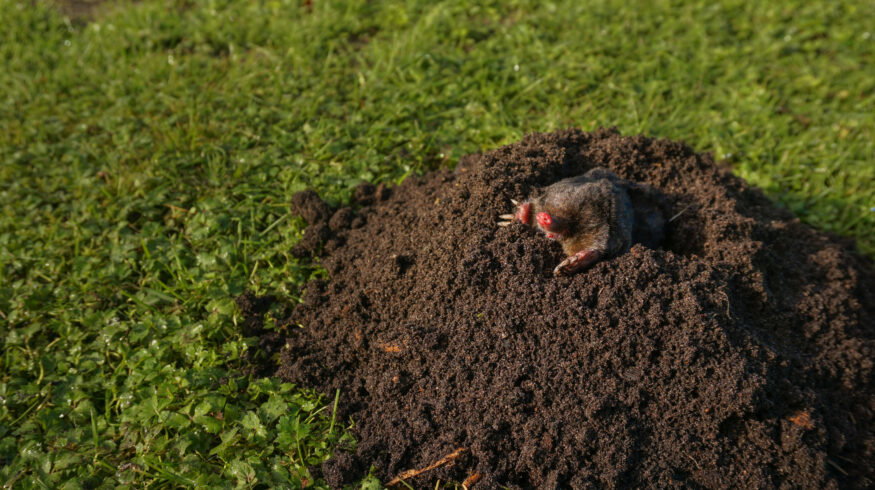
      A new study published in Global Change Biology found that adding soil microbiome predators — protists and nematodes — to agricultural soil boosted plant biomass by 53%, outperforming the effect of added synthetic nitrogen fertilizer. The findings suggest that managing the soil food web could reduce crop dependence on conventional nitrogen inputs while maintaining or improving yields.

      How soil predators outperformed nitrogen fertilizer

      The researchers conducted controlled greenhouse experiments using cannabis (hemp) as the test crop. Plants received one of four treatments: a control with no additions, synthetic nitrogen fertilizer alone, soil microbiome predators (protists and nematodes) alone, or a combination of fertilizer and predators. The predator-only treatment produced a 53% increase in aboveground biomass compared to the unfertilized control — a larger gain than nitrogen fertilizer alone delivered.

      The mechanism, according to the study’s authors, centers on the “microbial loop” in the rhizosphere. Protists and nematodes feed on soil bacteria, releasing nitrogen locked in bacterial biomass back into plant-available forms. This grazing pressure also reshapes the composition of the bacterial community, favoring species that promote plant growth and nutrient cycling. The result is a more efficient transfer of nitrogen from soil organic matter to the plant.

      Implications for nitrogen fertilizer reduction

      The study’s authors noted that their findings support a growing body of soil microbiome research showing that biological soil management can partially substitute for synthetic fertilizer inputs. If the results hold at field scale, deliberately introducing or encouraging predator populations could allow farmers to cut nitrogen application rates without sacrificing productivity.

      ADVERTISEMENT

      This aligns with the broader industry shift toward biological soil amendments. Switch Bioworks recently launched U.S. field trials for engineered nitrogen-fixing microbes in corn, and companies like Pivot Bio have commercialized microbial nitrogen products targeting the same goal — reducing synthetic fertilizer use through biological pathways.

      A food web approach to crop nutrition

      Unlike engineered microbes or biological nitrogen fixers, the predator-based approach works with existing soil ecology rather than introducing new organisms. Protists and nematodes are natural components of healthy soils that are often depleted by intensive tillage, fumigation, and heavy fertilizer use. The study suggests that restoring these populations — through reduced tillage, organic matter additions, or targeted inoculation — could unlock nitrogen already present in the soil’s microbial biomass.

      The research was conducted using a single crop species in greenhouse conditions, and the authors cautioned that field validation across multiple crops, soil types, and climatic zones is needed before the results can be translated into commercial recommendations. Scaling from greenhouse pots to farm fields introduces variables — including existing soil predator populations, tillage regimes, and chemical inputs — that could affect the magnitude of the biomass response.

      For the fertilizer industry, the study adds to evidence that the soil microbiome represents both a competitive threat and a commercial opportunity. Companies that can develop products enhancing beneficial soil food web interactions — rather than simply replacing synthetic nitrogen molecule-for-molecule — may find a differentiated market position as regulators and farmers increasingly prioritize soil health.

      Source: Global Change Biology / PMC

      0
      agricultural research
      biofertilizer
      crop nutrition
      nitrogen
      nitrogen fertilizer
      research
      Science
      soil health
      study
      sustainability

      Enjoyed this story?

      Every Monday, our subscribers get their hands on a digest of the most trending agriculture news. You can join them too!


      Sign me up
      Check the example

      Discussion0 comments

      Спасибо за комментарий, он будет опубликован на сайте после проверки модератором. Хотите, чтобы ваши комментарии появлялись на сайте мгновенно? Достаточно пройти регистрацию.
      Congratulations, you can be the first to start the conversation.
      Do you have a question or suggestion? Please leave your comment to ignite conversation.
      What’s on your mind?
      Cancel Log in and comment
      Or continue without registration
      Get notified about new comments by email.
      Advertisement
      In focus
      How to get here?
      Stock quotes
      Bayer
      14.29
      0.07
      Bayer Crop Science
      49.41
      1.44
      CF Industries
      134.33
      0.73
      Corteva Agriscience
      84.75
      1.34
      ICL Group
      5.86
      0.17
      Intrepid Potash
      41.54
      2.54
      Mosaic
      26.53
      2.63
      Nutrien
      80.68
      1.52
      Yara International
      25.64
      1.1
      See all
      Most read
      Sulfur shortage threatens global phosphate supply as Hormuz blockade and Russia ban cut 2 of 3 top sources
      Sulfur shortage threatens global phosphate supply as Hormuz blockade and Russia ban cut 2 of 3 top sources
      Nutrien weighs phosphate future as sulfur costs push Q2 margins negative
      Nutrien weighs phosphate future as sulfur costs push Q2 margins negative
      USDA fertilizer investigation nears completion as farm groups push for pricing transparency
      USDA fertilizer investigation nears completion as farm groups push for pricing transparency
      Urea price decline accelerates to $386/t as China quota releases and Hormuz talks ease supply fears
      Urea price decline accelerates to $386/t as China quota releases and Hormuz talks ease supply fears
      Sabic and Maaden sign 3-year fertilizer MoU as Sabic plans 2.6 million metric tons of new urea capacity
      Sabic and Maaden sign 3-year fertilizer MoU as Sabic plans 2.6 million metric tons of new urea capacity
      Events
      Fertilizer Canada Annual Conference
      Charlottetown, Canada
      Sep 14 — 16, 2026
      Argus Methanol & Ammonia Conference
      Houston (TX), USA
      Sep 21 — 23, 2026
      Argus Fertilizer Europe
      Prague, Czechia
      Oct 20 — 22, 2026
      CEAg World Conference and Expo
      Charlotte–Concord (NC), USA
      Nov 10 — 11, 2026
      BioAg Congress
      Anaheim (CA), USA
      Nov 11 — 12, 2026
      See all
      Live
      Trader
      July 29, 06:28 pm
      100 percent AI generated, from a company with a 100 percent AI generated website. I’m sure they have good data, but it’s hard to take it seriously wen it’s just AI church
      Green ammonia is easier to make than to sell
      Stefan Petko
      May 6, 06:48 pm
      It is alarming to see these developments in California. As a vineyard grower, I have faced significant challenges this year, with fertilizer costs rising sharply while market conditions have made it difficult to sell the harvest.
      California peach growers forced to remove 420,000 trees after bankruptcy of Del Monte Foods canneries
      Estebel
      April 23, 10:26 pm
      Sounds like magic ))
      MIT study: rice seeds germinate faster when exposed to rainfall sounds
      Isabelita Barreiro
      December 11, 2025, 01:54 am
      Excellent management of water resources and effective use of water-soluble fertilizers!
      Argentine nano-fertilizer firm AKO Agro expands to Brazil
      Meripa Corson
      August 4, 2025, 01:18 pm
      Where does the money actually go? As a timber land owner, how do I benefit from the legislation?
      USDA commits $80 million to expand timber markets and improve forest resilience
      About
      Sections
      Trade & Policy  ·  Markets  ·  AgTech & Research  ·  Corporate  ·  Sustainability  ·  Interviews  ·  Rankings
      Support
      About  ·  Team  ·  Advertise  ·  Contacts  ·  Submit a Tip  ·  Privacy Policy  ·  Terms of Service  ·  Site Map
      Copyright © 2014-2026 DigitalTree LLC. All rights reserved.
      We deliver content lightning-fast thanks to the managed cloud WordPress hosting with CDN.
      16+
      More to read
      New framework links plant microbe breeding to lower fertilizer dependence across major crops
      New framework links plant microbe breeding to lower fertilizer dependence across major crops
      Regenerative agriculture deserves system-wide deployment, scientists argue
      Regenerative agriculture deserves system-wide deployment, scientists argue
      Human urine and fecal compost replace mineral fertilizer in kohlrabi trial
      Human urine and fecal compost replace mineral fertilizer in kohlrabi trial
      Advertising that helps us do quality reporting