

Nebraska’s $1B Fertilizer Complex Advances With 365,000 Tons of UAN Capacity

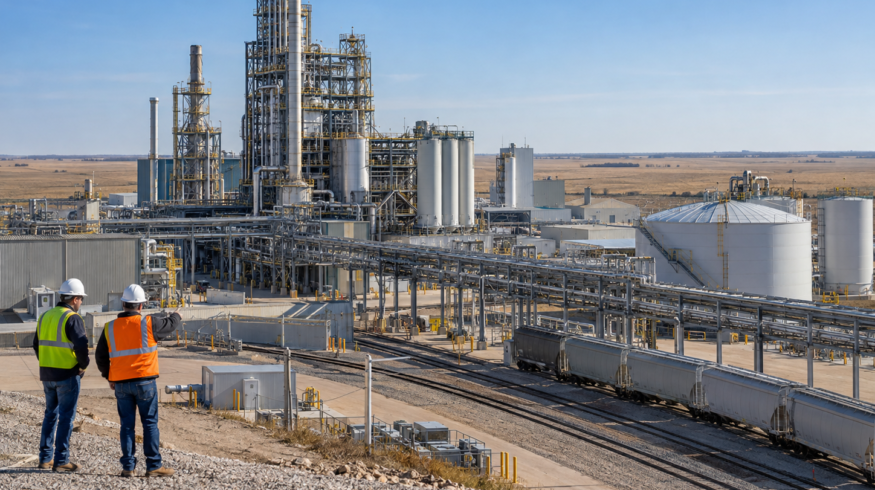

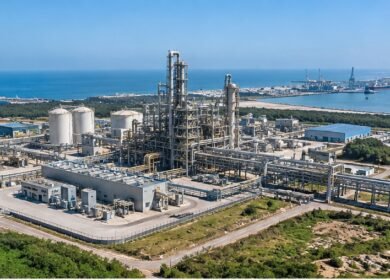
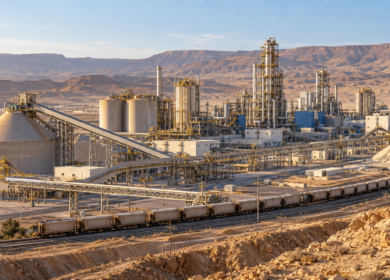
Project Meadowlark, a more than $1 billion integrated fertilizer complex planned for Gothenburg, Nebraska, has been added to the U.S. federal FAST-41 Transparency Dashboard, giving the project a new permitting milestone as it targets commercial operation in 2029.
The Federal Permitting Improvement Steering Council announced the designation on October 1, making Meadowlark the first manufacturing project added to the FAST-41 Transparency Dashboard. The U.S. Department of Energy is the project’s lead federal permitting agency.
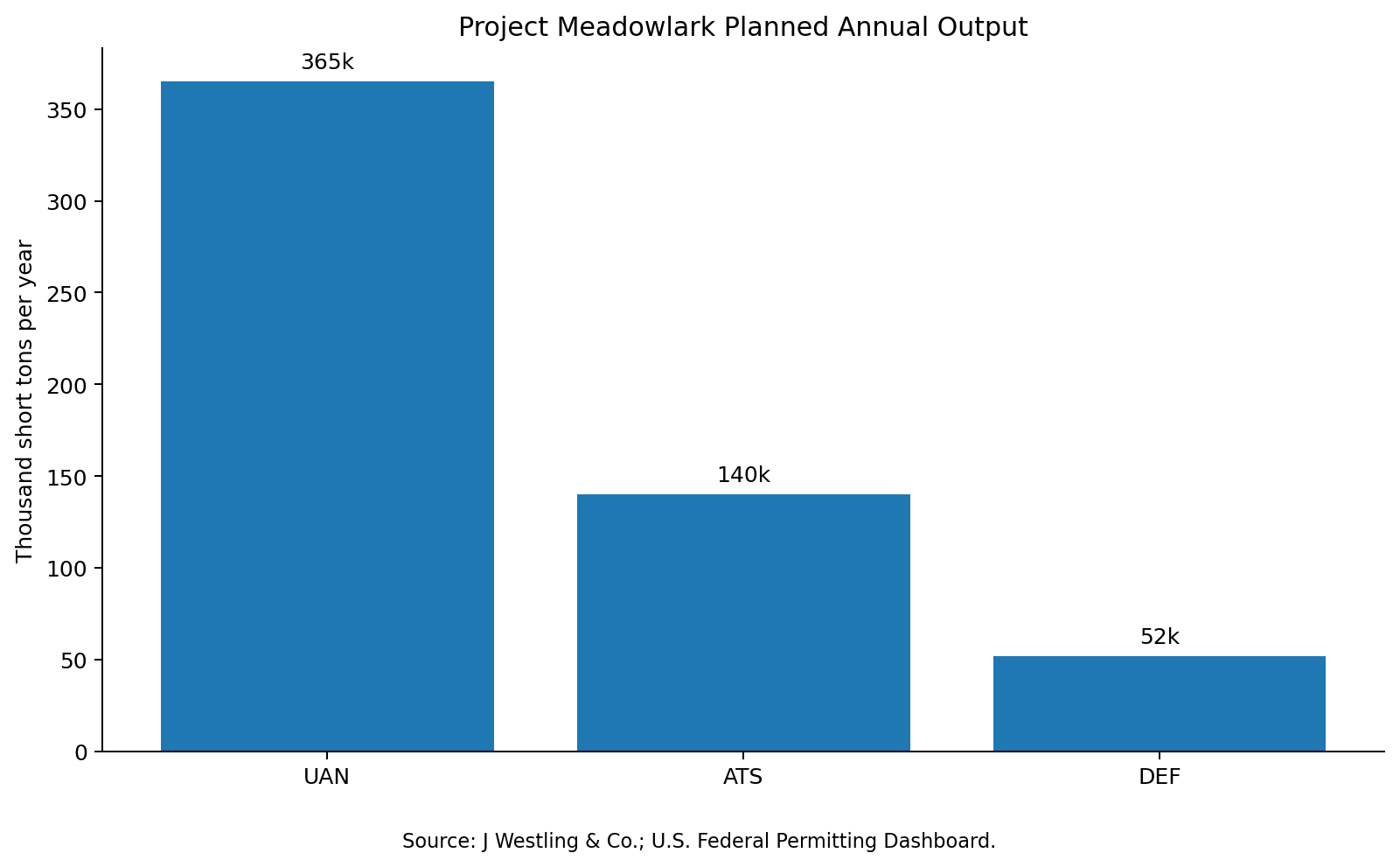
Once operational, the complex is designed to produce approximately 365,000 short tons per year of urea ammonium nitrate (UAN), 140,000 short tons per year of ammonium thiosulfate (ATS) and 52,000 short tons per year of diesel exhaust fluid (DEF). All ammonia produced on site will be converted into downstream products rather than sold into the merchant ammonia market.
Project Meadowlark enters the FAST-41 Transparency Dashboard
The Permitting Council added Project Meadowlark to the FAST-41 Transparency Dashboard on October 1, alongside the Taylor Shellfish Project in Washington.
Until now, the Council’s transparency authority had been used only for mining projects. Meadowlark is the first manufacturing project to be posted under that authority.
The project is not yet listed as a fully covered FAST-41 project. Instead, it has been posted under the Council’s transparency authority, which allows the federal permitting process to be tracked publicly on the dashboard.
The federal project page currently lists the environmental review and permitting status as planned and says a permitting timetable will be posted on or before October 14, 2026.
| Project Meadowlark | Current plan |
|---|---|
| Location | Gothenburg, Nebraska |
| Total investment | More than $1 billion |
| UAN capacity | 365,000 short tons/year |
| ATS capacity | 140,000 short tons/year |
| DEF capacity | 52,000 short tons/year |
| Intermediate ammonia output | About 500 short tons/day |
| Civil work | Targeted for 2027 |
| Commercial operation | 2029 |
365,000 tons of UAN would target the Western Corn Belt
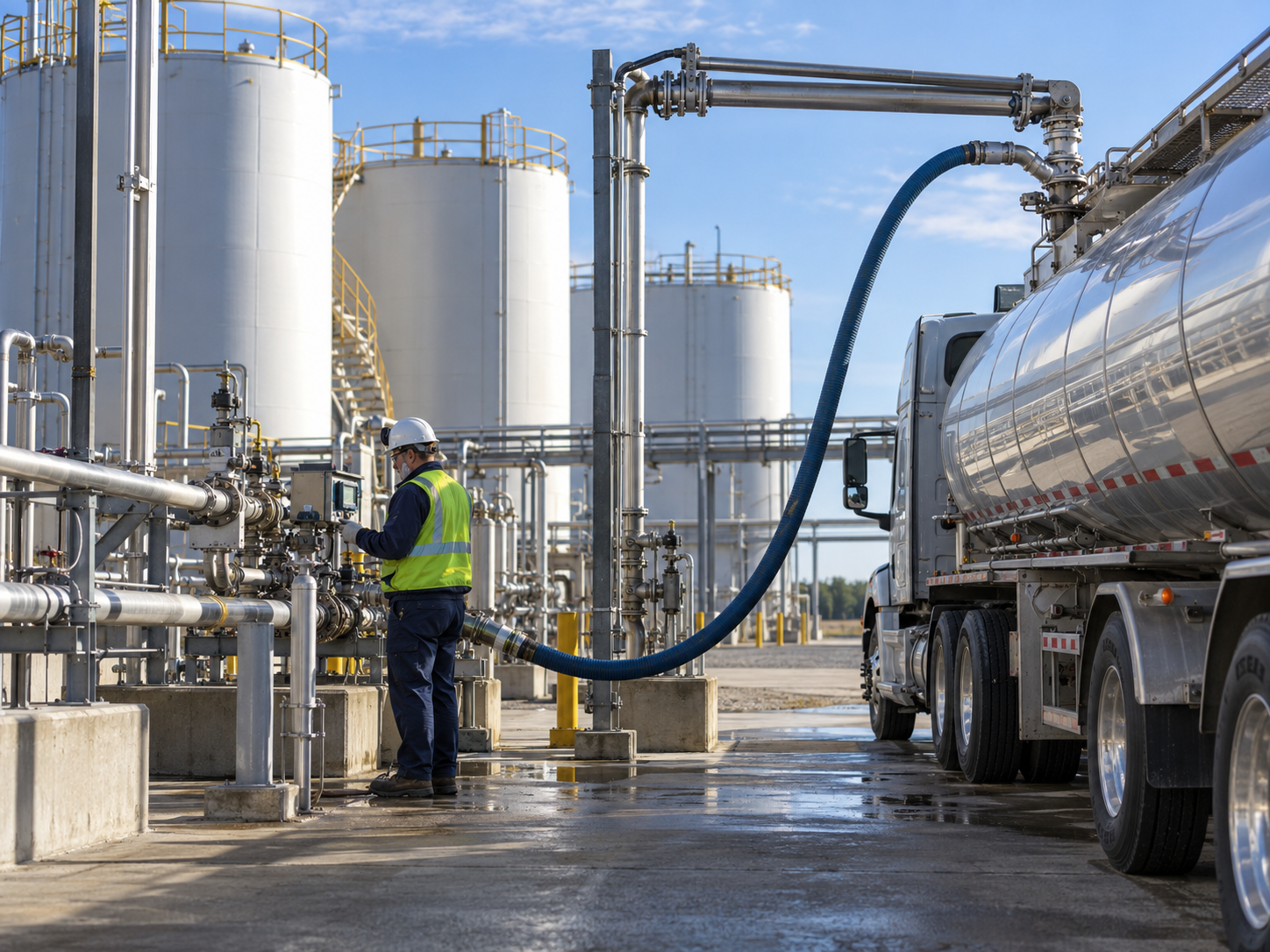
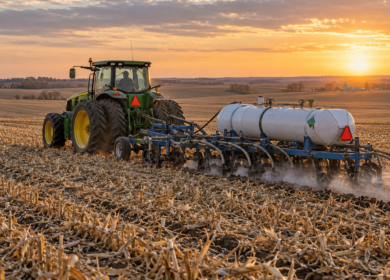
The largest finished-product stream at Meadowlark will be UAN, a liquid nitrogen fertilizer widely used across corn-producing regions of the Midwest.
The project developer, J Westling & Co., says Nebraska’s nitrogen-fertilizer demand exceeds local production, forcing much of the region’s liquid fertilizer or its components to travel long distances before reaching growers.
The project is designed around that regional supply gap rather than the export-oriented model used by many large ammonia projects on the U.S. Gulf Coast.
UAN and ATS together would represent approximately 505,000 short tons per year of liquid fertilizer output. DEF adds another 52,000 tons of industrial product used in diesel emissions-control systems.
This regional focus is particularly relevant in Nebraska because corn remains the state’s dominant crop. USDA’s 2026 state overview shows approximately 10.1 million acres of corn planted, with 9.61 million acres harvested for grain.
All ammonia will be converted on site
Project Meadowlark is designed to produce approximately 500 short tons per day of ammonia as an intermediate feedstock.
According to testimony submitted to the U.S. Senate Agriculture Committee earlier this year, none of that ammonia is intended for merchant sale. Instead, every pound would be converted on site into UAN, ATS or DEF.
This is an important distinction from large merchant-ammonia plants, where ammonia itself is the primary traded product.
J Westling argues that the downstream integration improves the economics of serving a regional agricultural market by producing the fertilizer forms that local growers actually use.
Fertilizer Daily previously reported that Meadowlark will use Topsoe’s SynCOR Ammonia technology for its low-carbon ammonia unit.
The plant is designed around low-carbon ammonia production
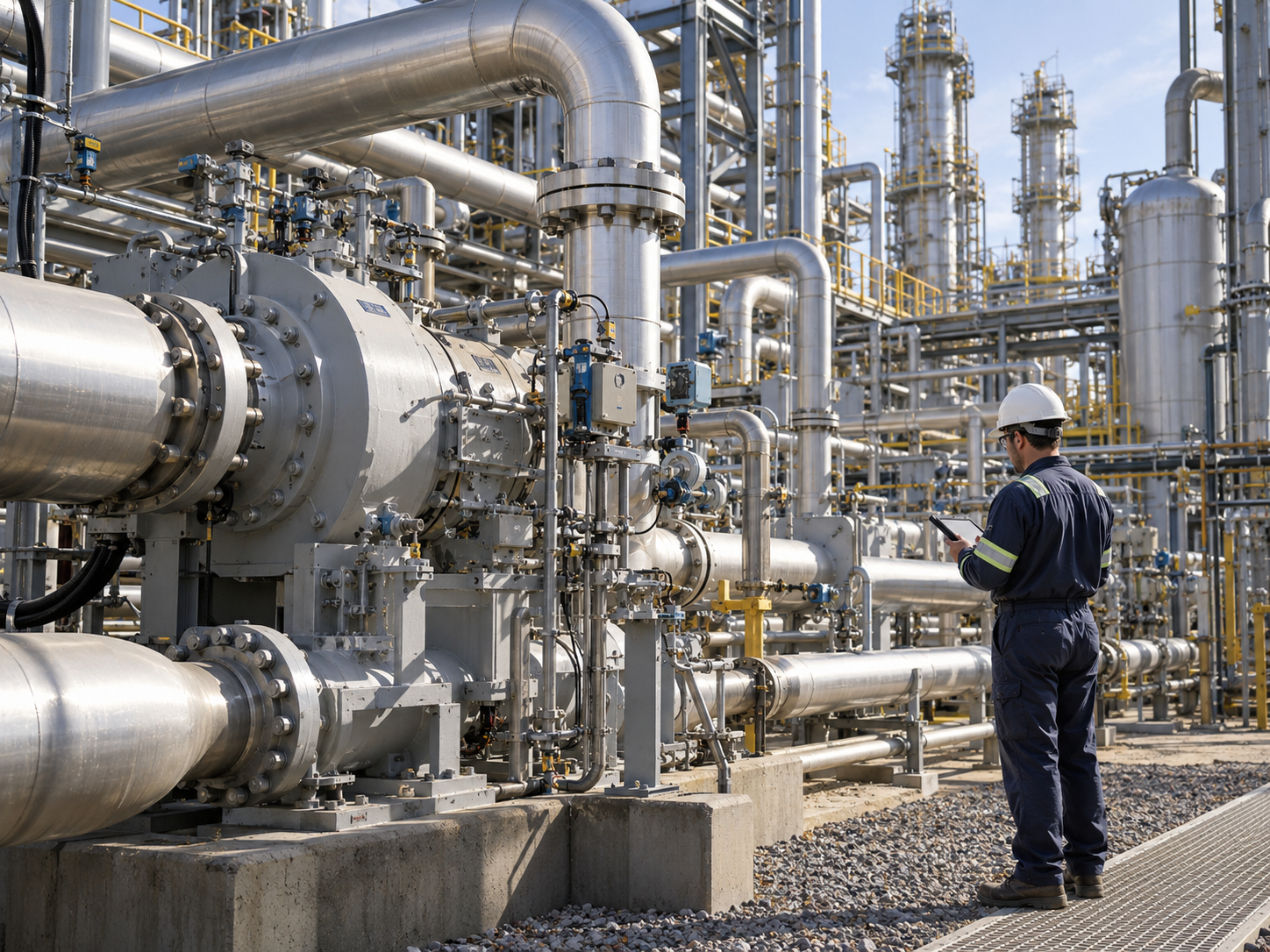
Project Meadowlark plans to use autothermal reforming rather than a conventional steam-methane reformer configuration.
In July, Topsoe announced a technology agreement to supply its SynCOR Ammonia process, proprietary equipment and catalysts for the Nebraska project.
The developer told the Senate Agriculture Committee that the project is designed with greater than 98% carbon capture from the ammonia-production process.
Captured CO₂ is expected to be transported through Tallgrass Energy’s existing Trailblazer pipeline system rather than requiring the project to develop its own dedicated sequestration site.
This structure is intended to remove a separate Class VI injection-well permit from the project’s critical path.
Low-carbon ammonia production does not make the entire fertilizer complex zero-emission, but it can substantially reduce the carbon intensity of one of the most emissions-intensive steps in nitrogen fertilizer production.
ATS gives the project a second crop-nutrition market
Alongside UAN, Meadowlark plans to produce approximately 140,000 short tons per year of ammonium thiosulfate.
ATS is a liquid sulfur and nitrogen fertilizer commonly blended with UAN and applied to crops requiring supplemental sulfur.
That product mix is strategically useful in the Western Corn Belt because sulfur nutrition has become more important as atmospheric sulfur deposition has declined over time and high-yielding crops remove larger quantities of sulfur from fields.
Producing UAN and ATS at the same complex also allows the plant to serve blended liquid-fertilizer demand rather than depending on a single nitrogen product.
The project has already cleared several development milestones
J Westling says the Gothenburg site is secured, fully zoned and entitled.
The company also says:
- an air permit has already been issued;
- an engineering, procurement and fabrication contract has been secured;
- approximately $50 million in development capital has been raised;
- civil work is currently targeted for 2027;
- commercial operations are targeted for 2029.
Black & Veatch is expected to serve as integrated project management team and owner’s engineer, according to testimony submitted by J Westling.
The project has also signed a 15-year offtake agreement covering 100% of planned DEF output, while the developer says multiple counterparties are competing for future UAN and ATS volumes.
FAST-41 status improves visibility, not project economics by itself
The new federal designation does not mean Meadowlark has received final approval or that construction is guaranteed to proceed.
FAST-41 is primarily a permitting-coordination framework designed to make federal review schedules more transparent and predictable.
For Meadowlark, the immediate benefit is public visibility into federal permitting milestones and greater coordination among agencies involved in the review process.
The project still depends on completing remaining permitting work, financing, construction and commissioning before its planned 2029 startup.
The distinction matters because large fertilizer projects can spend years in development even after securing technology agreements and early permits.
Domestic fertilizer production is again a U.S. policy priority
The Meadowlark designation comes as U.S. policymakers place renewed emphasis on fertilizer supply security and domestic manufacturing.
The Permitting Council said the project supports domestic fertilizer production and reduces exposure to foreign supply disruptions.
The U.S. fertilizer market remains integrated with international trade. USDA transportation data track substantial annual imports of nitrogen, phosphorus and potassium fertilizers, while ammonia and other nitrogen products move long distances by pipeline, rail, truck and vessel before reaching the Corn Belt.
Fertilizer Daily reported in May that federal agencies were also accelerating permitting for other major U.S. fertilizer projects as part of a broader push to expand domestic supply.
At the same time, decentralized and regional projects are attracting attention. A proposed Texas project involving Siemens and Shomax, for example, is built around smaller-scale domestic nitrogen production closer to agricultural demand.
Meadowlark is much smaller than a Gulf Coast ammonia megaproject — by design
At approximately 500 short tons per day of ammonia, Meadowlark is much smaller than world-scale Gulf Coast ammonia projects that can produce several thousand tonnes per day.
That smaller size is deliberate.
The project is designed to monetize a regional logistics advantage rather than compete primarily on global ammonia exports.
J Westling has previously estimated that transporting ammonia from the Gulf Coast into Nebraska can add approximately $100–120 per ton in logistics costs.
Producing ammonia and downstream fertilizer closer to Nebraska growers could reduce part of that freight exposure, although actual farm-level savings will ultimately depend on natural-gas prices, plant utilization, distribution costs and prevailing fertilizer-market prices.
Nebraska’s corn acreage creates a large nearby demand base
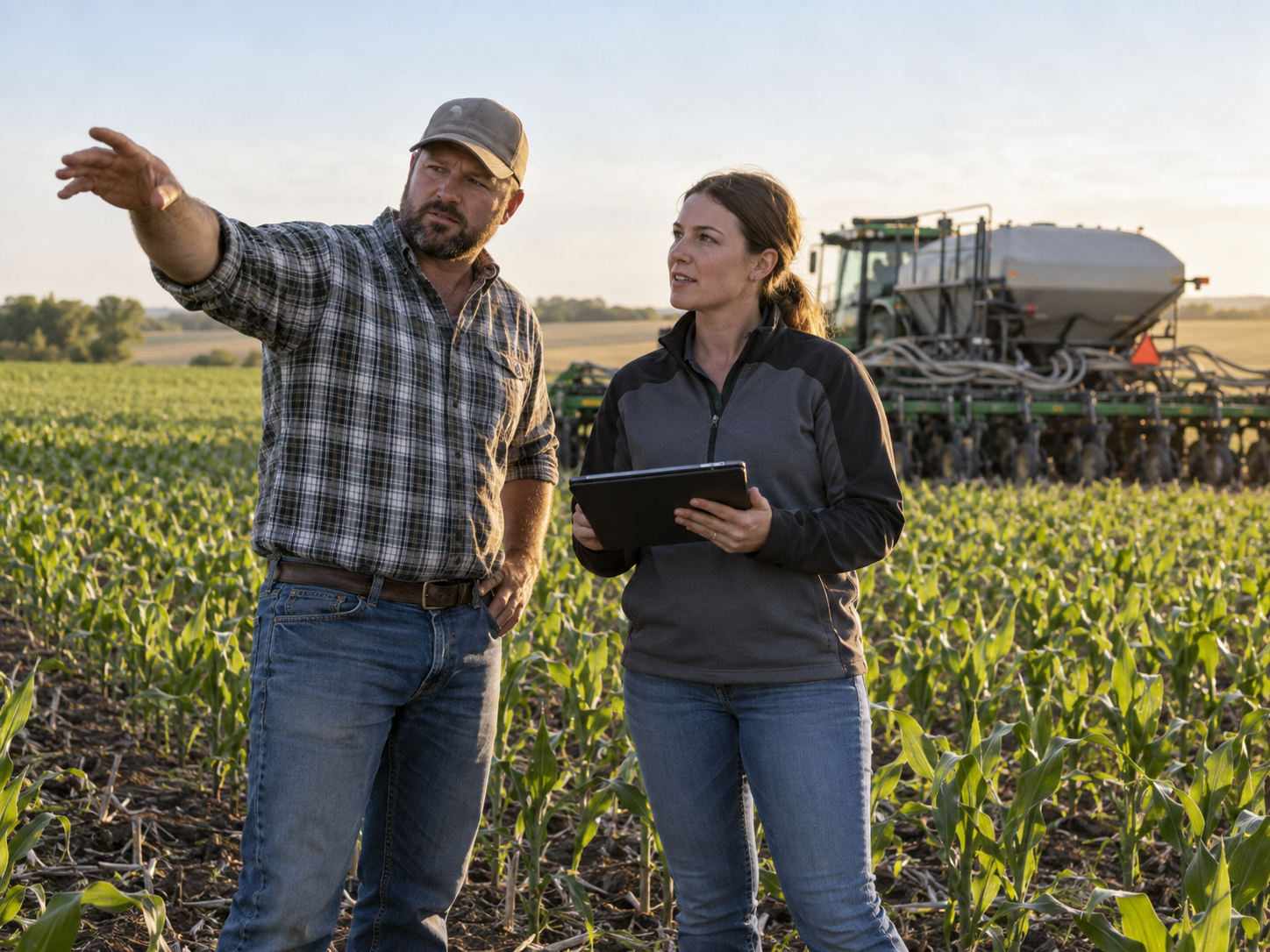
Nebraska planted approximately 10.1 million acres of corn in 2026, according to USDA.
That gives Meadowlark access to one of the largest concentrated nitrogen-fertilizer markets in the United States.
The plant’s location also places it within trucking and distribution range of neighboring Western Corn Belt markets rather than forcing all output through export terminals or major coastal distribution systems.
The project developer argues that this regional model could improve supply reliability during periods when international trade, river transport, rail availability or Gulf Coast production is disrupted.
U.S. fertilizer prices remain elevated heading into fall
The permitting milestone also comes during a period of elevated U.S. fertilizer costs.
Recent Fertilizer Daily price tracking showed most major U.S. fertilizer products trading above year-earlier levels heading into fall application.
Regional manufacturing cannot fully insulate growers from global nitrogen economics because natural gas, ammonia and fertilizer prices remain connected across domestic and international markets.
However, additional inland production can reduce dependence on long-distance transportation and create another source of regional supply.
What happens next
The next immediate milestone is the federal permitting timetable, which is expected to be posted by October 14, 2026.
Other major developments to watch include:
- completion of remaining federal review and authorizations;
- progress toward full project financing;
- final construction contracting;
- civil work targeted for 2027;
- installation of Topsoe SynCOR ammonia technology;
- connection to CO₂ transport infrastructure;
- commercial agreements for UAN and ATS;
- commissioning ahead of the planned 2029 startup.
If completed on schedule, Meadowlark would add a new integrated source of liquid nitrogen and sulfur fertilizer directly inside one of the largest U.S. crop-producing regions.
Frequently asked questions
Project Meadowlark is a planned integrated fertilizer complex in Gothenburg, Nebraska, being developed by J Westling & Co. The project represents more than $1 billion in planned investment.
The project is designed to produce approximately 365,000 short tons per year of UAN and 140,000 short tons per year of ATS, plus 52,000 short tons per year of DEF.
The integrated ammonia unit is designed for approximately 500 short tons per day. The ammonia will be converted on site rather than sold as merchant ammonia.
Commercial operation is currently targeted for 2029, with civil work planned for 2027.
It means the project’s federal environmental review and permitting milestones will be tracked publicly on the federal dashboard. It does not by itself constitute final project approval.
Yes. The developer says the ammonia-production system is designed for greater than 98% carbon capture, with CO₂ expected to move through existing pipeline infrastructure.
Nebraska has a large local market for nitrogen fertilizer, particularly from corn production, while much of the region’s liquid fertilizer currently travels long distances from other production and import centers.
Sources: U.S. Permitting Council, Federal Permitting Dashboard, J Westling & Co., U.S. Senate Agriculture Committee, USDA NASS

Enjoyed this story?
Every Monday, our subscribers get their hands on a digest of the most trending agriculture news. You can join them too!


Discussion0 comments