

Belarus Potash Cargo Heads to New Orleans as U.S. Tests Supply Diversification Beyond Canada

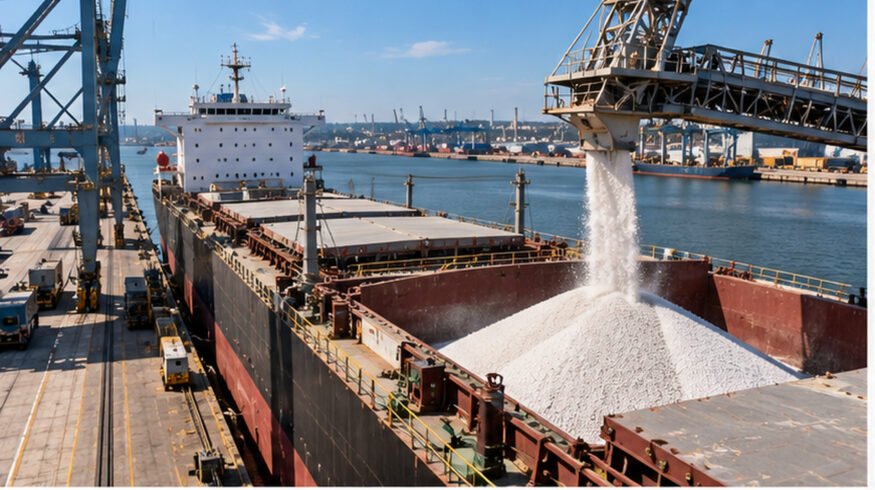

A 30,000-tonne cargo of Belarusian granular muriate of potash is heading to New Orleans, providing the first physical test of renewed U.S.-Belarus potash trade after Washington eased restrictions on the sector.
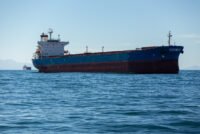
The Belarusian Potash Company loaded the shipment at Russia’s Bronka port in St. Petersburg on September 15, according to reporting based on Argus data. Commodity-tracking platform Kpler indicates that the cargo is expected to discharge in New Orleans on October 14.
The shipment adds an important new detail to a trade story Fertilizer Daily examined in late September: Washington has discussed expanding Belarusian potash purchases, but the question is whether those flows can become commercially significant in a U.S. market still overwhelmingly dependent on Canadian supply.
The first cargo is real, but its scale is still small
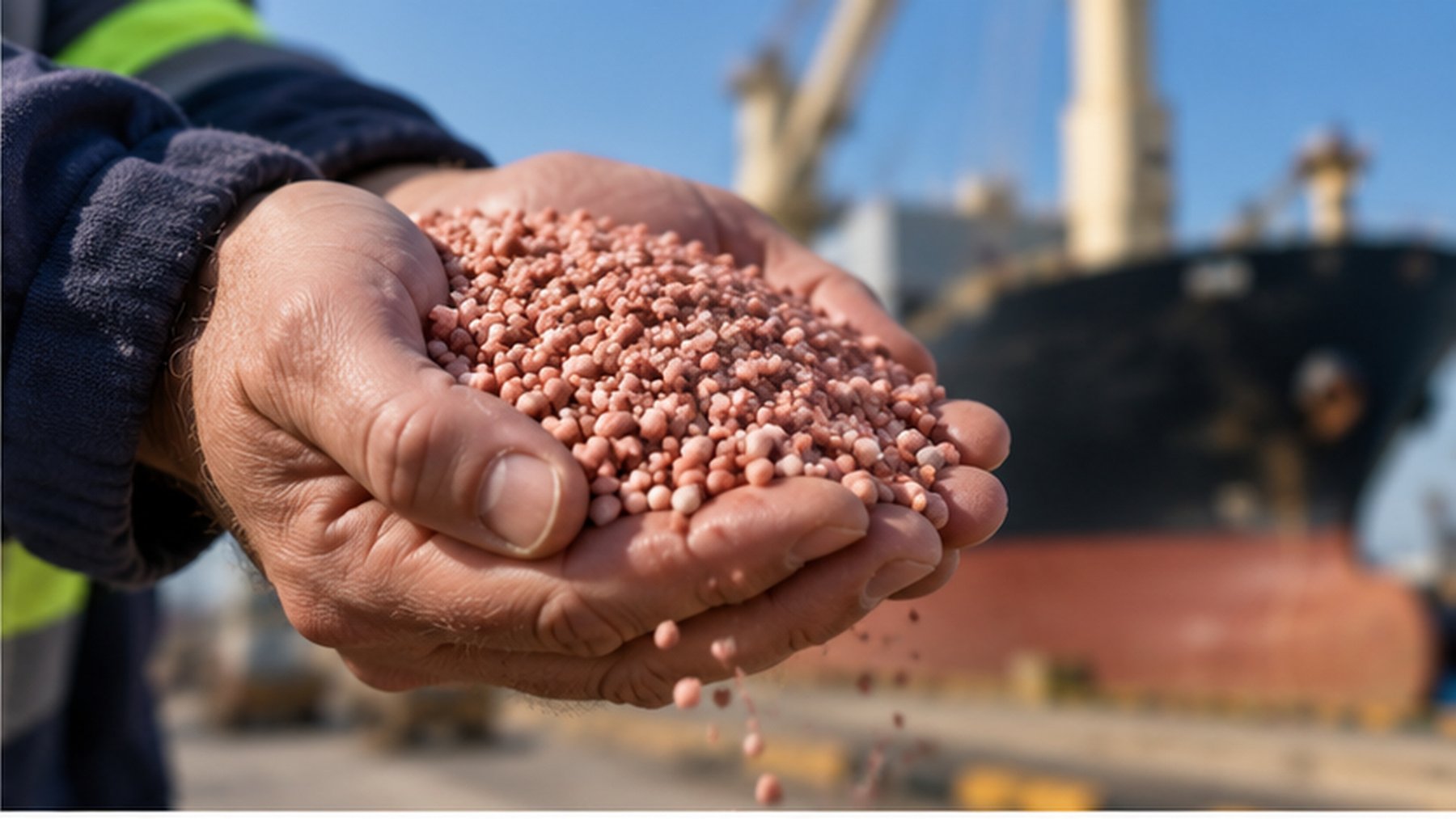
The 30,000-tonne shipment consists of granular muriate of potash, or MOP, the dominant form of potassium fertilizer traded internationally.
Before sanctions interrupted the trade, Belarus shipped an average of approximately 635,000 tonnes of potash per year to the United States between 2017 and 2021, according to industry data cited in recent reporting.
That means the current 30,000-tonne cargo is equivalent to only about 4.7% of Belarus’s pre-sanctions average annual U.S. shipments.
| Indicator | Volume | What it shows |
|---|---|---|
| Current Belarus cargo | 30,000 tonnes | First physical shipment to the U.S. in four years |
| Average Belarus exports to U.S., 2017–2021 | ~635,000 tonnes/year | Pre-sanctions trade scale |
| Current cargo vs. historical annual average | ~4.7% | One vessel remains small relative to previous trade |
This is why the first vessel matters more as proof that the trade route has reopened than as an immediate change in the U.S. potash balance.
Washington reopened the legal route in two stages

The shipment became possible after the U.S. Treasury Department began easing restrictions on Belarus’s potash industry.
On December 15, 2025, the Office of Foreign Assets Control issued General License 13, authorizing transactions involving Belaruskali, the Belarusian Potash Company and certain related entities.
The regulatory change went further on March 26, 2026, when OFAC removed Belaruskali and the Belarusian Potash Company from the Specially Designated Nationals list. General License 13 was subsequently archived because it was no longer required for those entities.
The sequence is significant. The October shipment is not moving under a temporary loophole or an exceptional cargo authorization; it follows a broader removal of the main Belarusian potash entities from U.S. blocking sanctions.
Trump says lower fertilizer prices are the objective

President Donald Trump has publicly framed Belarusian supply as a way to increase competition in the U.S. potash market.
“Belarus has a lot of potash, and our farmers need good prices.”
Trump also said the United States would continue purchasing Canadian potash while Belarus was prepared to sell at a lower price.
The administration’s argument is straightforward: introducing another major global producer could strengthen the negotiating position of U.S. buyers and potentially put downward pressure on imported fertilizer costs.
However, increasing supplier competition and materially changing farm-gate prices are not the same thing.
Canada remains structurally dominant
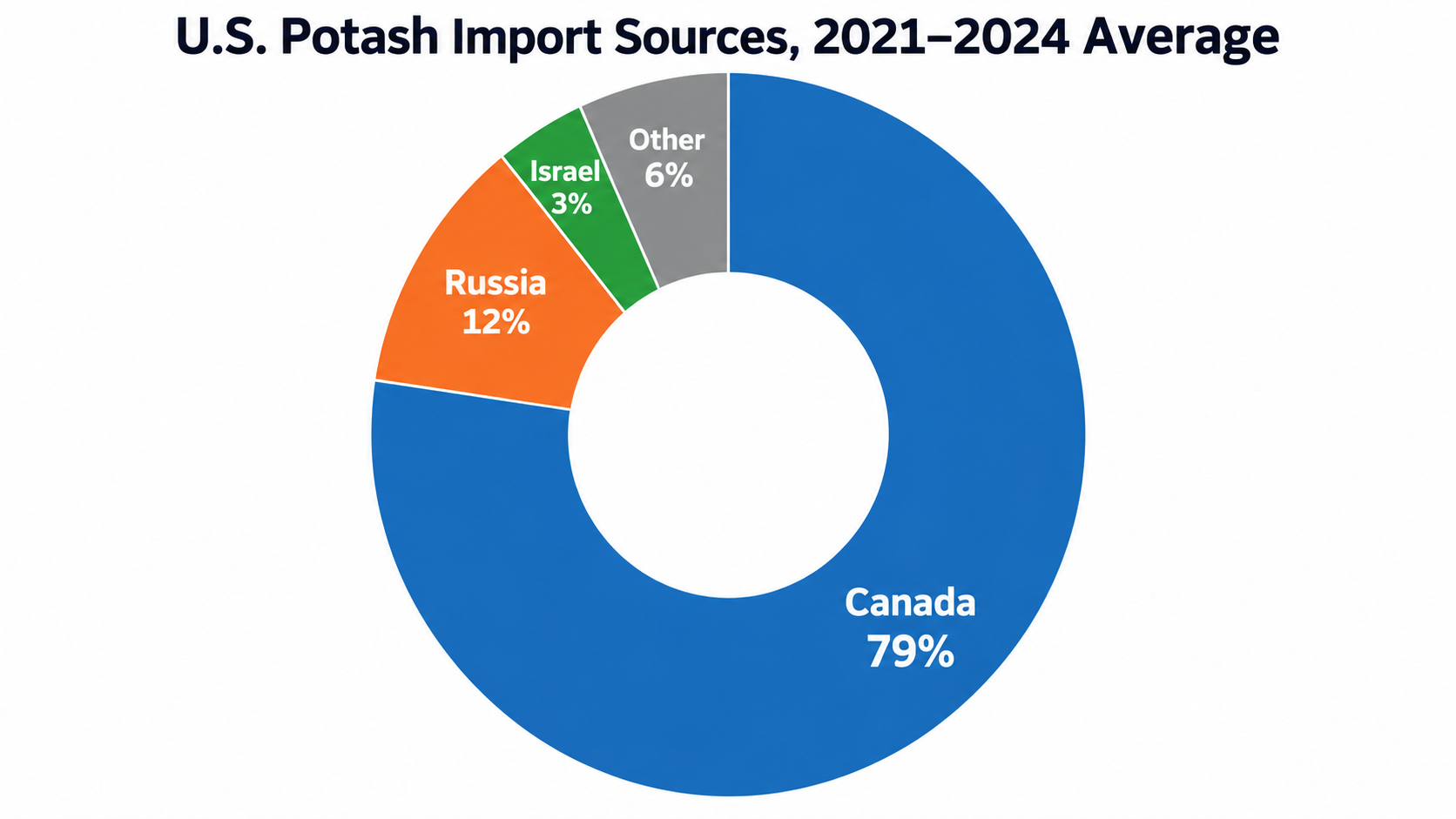
U.S. Geological Survey data underline how difficult it would be for Belarus to displace Canada at scale.
The United States remains heavily dependent on imported potash. Fertilizer Daily recently reported that U.S. net import reliance was approximately 92% in 2025.
USGS data also show that Canada supplied approximately 79% of U.S. potash imports during 2021–2024. Russia accounted for about 12%, while Israel supplied about 3%.
This concentration is one reason potash was added to the U.S. Critical Minerals List in 2025. USGS analysis identified reliance on Canada as a material supply-chain concentration risk, estimating that roughly 90% of U.S. net potash imports in 2023 originated there.
That does not mean Canadian supply is unreliable. Canada possesses extensive Saskatchewan reserves, established mines, rail infrastructure and longstanding commercial relationships with U.S. distributors.
It does mean that U.S. policymakers increasingly view supplier concentration itself as a strategic issue.
Belarus cannot simply redirect unlimited tonnes to the U.S.
The supply side creates another constraint.
Belarus was the world’s fourth-largest potash producer in 2024, accounting for about 10.7% of global output, according to the U.S. Geological Survey. The country produced approximately 7.08 million tonnes of K2O-equivalent potash that year.
But production scale does not automatically translate into uncommitted export availability.
Belarusian President Aleksandr Lukashenko has said that the country’s production is already committed to existing buyers.
“Everything is contracted for this year.”
China is a particularly important destination. USGS reports that China accounted for 29% of Belarusian potash exports in 2024, while Brazil and India are also major markets.
Redirecting substantial volumes toward the United States would therefore require Belarus either to expand production, reduce deliveries to existing customers or renegotiate existing commercial arrangements.
Logistics may matter as much as mine output
The route of the current shipment highlights another difference between Belarusian and Canadian supply.
Belarus is landlocked. Before sanctions, much of its potash moved through Baltic infrastructure, particularly the Lithuanian port of Klaipeda. European restrictions have made that route unavailable for current U.S.-bound trade.
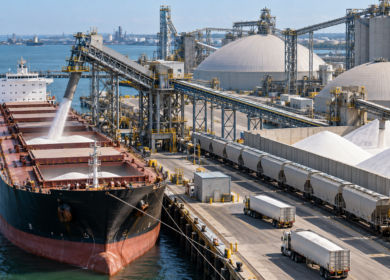
The latest cargo instead moved west through Russia to Bronka, near St. Petersburg, before being loaded for the transatlantic voyage to Louisiana.
That creates a considerably different logistics chain from Canadian potash, which can move south from Saskatchewan into U.S. agricultural markets through established rail networks.
For U.S. buyers, the relevant comparison therefore is not simply mine-gate Belarusian MOP versus Canadian MOP. What matters is the delivered cost after rail transport, port handling, ocean freight, insurance, unloading and inland distribution.
This is particularly important if Washington expects Belarusian imports to lower fertilizer prices for farmers rather than merely diversify the list of suppliers.
Analysts question whether potash is the U.S. fertilizer market’s main problem
Market analysts have also questioned how much additional Belarusian potash would change current fertilizer conditions.
StoneX fertilizer analyst Josh Linville argued in September that the United States has not faced a significant physical shortage of potash. His assessment was that supply pressure has been more acute in nitrogen and phosphate fertilizers.
That distinction matters because additional MOP cargoes cannot directly solve tightness in urea, ammonia, DAP or MAP markets.
Potash prices can still benefit from stronger competition between suppliers, but the agricultural impact of the Belarus opening should not be generalized across the entire fertilizer complex.
Fertilizer Daily analysis: one ship is a market test, not a new supply structure
Fertilizer Daily analysis: the October cargo should be treated as a commercial test rather than evidence that the structure of U.S. potash supply has already changed.
Three questions will determine whether the reopening becomes materially important.
- Will additional Belarusian cargoes follow? One 30,000-tonne shipment proves that trade is legally and logistically possible. Repeated shipments would demonstrate that a sustainable commercial route exists.
- Can Belarus beat Canadian delivered prices? Lower producer pricing is not enough if longer logistics through Russian ports and ocean freight eliminate the difference.
- Does Belarus have uncommitted supply? Existing sales to China, Brazil, India and other markets limit how quickly exports can be redirected.
The first question could be answered within months. If additional vessels are nominated for U.S. Gulf ports after October, the story begins to shift from diplomatic symbolism toward a recurring trade flow.
A second issue is emerging: Belarus wants broader fertilizer ties with the U.S.
The potash cargo may also be part of a broader fertilizer relationship.
On September 29, Lukashenko proposed U.S. participation in a planned nitrogen fertilizer project involving Belarus and Russia’s Gazprom, according to Reuters citing Belarusian state media.
The proposal does not constitute an investment agreement or a confirmed U.S. project. It does, however, show that Minsk is attempting to expand the current diplomatic opening beyond potash into nitrogen fertilizer production and technology.
For the fertilizer market, that makes the October MOP shipment worth watching not only as a potash transaction but as the first physical trade milestone in a potentially broader U.S.-Belarus fertilizer relationship.
What to watch on October 14
The immediate milestone is the expected unloading of the vessel in New Orleans on October 14.
After that, the more important signals will be:
- whether a second U.S.-bound Belarusian cargo is booked;
- the delivered price relative to Canadian MOP;
- which U.S. buyers take the material;
- whether Belarus reallocates volumes from existing customers;
- whether sanctions or logistics policy in Europe changes;
- and whether the U.S. government announces a larger formal purchase agreement.
If no follow-on cargoes appear, the 30,000-tonne shipment will remain primarily a diplomatic and commercial reopening.
If regular shipments develop, Belarus could re-emerge as a secondary supplier and give U.S. buyers another source of leverage in a market where dependence on Canada remains exceptionally high.
Frequently asked questions
The first cargo contains approximately 30,000 tonnes of granular muriate of potash.
Ship-tracking data cited in current reporting indicate an expected discharge in New Orleans on October 14, 2026. Shipping schedules can change.
The cargo was loaded at Bronka port in St. Petersburg, Russia, on September 15.
Belarus is landlocked, while European sanctions continue to restrict traditional Baltic export routes. Russian ports therefore provide an alternative maritime outlet.
Not at the current scale. Canada remains by far the largest U.S. potash supplier, while the first Belarusian cargo is only 30,000 tonnes and Belarus has said much of its production is already contracted.
USGS estimates U.S. net import reliance at approximately 92% in 2025. Canada is the dominant supplier.
Additional supplier competition could affect wholesale MOP pricing, but the impact will depend on delivered cost, recurring shipment volumes and market conditions. One cargo alone is unlikely to materially reset U.S. potash prices.
Sources: Financial Times, U.S. Treasury, USGS, Reuters, Reuters

Enjoyed this story?
Every Monday, our subscribers get their hands on a digest of the most trending agriculture news. You can join them too!



Discussion0 comments