

Utah Potash Drilling Confirms Sylvite as U.S. Import Reliance Stays at 92%

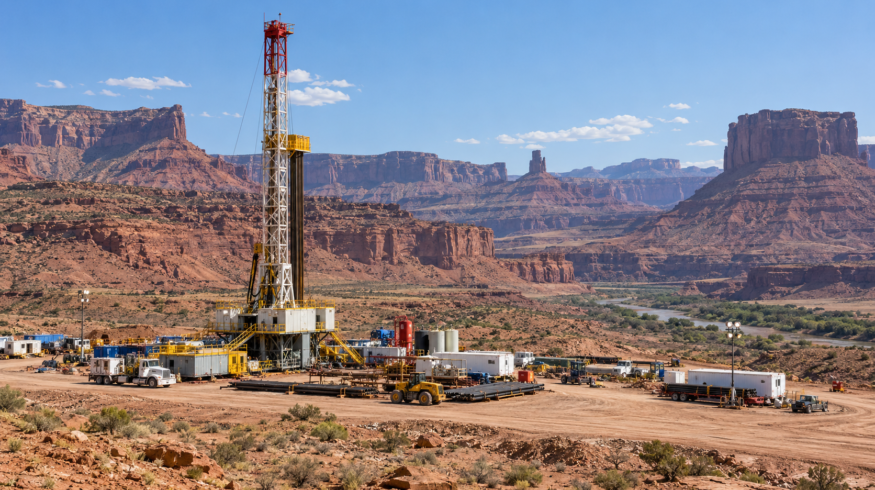

American Critical Minerals has completed its first confirmation drill hole at the Green River Project in Utah and reported the presence of sylvite mineralization in the targeted Cycle 5 potash horizon, adding new geological evidence to a U.S. fertilizer market that remains heavily dependent on imported potash.
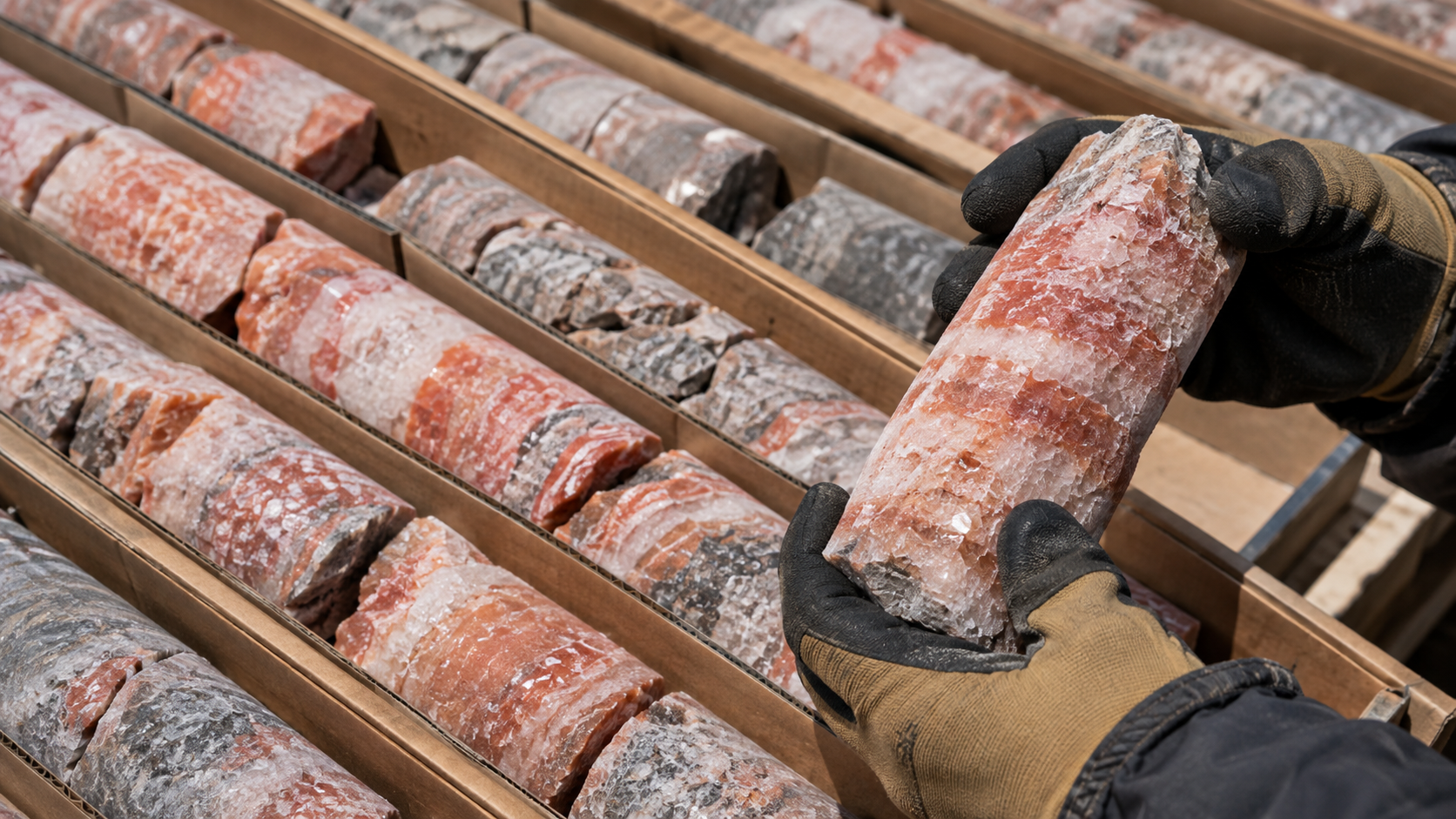
The company said the Duma Point AP-S-02 well reached a total depth of 2,818 metres (9,245 feet) on September 13, 2026. Initial core inspection and downhole geophysical logging confirmed sylvite within the Cycle 5 potash bed, while laboratory assays are still pending.
The timing is significant for U.S. agriculture. According to the latest U.S. Geological Survey Mineral Commodity Summaries, the United States remained approximately 92% net import reliant on potash in 2025, with Canada accounting for the majority of U.S. imports.
Utah drilling confirms the targeted Cycle 5 potash horizon
The new well was drilled at American Critical Minerals’ Green River Project approximately 20 miles northwest of Moab, Utah, in the Paradox Basin.
According to American Critical Minerals, the purpose of the well was to test historic potash data and collect fresh core from the Paradox Formation while also evaluating deeper brine-bearing zones for lithium and bromine.
The company reported three main findings:
- sylvite mineralization was visually identified within the Cycle 5 potash bed;
- wireline geophysical logs indicate the target interval occurs at depths and apparent thicknesses consistent with historic drilling nearby;
- brine samples were recovered from the Paradox and Leadville formations for lithium and bromine analysis.
The Cycle 5 core is now being prepared for detailed geochemical analysis at the Saskatchewan Research Council in Canada.
This distinction is important: the current announcement confirms the presence of the target mineralization, but final potash grades from the new well have not yet been published.
Historic drilling reported 24.3% KCl over 5.9 metres
The Duma Point well was positioned approximately 2,000 feet from the historic Quintana Fed 1-1 well.
That older well reported an estimated potassium chloride grade of 24.3% KCl over 5.9 metres (19.4 feet) in the Cycle 5 potash interval.
American Critical Minerals said the new wireline responses show a strong correlation with the depths and apparent thicknesses recorded in the historic hole. However, the company also cautions that historic results have not yet been fully verified by current drilling and laboratory analysis.
| Green River drilling indicator | Current status |
|---|---|
| Duma Point AP-S-02 total depth | 2,818 m / 9,245 ft |
| Target potash horizon | Cycle 5 |
| Sylvite observed in new core | Yes |
| Historic nearby intercept | 5.9 m at 24.3% eKCl |
| New laboratory potash assays | Pending |
| Lithium and bromine brines sampled | Yes |
Why domestic potash matters for U.S. fertilizer supply
Potash is one of the three primary crop nutrients, together with nitrogen and phosphorus, and there is no substitute for potassium as an essential plant nutrient.
The United States has substantial geological potash resources but relatively little domestic production compared with agricultural consumption.
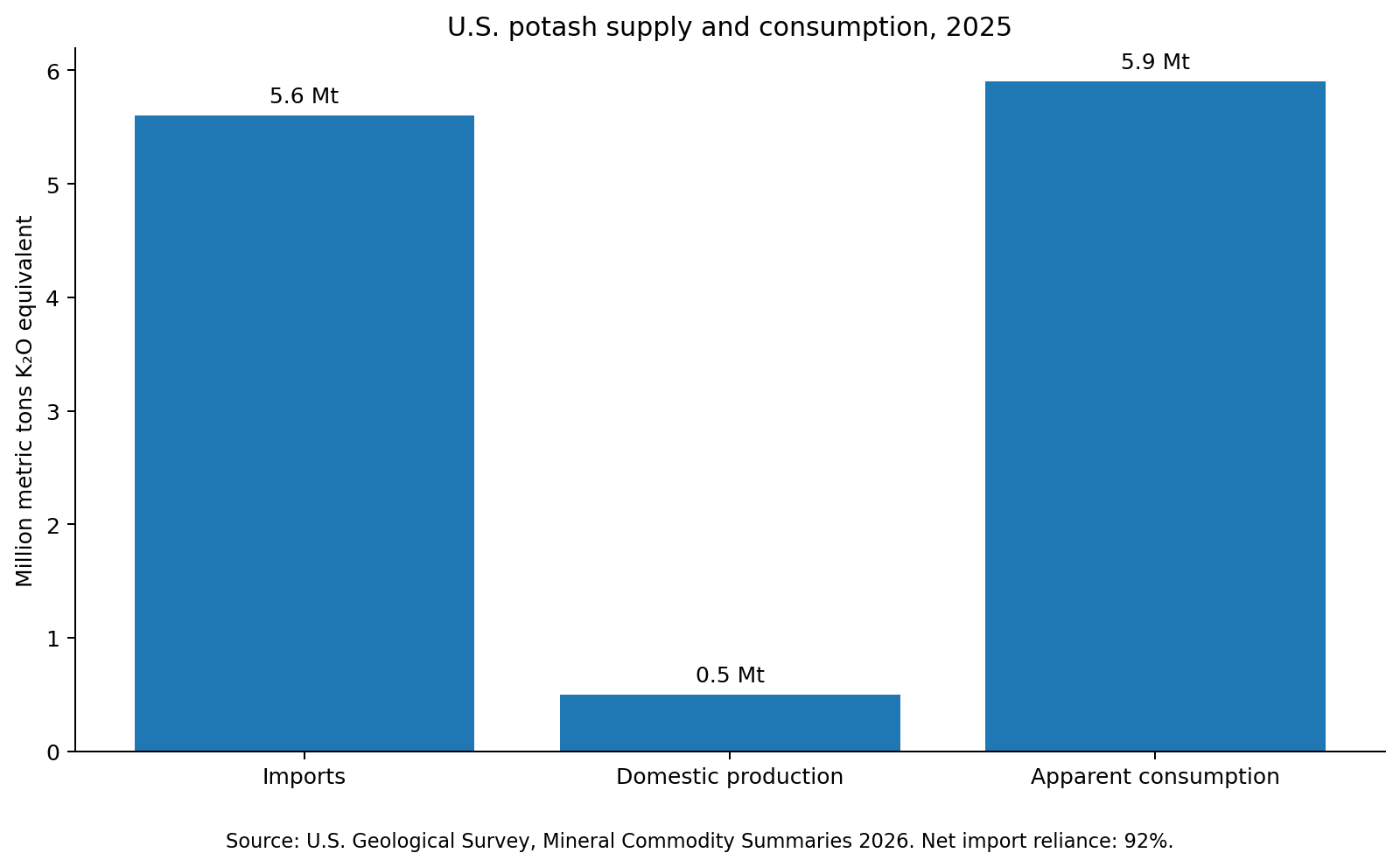
USGS estimates show that in 2025 the United States produced approximately 500,000 tonnes of K₂O equivalent while importing about 5.6 million tonnes. Apparent consumption was approximately 5.9 million tonnes.
| U.S. potash indicator | 2025 estimate |
|---|---|
| Domestic production | 0.5 million tonnes K₂O equivalent |
| Imports for consumption | 5.6 million tonnes |
| Apparent consumption | 5.9 million tonnes |
| Net import reliance | 92% |
| Largest import source | Canada |
Canada supplied approximately 79% of U.S. potash imports over the 2021-2024 period, according to USGS data.
That concentration has become more important during 2026 as fertilizer costs and trade relations have increased attention on the resilience of U.S. nutrient supply chains.
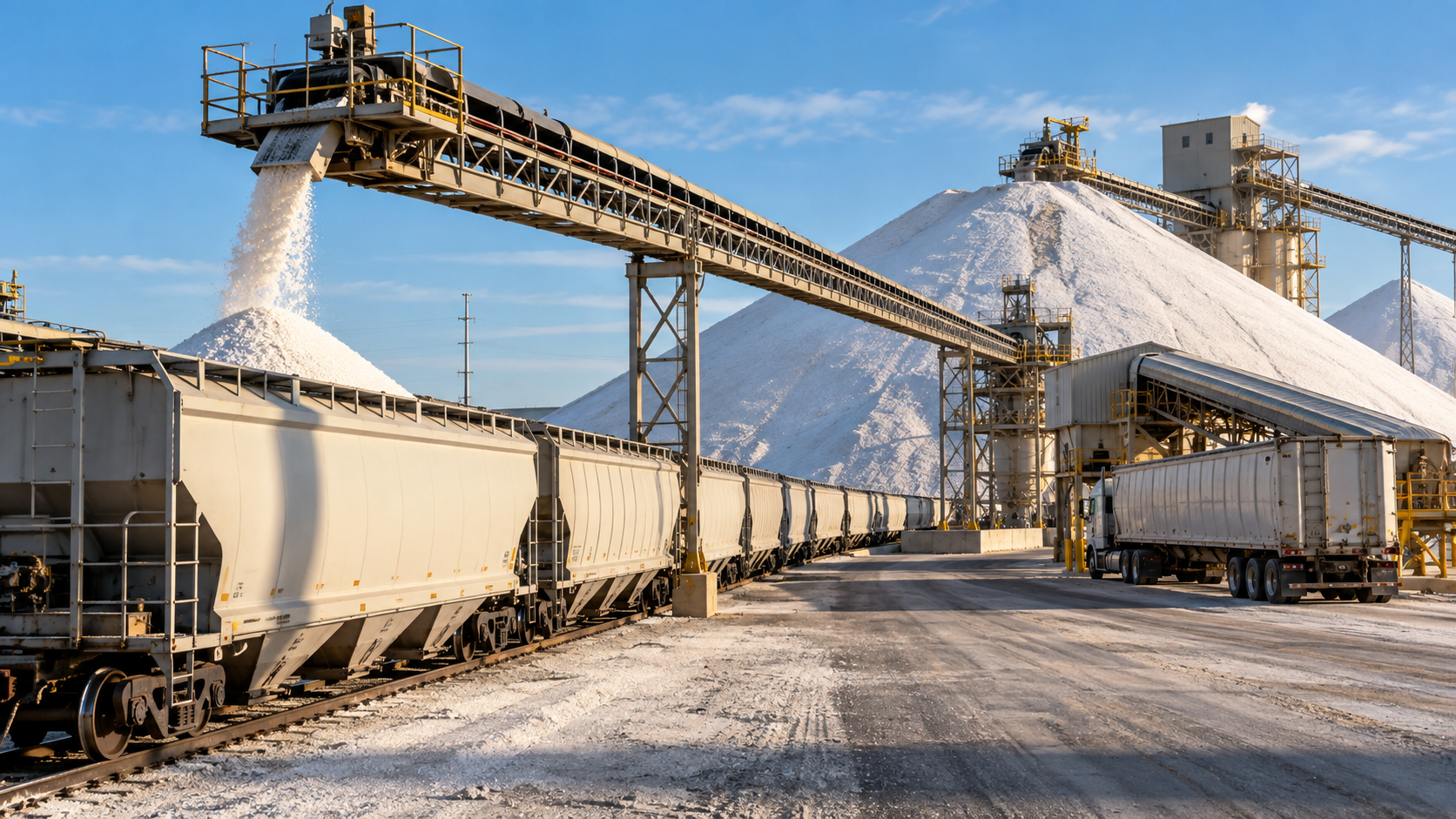
Fertilizer Daily recently examined U.S. dependence on Canadian potash and the limited number of alternative suppliers capable of replacing Canadian volumes at scale.
Potash is now a U.S. critical mineral
Potash was added to the final U.S. Critical Minerals List in November 2025.
The U.S. Geological Survey identified potash as one of the mineral supply chains with the highest assessed disruption risk.
USGS analysis found that approximately 90% of U.S. net potash imports in 2023 originated in Canada, making the country’s fertilizer supply unusually dependent on a single foreign source.
The designation does not mean that every domestic potash exploration project will become commercially viable. It does, however, increase the strategic relevance of projects capable of expanding U.S. production over the long term.
Green River covers more than 32,000 acres
American Critical Minerals controls a combination of Utah state leases, federal potash prospecting permits and federal lithium brine claims across the Green River Project.
The company’s current project position includes:
- 11 Utah SITLA mineral and mineral-salt leases covering approximately 7,050 acres;
- 11 federal potash prospecting permits covering approximately 25,480 acres;
- 1,094 federal lithium brine claims covering approximately 21,150 acres;
- a combined project footprint of approximately 32,530 acres.
The company is currently authorized to drill up to seven holes across the project.
Earlier this year, Fertilizer Daily reported that American Critical Minerals had received its final federal potash prospecting permits, clearing the way for the 2026 drilling program.
The project is close to existing Utah potash operations
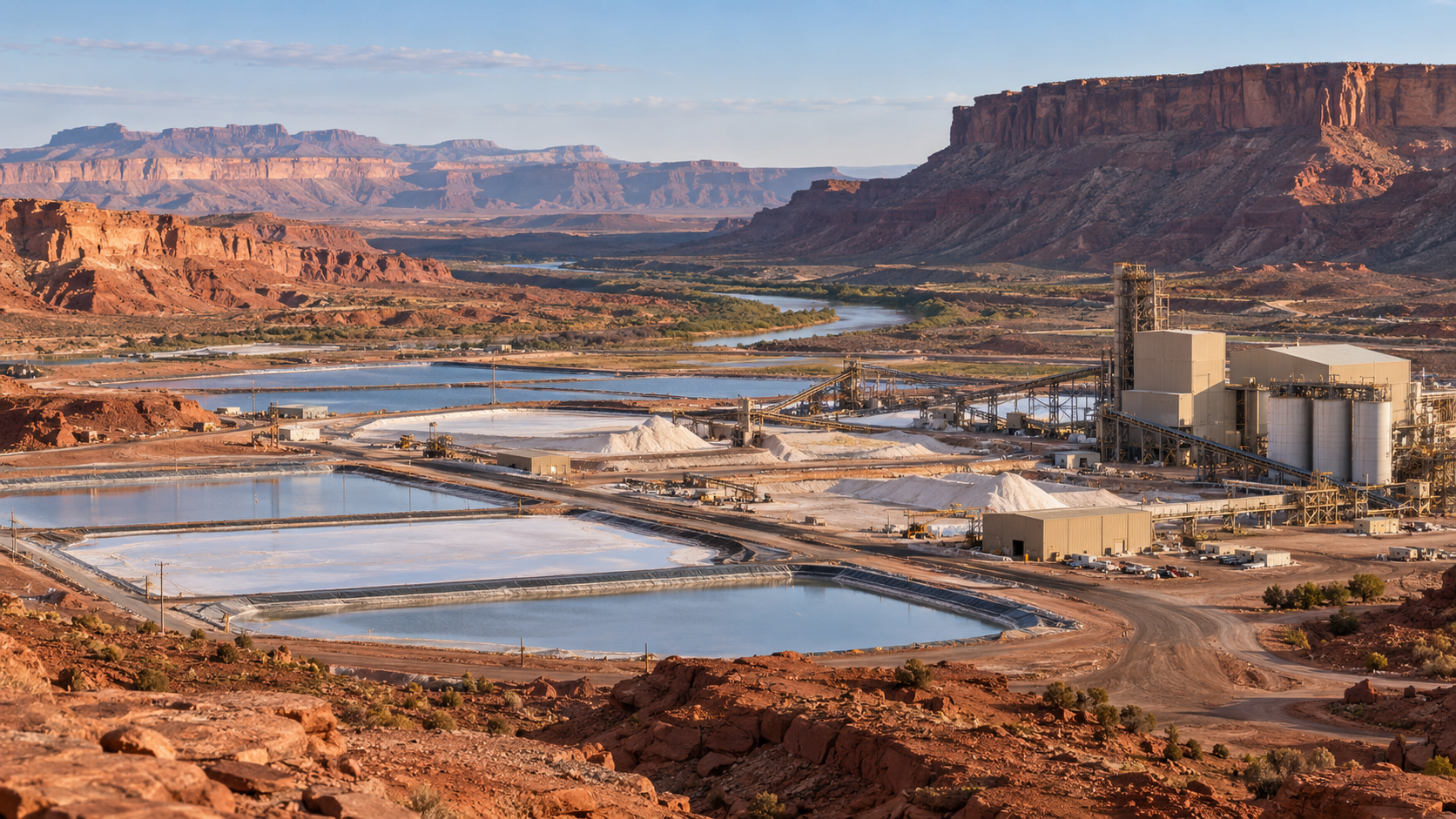
The Green River acreage lies within Utah’s Paradox Basin, a region with a long history of potash and energy development.
Existing potash production near Moab provides important geological context for the project, although results from neighboring operations cannot be assumed to apply directly to Green River.
The wider Paradox Basin contains an estimated 2 billion tonnes of potash resources, according to USGS.
Existing infrastructure is another potential advantage. The Green River Project is close to highways, rail connections, towns, industrial services and agricultural markets across the western and central United States.
The exploration target is large — but it is not yet a mineral resource
American Critical Minerals has published an exploration target for Green River of approximately 500 million to 950 million tonnes of sylvinite grading an estimated 12% to 18% K₂O, equivalent to approximately 19% to 29% KCl.
Those figures are based on historical well information and geological interpretation.
They should not be confused with a formal mineral resource or reserve.
The company’s January 2026 NI 43-101 technical report explicitly states that the exploration target is conceptual in nature, that insufficient exploration has been completed to define a mineral resource, and that further drilling may or may not result in a resource being established.
The current Duma Point drill program is therefore important because it begins replacing historical assumptions with modern core, geophysical logs and laboratory data.
Utah is only one part of the U.S. domestic potash push
Green River is not the only U.S. project seeking to increase domestic potash production.
Michigan Potash & Salt is developing a proposed large-scale project in Michigan with planned capacity of approximately 800,000 tonnes per year of potash. If built and operated at design capacity, the project could supply a meaningful share of U.S. demand.
In New Mexico, existing potash mining and processing operations remain another important component of domestic supply.
The comparison highlights the scale of the challenge. Even substantial new U.S. projects would be entering a market where imports currently exceed domestic production by more than tenfold.
Domestic supply could reduce concentration risk, not eliminate imports
A commercially successful Green River project could eventually contribute to diversification of U.S. potash supply, but it would not make the country self-sufficient on its own.
The U.S. fertilizer market consumes millions of tonnes of potash annually, while Canada’s Saskatchewan industry operates at a scale far larger than current U.S. production.
For that reason, domestic expansion is more realistically viewed as a way to:
- increase supply diversity;
- reduce exposure to individual trade routes or suppliers;
- provide additional regional fertilizer supply;
- shorten transportation distances to some U.S. agricultural markets;
- create additional competition in the domestic potash market.
The United States is likely to remain a major potash importer even if several proposed domestic projects reach production.
Potash prices remain comparatively stable in 2026
Potash has been less volatile than nitrogen and phosphate fertilizers during much of 2026.
The latest U.S. fertilizer price data tracked by Fertilizer Daily showed potash averaging approximately $495 per ton in mid-September, around 2% higher than one year earlier.
That relative price stability does not remove the strategic supply issue. Potash prices can still be affected by trade policy, sanctions, rail logistics and production changes in major suppliers including Canada, Russia and Belarus.
What happens next at Green River
The most important next step is laboratory analysis of the recovered Cycle 5 core.
Results from the Saskatchewan Research Council should provide a direct modern measurement of:
- potassium chloride grade;
- mineralized interval thickness;
- potash mineralogy;
- correlation with historic wells;
- the potential basis for additional drilling.
Brine samples from the Paradox and Leadville formations are also being analyzed separately for lithium and bromine.
If laboratory results support the historic potash data, American Critical Minerals will still need substantially more drilling, technical studies, resource definition, permitting and economic analysis before a commercial development decision could be considered.
For U.S. fertilizer supply, however, the new drilling provides another data point in a broader effort to determine whether domestic potash projects can eventually reduce one of the country’s highest agricultural mineral import dependencies.
Frequently asked questions
Not yet. The company confirmed sylvite mineralization in its first 2026 drill hole, but laboratory assays remain pending and the project does not currently have a defined NI 43-101 mineral resource.
The nearby historic Quintana Fed 1-1 well reported an estimated 24.3% KCl over 5.9 metres in the Cycle 5 potash horizon.
USGS estimates U.S. net import reliance at approximately 92% in 2025. Canada supplied around 79% of U.S. imports over the 2021-2024 period.
USGS estimated domestic production at approximately 500,000 tonnes of K₂O equivalent in 2025, compared with about 5.6 million tonnes of imports.
Potash is essential for fertilizer production and U.S. agriculture, has no substitute as a plant nutrient and is highly import dependent. USGS included potash on the final 2025 Critical Minerals List after identifying significant supply-chain concentration risk.
The project is located in Utah’s Paradox Basin, approximately 20 miles northwest of Moab.
No single current U.S. project is large enough to replace Canadian supply. A successful Green River development could contribute to domestic supply diversification, but the United States would likely remain a major potash importer.
Sources: American Critical Minerals, USGS Mineral Commodity Summaries 2026, USGS Critical Minerals List

Enjoyed this story?
Every Monday, our subscribers get their hands on a digest of the most trending agriculture news. You can join them too!





Discussion0 comments