

Green manure plus biochar boosts soil health while cutting nitrogen fertilizer

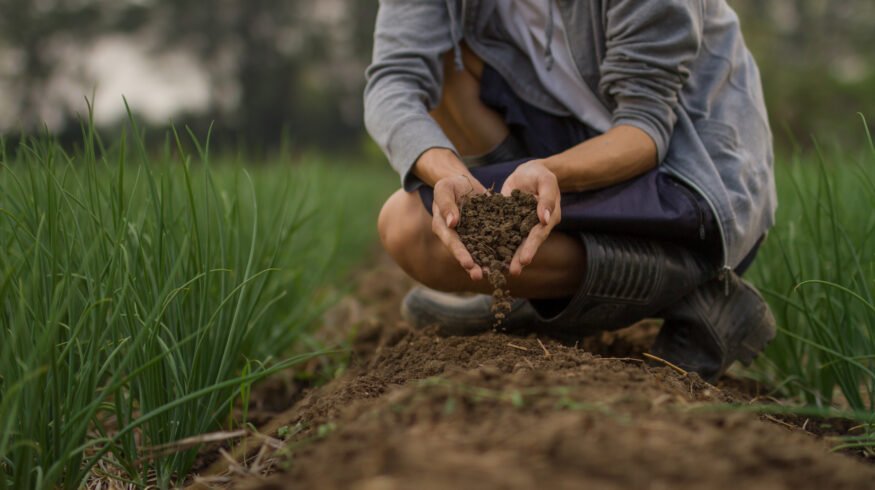

A three-year North China Plain field trial found the combination raised a composite soil quality index by 66.67% to 116.67% compared with bare winter fields.
Chinese researchers found that pairing a winter green manure crop with biochar can substantially improve farmland soil quality, even when controlled-release nitrogen fertilizer is cut back. In a three-year field experiment on the North China Plain, the combined treatment raised a composite soil quality index by 66.67% to 116.67% compared with leaving fields bare over winter. The gain held under both conventional fertilization and controlled-release fertilizer regimes.
Green manure helps, and biochar adds more
Green manure alone improved soil properties and reduced bulk density by 3.31% to 7.74%. Adding biochar lowered bulk density further, by 8.61% to 9.80%, and increased total porosity and field capacity. In the first period, the largest gains in porosity and field capacity under a 45% controlled-release reduction reached 13.19% and 13.04%.
Both treatments raised mineral nitrogen, available phosphorus and potassium, total nitrogen and soil organic carbon. The highest levels of available nutrients and organic carbon occurred under the combined treatment with a 30% fertilizer reduction.
Soil biology responded fastest
The biological responses were the fastest and largest. The combined treatment outperformed green manure alone on microbial biomass carbon and nitrogen and on enzyme activity. Under the 30% reduction, microbial biomass carbon rose 20.9% and beta-1,4-glucosidase activity rose 27.3%.
By the third period, the improvements had persisted and in several cases strengthened. Under a 45% reduction, the combined treatment raised total porosity 15.40% and field capacity 17.39%, and cut bulk density 12.41%, all compared with winter fallow. The researchers attribute the physical changes to biochar’s porous structure and to green manure roots and their decomposition products, which build soil aggregates.
Yield holds at a 30% cut, not at 45%
Under the combined treatment, maize yield peaked at 100% controlled-release fertilizer, between 10,195.75 and 10,418.87 kilograms per hectare. At a 30% reduction, yield was maintained without a decrease. At 45%, maize yield was significantly lower than under conventional fertilization, and soil mineral nitrogen, available phosphorus and available potassium fell to their lowest levels.
The authors say substantial nitrogen cuts hinder nutrient accumulation even when organic amendments are in place. They suggest a graded approach, combining green manure with crop straw or livestock manure, which have different carbon-to-nitrogen ratios.
Three ways to score soil quality
The study compared three assessment frameworks. An index built from all soil function indices was the most precise, with an R-squared of 0.981 to 0.988, but it required the most indicators. A six-indicator minimum dataset built through principal component analysis reached an R-squared of 0.946 to 0.960. A four-indicator set from network analysis, using soil organic carbon, total nitrogen, capillary porosity and L-leucine aminopeptidase activity, reached 0.834 to 0.910 with far less measurement. The researchers recommend the network approach for large-scale screening and monitoring.
Limits of a single-region trial
Both sampling periods came from one region, so the results have not been tested in other climates or soil types. The authors also say seasonal factors and year-to-year climate variability were not included. Structural equation modeling identified microbial diversity as the main pathway, with green manure and biochar each showing a standardized total effect of 0.47 on soil quality.
Sources: Bioengineer.org

Enjoyed this story?
Every Monday, our subscribers get their hands on a digest of the most trending agriculture news. You can join them too!




Discussion0 comments