

Manganese biochar cuts N₂O emissions 89% in key paddy soil study, boosting nitrogen retention

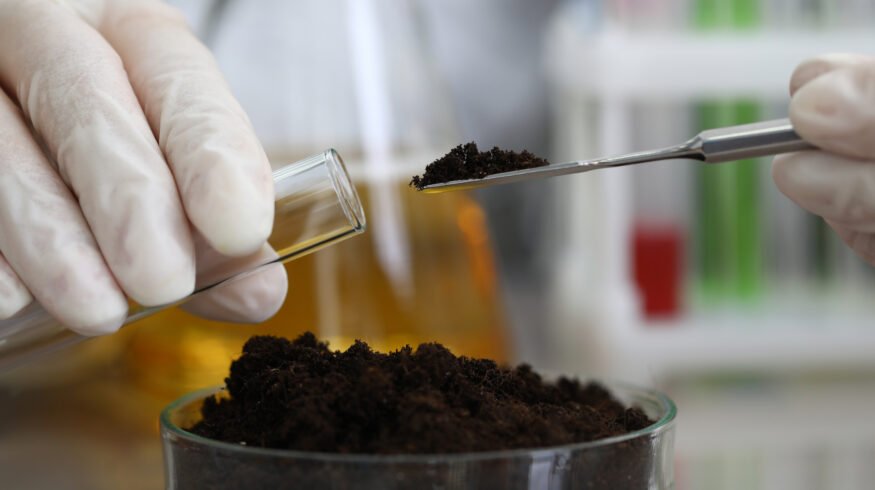

Manganese biochar made from wheat straw cut cumulative nitrous oxide (N2O) emissions from a paddy soil by about 89% in laboratory incubations, while pushing more nitrate into a microbial pathway that keeps nitrogen in the soil, according to a study by researchers from the Chinese Academy of Sciences and partner institutions. The paper, published October 14, 2026, in the journal Biochar, offers a materials-based route to tackling one of the costliest leaks in fertilizer use.
Why nitrogen retention matters for fertilizer efficiency
A large share of the nitrogen farmers apply never reaches the crop. In waterlogged soils such as rice paddies, much of the nitrate is converted by denitrifying bacteria into gases, including N2O, a greenhouse gas roughly 300 times more potent than carbon dioxide. That loss is both an agronomic cost and an emissions liability for growers and fertilizer suppliers.
A competing microbial process, dissimilatory nitrate reduction to ammonium (DNRA), turns nitrate into ammonium instead. Ammonium binds to soil particles more readily and stays available to plants. The problem is that DNRA needs a large supply of electrons, so it usually loses out to denitrification. The researchers set out to tip that balance.
How manganese biochar shifts soil microbes
The team loaded wheat-straw biochar with manganese, an element that cycles easily between oxidation states and can shuttle electrons to microbes. Key results reported by the authors:
- The manganese biochar raised the material’s electron exchange capacity by about 80% versus unmodified biochar.
- DNRA activity rose 2.9-fold compared with untreated soil.
- The share of nitrate reduction routed through DNRA climbed from 2.0% to 10.8%.
- Cumulative N2O emissions fell from 17.6 to 1.9 milligrams of nitrogen per kilogram of dry soil.
The treatment also reshaped the bacterial community toward DNRA-associated groups and increased expression of the nrfA gene, a standard marker for nitrate-to-ammonium conversion. The authors found evidence that manganese mobilized native soil organic carbon as an extra electron donor, without measurable carbon loss over the incubation period.
Corresponding author Dan Yuan said improving biochar’s ability to transfer electrons can encourage microbes to conserve nitrogen rather than let it escape. Co-author Shuping Qin said the work suggests soil nitrogen transformations can be steered toward pathways that retain nutrients.
What manganese biochar could mean for growers and input suppliers
For the fertilizer industry, the interest lies in nitrogen use efficiency. Any amendment that keeps more applied nitrogen as plant-available ammonium could, in principle, let growers hold yields with less product or cut the emissions footprint of each tonne applied. That matters as buyers, regulators and carbon programs scrutinize field-level N2O, which is often the largest single source of a crop’s fertilizer-related emissions.
The result also adds to a growing body of work on N2O management. Fertilizer Daily recently covered a field study showing nitrous oxide emissions falling up to 48% with reduced tillage in organic grain systems, and research estimating that cutting nitrogen losses from saline soils could be worth $24.5 billion a year.
Limits and next steps
The findings come from controlled laboratory incubations on a single paddy soil, and the 89% figure applies only to those experimental conditions. The authors say field trials are needed to test long-term effectiveness, environmental safety and performance across soil types. The study did not report application rates or production costs for manganese-loaded biochar, both of which will decide whether the approach can compete with existing nitrification and urease inhibitors.
If field results hold up, manganese biochar would join a short list of soil amendments that do more than store carbon, actively redirecting nitrogen chemistry in growers’ favor.
Source: Biochar

Enjoyed this story?
Every Monday, our subscribers get their hands on a digest of the most trending agriculture news. You can join them too!





Discussion0 comments