Skip to content
  • Professionals
  • Gardeners
 
Search
Log in
EN
RU
  • Trade & Policy
  • Markets
  • AgTech & Research
  • Corporate
  • Sustainability
  • Interviews
  • Rankings
  • Events
  • Stock Quotes
  • Business Directory
Trending topic:

fertilizer prices

Featured company:
 
RU
  • Professionals
  • Gardeners
Sections
    Events
    Stock Quotes
    Business Directory
    Trending topic:

    fertilizer prices

    Featured company:
    Follow us...
    Helpful information
    • About
    • Team
    • Advertise
    • Contacts
    • Submit a Tip
    • Privacy Policy
    • Terms of Service
    • Site Map
    Sections
      Seasonal tips
      • Spring
      • Summer
      • Autumn
      • Winter
      Trending topics
      • compost
        32
      • garlic
        2
      • lemon
        1
      • potato
        16
      Follow us...
      Helpful information
      • About
      • Team
      • Advertise
      • Contacts
      • Submit a Tip
      • Privacy Policy
      • Terms of Service
      • Site Map
      Copyright © 2014-2026 DigitalTree LLC. All rights reserved.
      We deliver content lightning-fast thanks to the managed cloud WordPress hosting with CDN.
      16+

      Home / AgTech & Research

      California groundwater priorities shift with nitrogen data choice, UC Davis finds

      Timothy Bueno avatar Timothy Bueno
      November 19, 2026, 3:00 pm
      November 19, 2026, 3:00 pm
      Views: 2
      AgTech & Research
      Nitrogen
      Sustainability
      United States
      California groundwater priorities shift with nitrogen data choice, UC Davis finds
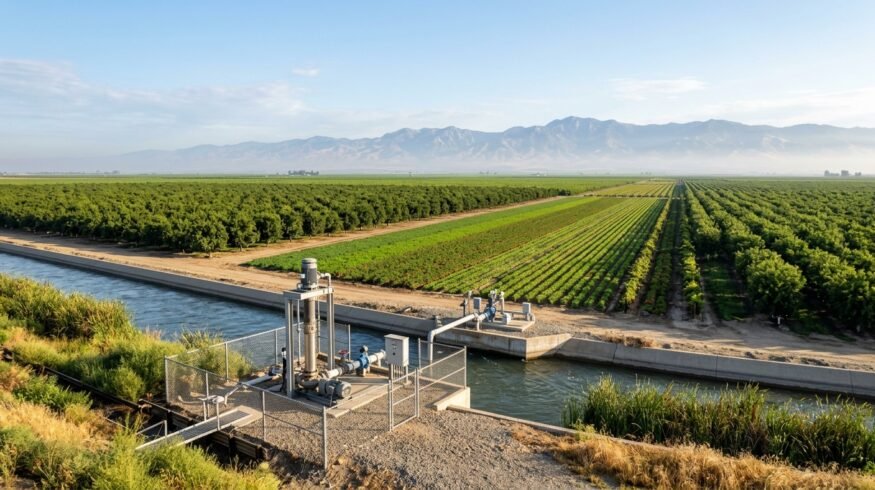
      Image Credits: AI Generated
      Save for later
      Share
      Never miss important fertilizer news

      The data used to estimate nitrogen surplus can change which crops and regions receive priority for California groundwater protection, a University of California, Davis-led study found. The research, published Nov. 10 in Nature Sustainability, tested 24 scenarios using different combinations of agricultural datasets.

      The result matters because nitrogen-surplus estimates help regulators identify where farm nitrogen management or conservation measures may be most needed. A surplus is the nitrogen remaining after crop harvest removes nutrients from a field; some can move below the root zone and contribute to groundwater nitrate loading. If the underlying data changes the estimated surplus, a map of priority areas can change too.

      Different nitrogen data produce different estimates

      Researchers used California’s Central Valley as a data-rich test case. The study compared five datasets covering fertilizer application and nitrogen removed in harvested crops: U.S. Department of Agriculture surveys and census data, grower-reported records, UC Davis Cost and Return Studies, and county crop acreage and harvest records collected by the California Department of Food and Agriculture.

      Each source captures different information and has limits. USDA surveys provide less detail for specialty crops and are not collected as frequently as annual farm records. Grower reports can differ because of recall or interpretation, while the UC Davis studies provide representative crop-level estimates rather than measurements from each field. County records document acreage and harvest, but do not directly measure fertilizer applied on individual farms.

      ADVERTISEMENT

      The team held its nitrogen-balance framework and land-use maps constant while varying the source data and assumptions about manure and nitrogen stored in perennial plants. The spatial model ran at a 50-meter resolution across 17 crop categories, representing about 20 of the Central Valley’s dominant crops. Those crops covered about 75% of the valley’s irrigated cropland and accounted for more than 90% of estimated potential nitrogen loading below the root zone.

      The scenarios define a bounded range of plausible outcomes, not 24 equally likely forecasts. Rice was excluded because flooded fields in the region typically lose little nitrogen through groundwater leaching, with denitrification accounting for more of the nitrogen loss.

      Field crops showed the widest variation

      Estimates diverged most for corn and other field crops that can receive dairy manure, including cotton, wheat, and oats. The study calculated average nitrogen surplus for corn at about 300 kilograms of nitrogen per hectare per year, with a standard deviation of 190 kilograms across the scenarios. That spread reflects model estimates under varying data and assumptions, not direct measurements at every corn field.

      Orchard and vineyard crops generally had narrower uncertainty ranges and lower estimated surpluses. The researchers found that differences between datasets could also change how townships ranked for mitigation. In some cases, the variation in estimated surplus was large relative to the average, making a single-point estimate an unreliable guide to the precision of a local priority map. Other field studies have measured how management choices can cut nitrogen losses, and how large the payoff from reducing nitrogen losses from farmland could be.

      Uncertainty affects California groundwater planning

      California’s nitrogen rules require growers in affected areas to report nitrogen use, giving regulators a locally generated data stream alongside federal surveys and other records. The study supports using multiple sources, while cautioning against treating one dataset as definitive. Thomas Harter, a UC Davis professor and Cooperative Extension specialist and the study’s corresponding author, said regulators should “be cautious” because differences among datasets can rearrange the map used to target conservation efforts.

      For fertilizer and farm advisers, the findings underline a distinction between estimating nutrient balances and measuring nitrate in a particular well. The model assesses potential nitrogen surplus and loading, not the concentration of nitrate in every groundwater source. Local decisions still depend on site conditions, farm records, and monitoring data, as well as the chosen method for estimating applied and harvested nitrogen.

      The authors said the Central Valley’s data problem may also matter in regions that rely on only one or two agricultural datasets. There, uncertainty could remain hidden rather than appear as a visible range. Their conclusion is that nitrogen assessments should carry data-source uncertainty through to the final estimates, so regulators can see how robust a hotspot ranking is before directing protection resources.

      More consistent farm reporting and improved information on fertilizer use, harvest, and manure could narrow the gaps. Until then, the study argues, groundwater protection plans should account for the possibility that a different but credible dataset may produce a different set of priorities.

      Source: Global Agriculture

      agricultural research
      California
      corn
      fertilizer research
      groundwater
      manure
      nitrate
      nitrogen
      nitrogen fertilizer
      nitrogen use efficiency
      research
      UC Davis
      United States
      USDA
      water quality

      Enjoyed this story?

      Every Monday, our subscribers get their hands on a digest of the most trending agriculture news. You can join them too!

      Sign me up
      Check the example

      Discussion0 comments

      Спасибо за комментарий, он будет опубликован на сайте после проверки модератором. Хотите, чтобы ваши комментарии появлялись на сайте мгновенно? Достаточно пройти регистрацию.
      Congratulations, you can be the first to start the conversation.
      Do you have a question or suggestion? Please leave your comment to ignite conversation.
      What’s on your mind?
      Cancel Log in and comment
      Or continue without registration
      Get notified about new comments by email.
      Advertisement
      In focus
      How to get here?
      Stock quotes
      Bayer
      15.36
      0.52
      Bayer Crop Science
      55.94
      0.36
      CF Industries
      113.7
      4.73
      Corteva Agriscience
      8.36
      5.22
      ICL Group
      4.19
      3.23
      Intrepid Potash
      29.96
      3.23
      Mosaic
      19.93
      3.91
      Nutrien
      65.92
      4.77
      Yara International
      20
      3.1
      See all
      Most read
      Uralchem expands branded fertilizer sales in Thailand
      Uralchem expands branded fertilizer sales in Thailand
      Fertiglobe weighs $1.5 billion phosphate fertilizer project in Egypt
      Fertiglobe weighs $1.5 billion phosphate fertilizer project in Egypt
      Coastal Roots Farm turns regenerative agriculture into a community operating model
      Coastal Roots Farm turns regenerative agriculture into a community operating model
      Global phosphate production to hit just 45 Mt vs 75 Mt demand, Mosaic warns of critical shortage
      Global phosphate production to hit just 45 Mt vs 75 Mt demand, Mosaic warns of critical shortage
      Hormuz fertilizer shipments stay at zero for 2nd month as critical sulfur squeeze bites
      Hormuz fertilizer shipments stay at zero for 2nd month as critical sulfur squeeze bites
      Events
      YugAgro
      Krasnodar, Russia
      Nov 17 — 20, 2026
      The Fertilizer Show
      Tampa (FL), USA
      Nov 18 — 19, 2026
      Syngas Nitrogen Uzbekistan and CIS
      Tashkent, Uzbekistan
      Nov 18 — 19, 2026
      Argus Clean Ammonia Europe
      Rotterdam, Netherlands
      Dec 1 — 3, 2026
      Organic Grower Summit
      Monterey (CA), USA
      Dec 2 — 3, 2026
      See all
      Live
      Stefan Petko
      May 6, 06:48 pm
      It is alarming to see these developments in California. As a vineyard grower, I have faced significant challenges this year, with fertilizer costs rising sharply while market conditions have made it difficult to sell the harvest.
      California peach growers forced to remove 420,000 trees after bankruptcy of Del Monte Foods canneries
      Estebel
      April 23, 10:26 pm
      Sounds like magic ))
      MIT study: rice seeds germinate faster when exposed to rainfall sounds
      Isabelita Barreiro
      December 11, 2025, 01:54 am
      Excellent management of water resources and effective use of water-soluble fertilizers!
      Argentine nano-fertilizer firm AKO Agro expands to Brazil
      Meripa Corson
      August 4, 2025, 01:18 pm
      Where does the money actually go? As a timber land owner, how do I benefit from the legislation?
      USDA commits $80 million to expand timber markets and improve forest resilience
      Patonkas Luksompulus
      January 21, 2025, 12:36 pm
      Greece meeds biological fertilizers! Great news about De sangosse.
      DE SANGOSSE expands operations with Greek subsidiary
      About
      Sections
      Trade & Policy  ·  Markets  ·  AgTech & Research  ·  Corporate  ·  Sustainability  ·  Interviews  ·  Rankings
      Support
      About  ·  Team  ·  Advertise  ·  Contacts  ·  Submit a Tip  ·  Privacy Policy  ·  Terms of Service  ·  Site Map
      Copyright © 2014-2026 DigitalTree LLC. All rights reserved.
      We deliver content lightning-fast thanks to the managed cloud WordPress hosting with CDN.
      16+
      More to read
      U.S. PFAS rules for fertilizers and biosolids in 2026
      U.S. PFAS rules for fertilizers and biosolids in 2026
      Recycled Fertilizers From Human Waste Can Match Conventional Fertilizers, Meta-Analysis Finds
      Recycled Fertilizers From Human Waste Can Match Conventional Fertilizers, Meta-Analysis Finds
      Nitricity’s California fertilizer plant advances amid organic status dispute
      Nitricity’s California fertilizer plant advances amid organic status dispute
      Advertising that helps us do quality reporting