Skip to content
  • Professionals
  • Gardeners
 
Search
Log in
EN
RU
  • Trade & Policy
  • Markets
  • AgTech & Research
  • Corporate
  • Sustainability
  • Interviews
  • Rankings
  • Events
  • Stock Quotes
  • Business Directory
Trending topic:

fertilizer prices

Featured company:
 
RU
  • Professionals
  • Gardeners
Sections
    Events
    Stock Quotes
    Business Directory
    Trending topic:

    fertilizer prices

    Featured company:
    Follow us...
    Helpful information
    • About
    • Team
    • Advertise
    • Contacts
    • Submit a Tip
    • Privacy Policy
    • Terms of Service
    • Site Map
    Sections
      Seasonal tips
      • Spring
      • Summer
      • Autumn
      • Winter
      Trending topics
      • compost
        26
      • garlic
        2
      • lemon
        1
      • potato
        16
      Follow us...
      Helpful information
      • About
      • Team
      • Advertise
      • Contacts
      • Submit a Tip
      • Privacy Policy
      • Terms of Service
      • Site Map
      Copyright © 2014-2026 DigitalTree LLC. All rights reserved.
      We deliver content lightning-fast thanks to the managed cloud WordPress hosting with CDN.
      16+

      Home / AgTech & Research

      Cutting nitrogen losses from saline soils by 59% could produce net global benefits of $24.5 billion a year, study finds

      Timothy Bueno avatar Timothy Bueno
      September 29, 2026, 9:00 am
      September 29, 2026, 9:00 am
      1
      AgTech & Research
      Sustainability
      Cutting nitrogen losses from saline soils by 59% could produce net global benefits of $24.5 billion a year, study finds
      Image Credits: iStock Photo
      Save for later
      Share
      Never miss important fertilizer news

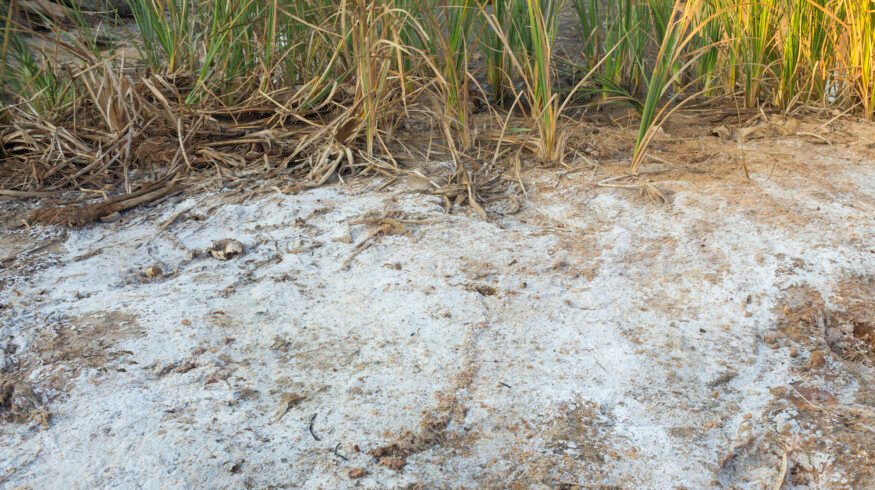
      Salt-affected cropland is leaking far more fertilizer nitrogen into the environment than previously quantified, and fixing it could be one of agriculture’s largest untapped nitrogen savings. A global analysis published in Nature Food finds that saline soils nitrogen losses are 61% higher than on comparable non-saline land, and that ten established management practices could cut those losses by 59%, or about 2.5 million tonnes of nitrogen a year, while raising crop output.

      The study, led by Wen Wen and Baojing Gu of Zhejiang University with colleagues at the International Institute for Applied Systems Analysis (IIASA) and the University of Maryland, estimates net global benefits of $24.5 billion a year, with an uncertainty range of plus or minus $11.8 billion. For fertilizer suppliers and agronomists, the finding frames salinity as a nutrient-efficiency problem as well as a yield problem.

      Why saline soils nitrogen losses are so high

      More than a billion hectares of farmland are affected by salt, which builds up in the root zone as irrigation water evaporates and saline groundwater moves inland. The researchers built a spatially explicit nitrogen budget for the world’s saline croplands at a 0.5-degree resolution, combining a global soil salinity map with European Space Agency cropland data, the IMAGE integrated assessment model, the CHANS nitrogen budget model and MODIS satellite vegetation data.

      By pairing salt-affected and unaffected fields, the team isolated the salinity effect. Salinity raised nitrogen inputs on affected cropland by 13% while cutting the nitrogen harvested in crops by 7%. In practice, farmers apply more fertilizer to offset weak yields, but stressed crops and soil microbes take up less of it.

      ADVERTISEMENT

      The surplus escapes as ammonia volatilization, nitrous oxide, nitrogen oxides and nitrate leaching. Salt stress suppresses the microbial communities that drive nitrification and denitrification, and impairs root growth and water uptake. The nitrous oxide share matters for climate accounting, since the gas is roughly 300 times more potent than carbon dioxide over a century.

      Ten practices to cut saline soils nitrogen losses

      The authors synthesized ten categories of salinity management from field studies. They range from improved irrigation and drainage that flush salts below the root zone, to soil amendments such as biochar, to biological approaches including halophyte-based remediation and salt-tolerant crop varieties. Widespread adoption would reduce annual reactive nitrogen losses from saline croplands by 59% and lift crop production at the same time.

      The scale is notable. A 2.5 million tonne annual nitrogen saving is comparable to the total mitigation potential of some entire national farm systems, a comparison that suggests saline soil management deserves a place alongside fertilizer optimization and manure management in nitrogen pollution control.

      Where the gains are concentrated

      Benefits cluster in large irrigated basins. China, Pakistan and Indonesia have the biggest aggregate mitigation opportunities, reflecting the extent of salt-affected irrigated land in their major river systems. Egypt stands out for the highest benefits per hectare, driven by intensive irrigated farming and severe salinity in the Nile Delta.

      For the fertilizer industry, those markets combine high nitrogen use with poor efficiency on salt-affected land. Better salinity management would not necessarily mean less fertilizer sold, but more of each tonne applied would end up in the crop. That aligns with the broader shift toward nutrient use efficiency that regulators and buyers increasingly expect.

      Limits and what comes next

      Constraints remain. The ten practice categories differ widely in cost, technical difficulty and suitability across soils and water regimes, and effect sizes from field trials may not transfer evenly to every salt-affected landscape. Drainage and leaching schemes need water infrastructure that many smallholder systems lack, and amendments like biochar remain costly at scale.

      The findings add to a growing body of work linking soil biology to nitrogen efficiency, including recent research showing that soil microbiome predators can boost plant biomass and may cut nitrogen fertilizer needs. The authors argue that saline soil restoration fits climate-smart agriculture and climate finance, since it raises output, cuts emissions and returns a net economic gain. Whether governments in the most affected basins fund drainage and soil programs at scale will decide how much of the modeled saving turns into real reductions. The full paper is available via Nature Food.

      Source: Bioengineer.org

      biochar
      China
      Egypt
      food security
      irrigation
      nitrogen
      nitrogen use efficiency
      nitrous oxide
      Pakistan
      research
      soil health
      soil salinity
      sustainability

      Enjoyed this story?

      Every Monday, our subscribers get their hands on a digest of the most trending agriculture news. You can join them too!

      Sign me up
      Check the example

      Discussion0 comments

      Спасибо за комментарий, он будет опубликован на сайте после проверки модератором. Хотите, чтобы ваши комментарии появлялись на сайте мгновенно? Достаточно пройти регистрацию.
      Congratulations, you can be the first to start the conversation.
      Do you have a question or suggestion? Please leave your comment to ignite conversation.
      What’s on your mind?
      Cancel Log in and comment
      Or continue without registration
      Get notified about new comments by email.
      Advertisement
      In focus
      How to get here?
      Stock quotes
      Bayer
      14.46
      0.77
      Bayer Crop Science
      50.8
      1.56
      CF Industries
      115.51
      0.73
      Corteva Agriscience
      77.74
      0.99
      ICL Group
      5.02
      2.33
      Intrepid Potash
      32.34
      4.99
      Mosaic
      22.25
      3.3
      Nutrien
      71.98
      0.35
      Yara International
      23.06
      0.92
      See all
      Most read
      Algeria Launches 3M t/y Phosphate and Urea Fertilizer Project
      Algeria Launches 3M t/y Phosphate and Urea Fertilizer Project
      Brazil phosphate shortage deepens as sulfur squeeze idles plants and H1 deliveries fall 5.4%
      Brazil phosphate shortage deepens as sulfur squeeze idles plants and H1 deliveries fall 5.4%
      Stueve demonstrated autonomous fertilizer warehouse technology
      Stueve demonstrated autonomous fertilizer warehouse technology
      Helios AI’s Hunger Exposure Index reveals 130 million people at risk
      Helios AI’s Hunger Exposure Index reveals 130 million people at risk
      Top 5 Fertilizer Importers in 2026: Brazil, U.S., India, China and Australia
      Top 5 Fertilizer Importers in 2026: Brazil, U.S., India, China and Australia
      Events
      Argus Fertilizer Europe
      Prague, Czechia
      Oct 20 — 22, 2026
      CEAg World Conference and Expo
      Charlotte–Concord (NC), USA
      Nov 10 — 11, 2026
      BioAg Congress
      Anaheim (CA), USA
      Nov 11 — 12, 2026
      Argus Fertilizer China
      Beijing, China
      Nov 12 — 15, 2026
      YugAgro
      Krasnodar, Russia
      Nov 17 — 20, 2026
      See all
      Live
      Trader
      July 29, 06:28 pm
      100 percent AI generated, from a company with a 100 percent AI generated website. I’m sure they have good data, but it’s hard to take it seriously wen it’s just AI church
      Green ammonia is easier to make than to sell
      Stefan Petko
      May 6, 06:48 pm
      It is alarming to see these developments in California. As a vineyard grower, I have faced significant challenges this year, with fertilizer costs rising sharply while market conditions have made it difficult to sell the harvest.
      California peach growers forced to remove 420,000 trees after bankruptcy of Del Monte Foods canneries
      Estebel
      April 23, 10:26 pm
      Sounds like magic ))
      MIT study: rice seeds germinate faster when exposed to rainfall sounds
      Isabelita Barreiro
      December 11, 2025, 01:54 am
      Excellent management of water resources and effective use of water-soluble fertilizers!
      Argentine nano-fertilizer firm AKO Agro expands to Brazil
      Meripa Corson
      August 4, 2025, 01:18 pm
      Where does the money actually go? As a timber land owner, how do I benefit from the legislation?
      USDA commits $80 million to expand timber markets and improve forest resilience
      About
      Sections
      Trade & Policy  ·  Markets  ·  AgTech & Research  ·  Corporate  ·  Sustainability  ·  Interviews  ·  Rankings
      Support
      About  ·  Team  ·  Advertise  ·  Contacts  ·  Submit a Tip  ·  Privacy Policy  ·  Terms of Service  ·  Site Map
      Copyright © 2014-2026 DigitalTree LLC. All rights reserved.
      We deliver content lightning-fast thanks to the managed cloud WordPress hosting with CDN.
      16+
      More to read
      Regenerative agriculture deserves system-wide deployment, scientists argue
      Regenerative agriculture deserves system-wide deployment, scientists argue
      Israel Innovation Authority identifies five technology areas to combat desertification
      Israel Innovation Authority identifies five technology areas to combat desertification
      Ranchbot brings satellite water monitoring to California’s drought-stressed farms
      Ranchbot brings satellite water monitoring to California’s drought-stressed farms
      Advertising that helps us do quality reporting