Skip to content
  • Professionals
  • Gardeners
 
Search
Log in
EN
RU
  • Markets
  • Business
  • Politics
  • Technologies
  • Interviews
  • Rankings
  • Sustainability
  • Events
  • Stock Quotes
  • Business Directory
Trending topic:

fertilizer prices

Featured company:
 
RU
  • Professionals
  • Gardeners
Sections
    Events
    Stock Quotes
    Business Directory
    Trending topic:

    fertilizer prices

    Featured company:
    Follow us...
    Helpful information
    • About
    • Team
    • Advertise
    • Contacts
    • Submit a Tip
    • Privacy Policy
    • Terms of Service
    • Site Map
    Sections
      Seasonal tips
      • Spring
      • Summer
      • Autumn
      • Winter
      Trending topics
      • compost
        24
      • garlic
        2
      • lemon
        1
      • potato
        14
      Follow us...
      Helpful information
      • About
      • Team
      • Advertise
      • Contacts
      • Submit a Tip
      • Privacy Policy
      • Terms of Service
      • Site Map
      Copyright © 2014-2026 DigitalTree LLC. All rights reserved.
      We deliver content lightning-fast thanks to the managed cloud WordPress hosting with CDN.
      16+

      Home / Technologies

      Deep-space flight shown to accelerate mutations in rice seeds, opening new possibilities for crop breeding

      Timothy Bueno avatar Timothy Bueno
      May 23, 2026, 11:00 am
      May 23, 2026, 11:00 am
      [esi post-views ttl=0]
      Technologies
      Sustainability
      Deep-space flight shown to accelerate mutations in rice seeds, opening new possibilities for crop breeding

      Save for later
      Share

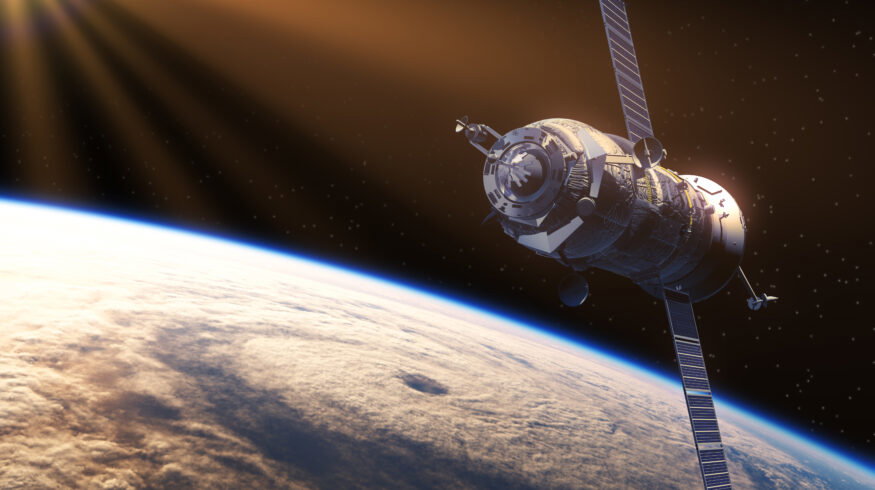
      Chinese researchers have found that rice seeds exposed to deep-space radiation during a lunar-orbit mission showed significantly higher rates of DNA and RNA modifications than ground-control seeds — and identified a transcription factor that acts as a biological gatekeeper suppressing the most severely mutated cells, according to a study published in Nature Communications on May 19.

      The study used multi-omics analysis — combining genomic, transcriptomic, and epigenomic data — alongside single-cell profiling to characterize the specific nature of mutations induced in rice seeds by deep-space exposure. The research found elevated rates of DNA modification and altered RNA editing patterns consistent with galactic cosmic ray and heavy-ion radiation at intensities substantially higher than those encountered in low Earth orbit.

      The SVT1 discovery: a built-in genetic gatekeeper

      The most significant mechanistic finding centers on a transcription factor the researchers named SVT1. Single-cell analysis showed that mutation-carrying cells tend to undergo uncontrolled differentiation — a process that would disrupt normal seedling development — and that SVT1 acts through the MAPK signaling pathway to suppress this differentiation in the most severely affected cells. In other words, the plant carries a built-in molecular response that selectively tempers the genetic damage inflicted by deep-space radiation, allowing certain mutation-carrying cells to survive and propagate while filtering out the most damaging changes.

      Why this matters for crop breeding

      Space mutagenesis is already a working crop improvement tool. China has sent rice, wheat, and cotton seeds on more than 30 recoverable satellite missions since the 1980s, and several commercially released rice varieties in China trace improved disease resistance or yield performance to mutations first induced in space. The new mechanistic understanding has two practical implications. First, identifying SVT1 and the MAPK pathway gives breeders potential molecular targets to modulate which mutations survive seedling development. Second, the finding that deep-space radiation produces a different mutation pattern than low-orbit flight suggests that dedicated space breeding missions could eventually be designed to target specific genomic regions more precisely.

      ADVERTISEMENT

      The fertilizer connection: nitrogen use efficiency

      Space mutation breeding is not a substitute for nitrogen management, but it is directly relevant to one of the fertilizer industry’s most active research priorities: nitrogen use efficiency (NUE). Rice varieties bred for improved NUE absorb and metabolize a larger fraction of applied nitrogen fertilizer, reducing both farm input costs and the nitrous oxide (N₂O) emissions from nitrogen lost to the atmosphere. If the SVT1 pathway can be harnessed to direct space-induced mutations toward NUE-linked genomic regions, it would offer an unconventional but potentially powerful route to lowering global fertilizer demand per tonne of grain produced.

      Rice feeds roughly 3.5 billion people globally, and conventional breeding programs face intensifying pressure to deliver heat stress tolerance, blast resistance, and yield performance under suboptimal nitrogen conditions. Any technique that compresses the time between mutation induction and stable heritable trait expression is commercially significant.

      Watch: China’s space breeding program has operated with relatively limited publication of mechanistic data. This is one of the most molecularly detailed studies to date and may catalyze parallel work by crop breeding programs in India, Japan, and Europe.

      Source: Nature Communications

      agricultural research
      agriculture
      China
      nitrogen fertilizer
      nitrogen fertilizers
      research
      Science
      soil health
      study

      Enjoyed this story?

      Every Monday, our subscribers get their hands on a digest of the most trending agriculture news. You can join them too!


      Sign me up
      Check the example

      Discussion0 comments

      Спасибо за комментарий, он будет опубликован на сайте после проверки модератором. Хотите, чтобы ваши комментарии появлялись на сайте мгновенно? Достаточно пройти регистрацию.
      Congratulations, you can be the first to start the conversation.
      Do you have a question or suggestion? Please leave your comment to ignite conversation.
      What’s on your mind?
      Cancel Log in and comment
      Or continue without registration
      Get notified about new comments by email.
      Advertisement
      In focus
      How to get here?
      Stock quotes
      Bayer
      11.11
      1.42
      Bayer Crop Science
      38.51
      1.03
      CF Industries
      121.7
      0.01
      Corteva Agriscience
      79.56
      0.66
      ICL Group
      6.46
      0.15
      Intrepid Potash
      39.51
      2.06
      Mosaic
      22.51
      2.6
      Nutrien
      70.13
      0.16
      Yara International
      28.34
      1.73
      See all
      Most read
      IPL finalizes 1.346mt DAP purchase from 14 global suppliers at $930–935/t CFR
      IPL finalizes 1.346mt DAP purchase from 14 global suppliers at $930–935/t CFR
      California peach growers forced to remove 420,000 trees after bankruptcy of Del Monte Foods canneries
      California peach growers forced to remove 420,000 trees after bankruptcy of Del Monte Foods canneries
      Russia limits fertilizer exports to 20 million tons through November 2026
      Russia limits fertilizer exports to 20 million tons through November 2026
      Yara CEO: fertilizer shortage is costing 10 billion meals per week globally
      Yara CEO: fertilizer shortage is costing 10 billion meals per week globally
      Strait of Hormuz blockade disrupts global fertilizer trade, raising food supply concerns
      Strait of Hormuz blockade disrupts global fertilizer trade, raising food supply concerns
      Events
      Fertilizer Summit
      Chicago (IL), USA
      Jun 1 — 2, 2026
      Argus Clean Ammonia Asia
      Tokyo, Japan
      Jun 2 — 4, 2026
      Wood Mackenzie Hydrogen Hydrogen Conference
      London, UK
      Jun 4, 2026
      Agriculture & Organic Farming Summit
      Paris, France
      Jun 17 — 18, 2026
      International Crop-Science Conference & Expo
      New Delhi, India
      Jun 25 — 26, 2026
      See all
      Live
      Stefan Petko
      May 6, 06:48 pm
      It is alarming to see these developments in California. As a vineyard grower, I have faced significant challenges this year, with fertilizer costs rising sharply while market conditions have made it difficult to sell the harvest.
      California peach growers forced to remove 420,000 trees after bankruptcy of Del Monte Foods canneries
      Estebel
      April 23, 10:26 pm
      Sounds like magic ))
      MIT study: rice seeds germinate faster when exposed to rainfall sounds
      Isabelita Barreiro
      December 11, 2025, 01:54 am
      Excellent management of water resources and effective use of water-soluble fertilizers!
      Argentine nano-fertilizer firm AKO Agro expands to Brazil
      Meripa Corson
      August 4, 2025, 01:18 pm
      Where does the money actually go? As a timber land owner, how do I benefit from the legislation?
      USDA commits $80 million to expand timber markets and improve forest resilience
      Patonkas Luksompulus
      January 21, 2025, 12:36 pm
      Greece meeds biological fertilizers! Great news about De sangosse.
      DE SANGOSSE expands operations with Greek subsidiary
      About
      Sections
      Markets  ·  Business  ·  Politics  ·  Technologies  ·  Interviews  ·  Rankings  ·  Sustainability
      Support
      About  ·  Team  ·  Advertise  ·  Contacts  ·  Submit a Tip  ·  Privacy Policy  ·  Terms of Service  ·  Site Map
      Copyright © 2014-2026 DigitalTree LLC. All rights reserved.
      We deliver content lightning-fast thanks to the managed cloud WordPress hosting with CDN.
      16+
      More to read
      Brazil sends seeds to International Space Station for agricultural research
      Brazil sends seeds to International Space Station for agricultural research
      Heirloom Seeds: Preserving Cultural Heritage and Biodiversity
      Heirloom Seeds: Preserving Cultural Heritage and Biodiversity
      European scientists are close to creating self-fertilizing crops
      European scientists are close to creating self-fertilizing crops
      Advertising that helps us do quality reporting