

Faraday Earth targets $500-per-ton green ammonia with plasma technology after AgFunder investment

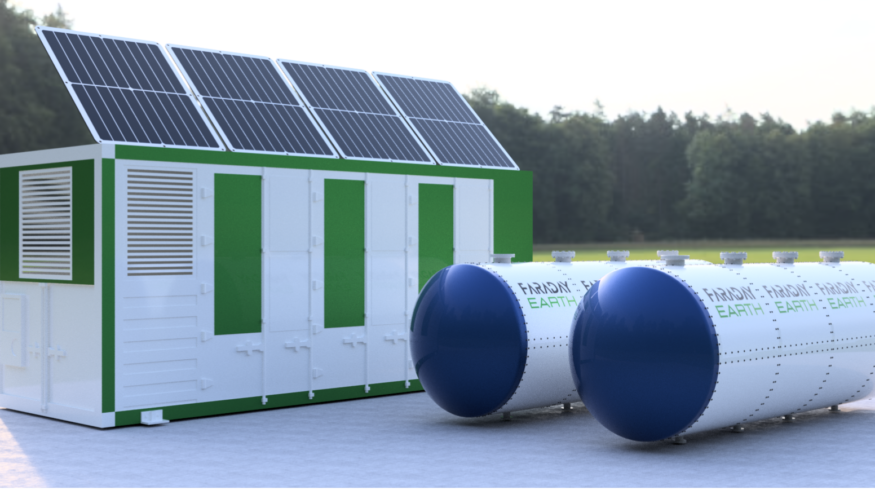

Faraday Earth, a U.S.-based developer of plasma-based green ammonia technology, reports its process could achieve a levelized cost of approximately $500 per metric ton. This approaches the cost of conventional gray ammonia and could make low-carbon ammonia commercially viable. The company announced this target after a recent investment from AgFunder, according to AgFunderNews.
Unlike the conventional Haber-Bosch process, which uses fossil fuels at high temperatures and pressures, Faraday Earth’s technology uses a high-voltage electric field to generate non-thermal plasma. This plasma activates nitrogen molecules, which are then combined with green hydrogen produced via electrolysis or from geological sources. Cofounder Debayan Saha stated that machine learning has been essential to improving reactor performance by continuously optimizing conditions via an AI-powered digital twin, thereby significantly increasing ammonia yields. Saha noted that gray ammonia prices ranged from $300 to $700 per metric ton before the recent conflict involving Iran.
Faraday Earth is developing modular, container-sized units capable of producing several metric tons of ammonia per day. This approach enables fertilizer producers and agricultural markets to manufacture ammonia closer to end users, reducing transportation costs. The company has deployed a demonstration unit, secured at least one paying customer, and signed a commercialization agreement with a major industry partner. AgFunder stated that this technology could support the expansion of localized ammonia production as global investment in green ammonia projects increases. Ammonia remains the primary feedstock for nitrogen fertilizers, making it essential to global food production.
Source: AgFunderNews
Faraday Earth: five things to know
The startup produces green ammonia using non-thermal plasma instead of the conventional Haber-Bosch process. Ammonia is the building block for most nitrogen fertilizers and can be used directly or converted into urea, ammonium nitrate, and ammonium sulfate. Faraday Earth is incorporated in the United States with research and development operations in India.
A high-voltage electric field creates non-thermal plasma, a highly energized gas that excites nitrogen and makes the normally inert molecule reactive. The activated nitrogen then combines with green hydrogen, sourced from electrolysis or naturally occurring geological hydrogen, to form ammonia. A catalyst still assists the final step, but plasma handles the hard part of nitrogen activation.
Early yields were 60 to 70 times worse than today. The turnaround came when cofounders Debayan Saha and Shashi Ranjan built an AI digital twin of the reactor, inspired by Google DeepMind’s use of machine learning to control fusion plasmas, allowing them to tune voltage, current, flow rate, and electrode parameters in near real time.
Saha projects a levelized cost of ammonia, including capital, energy, and maintenance, of around $500 per tonne, with room to fall further toward the theoretical limit. For comparison, gray ammonia produced via Haber-Bosch ranged from $300 to $700 per tonne before the 2026 Iran conflict.
Faraday Earth has built a demonstration unit, secured letters of intent, purchase orders, and at least one paying customer, and signed a commercialization agreement with a leading industry company. It plans containerized units roughly 40 by 10 feet that each make a few tonnes of ammonia per day, with modules stacked to serve larger demand.

Enjoyed this story?
Every Monday, our subscribers get their hands on a digest of the most trending agriculture news. You can join them too!






Discussion0 comments