

ACME secures 405,000-tonne green ammonia export deal with Japan’s IHI

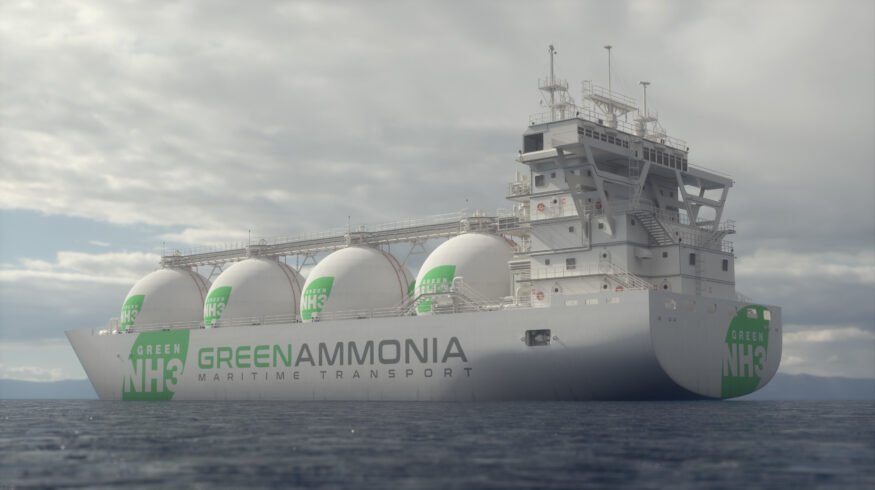

India’s ACME Cleantech Solutions has signed a long-term deal to export 405,000 tonnes of green ammonia a year to Japan’s IHI Corporation, in what the companies called one of the largest such commitments between the two countries to date.
The agreement, signed at a ceremony in New Delhi in early July, is underwritten by Japan’s Contract for Difference (CfD) scheme for low-carbon ammonia. That price support shifts much of the commercial risk of early green ammonia trade onto the buyer’s side, giving Indian developers the demand certainty they need to reach final investment decisions.
For a country that is both a major ammonia importer and an emerging clean-fuel exporter, the deal signals that India’s green ammonia export ambitions are moving from policy targets to firm offtake.
Inside the IHI green ammonia export deal
Under the arrangement, ACME will supply 405,000 tonnes of green ammonia a year to IHI. The volume is backed by Japan’s CfD mechanism, administered by the Ministry of Economy, Trade and Industry (METI), which tops up the price paid by Japanese buyers to bridge the gap between low-carbon ammonia and cheaper conventional supply. Union Minister for New and Renewable Energy Pralhad Joshi said the subsidy “reflects the growing global confidence in India’s green hydrogen ecosystem.”
ACME operates one of India’s earliest solar-to-ammonia pilot plants at Bikaner in Rajasthan and is developing large renewable-ammonia projects, including a $4.2 billion complex at Duqm in Oman.
A parallel green methanol pact
ACME also signed a separate 10-year agreement with Mitsubishi Gas Chemical to supply 100,000 tonnes of green methanol a year from its facility at Paradip on India’s east coast. The methanol targets the maritime sector and is designed to meet European Renewable Fuels of Non-Biological Origin (RFNBO) rules and International Maritime Organization standards for cleaner marine fuels.
What the deal means for India’s green ammonia export push
The two contracts reinforce demand for capacity built under India’s Strategic Interventions for Green Hydrogen Transition (SIGHT) programme, which recently locked in 670,000 tonnes of green ammonia a year for domestic fertilizer plants. MNRE Secretary Santosh Kumar Sarangi said the agreements create a market linkage with Japan, show the sector is becoming commercially mature and help build international green hydrogen value chains. METI vice-minister Takehiko Matsuo described the deals as a flagship outcome of India-Japan clean-energy cooperation.
The tie-up matters for fertilizer markets because ammonia is the building block of nitrogen fertilizer, and India remains one of the world’s largest ammonia importers, bringing in about 2.4 million tonnes in 2021 according to World Bank figures. Renewable-ammonia capacity built for export also creates a low-carbon supply option that could eventually displace grey ammonia in Indian fertilizer production.
The government has signaled more volume is coming, with a live tender for 750,000 tonnes a year of green ammonia and a further 450,000 tonnes floated under the National Green Hydrogen Mission. ACME did not disclose a first-delivery date for the IHI cargoes. The pace of the next offtake deals will show whether India can convert policy support into a durable green ammonia export industry.
Source: Indian Chemical News
What to know about ACME’s green ammonia export deal
ACME Cleantech Solutions signed the agreements with two Japanese companies at Atal Akshay Urja Bhawan in New Delhi: IHI Corporation for green ammonia and Mitsubishi Gas Chemical for green methanol. Officials from India’s Ministry of New and Renewable Energy and Japan’s METI attended the signing.
ACME will supply 405,000 tonnes a year of green ammonia to IHI and 100,000 tonnes a year of green methanol to Mitsubishi Gas Chemical under a 10-year contract.
It is a METI-administered price-support mechanism for low-carbon ammonia that tops up what Japanese buyers pay, covering the gap versus cheaper conventional supply. By de-risking early purchases, it is designed to underpin the long-term commercial viability of imports.
The green methanol will come from ACME’s facility at Paradip in Odisha. The announcement did not name the production site or a first-delivery date for the green ammonia.
The volumes support capacity built under the SIGHT programme within the National Green Hydrogen Mission. A tender for 750,000 tonnes a year of green ammonia is live, with a further 450,000 tonnes floated, part of India’s plan to incentivise more than a million tonnes a year of green hydrogen.

Enjoyed this story?
Every Monday, our subscribers get their hands on a digest of the most trending agriculture news. You can join them too!




Discussion0 comments