

OCP H1 2026: Sulfur Costs Triple as EBITDA Falls 28.5%

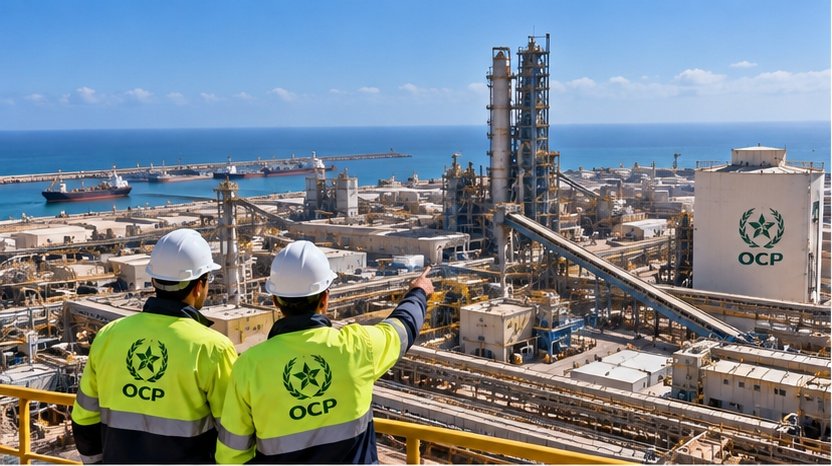

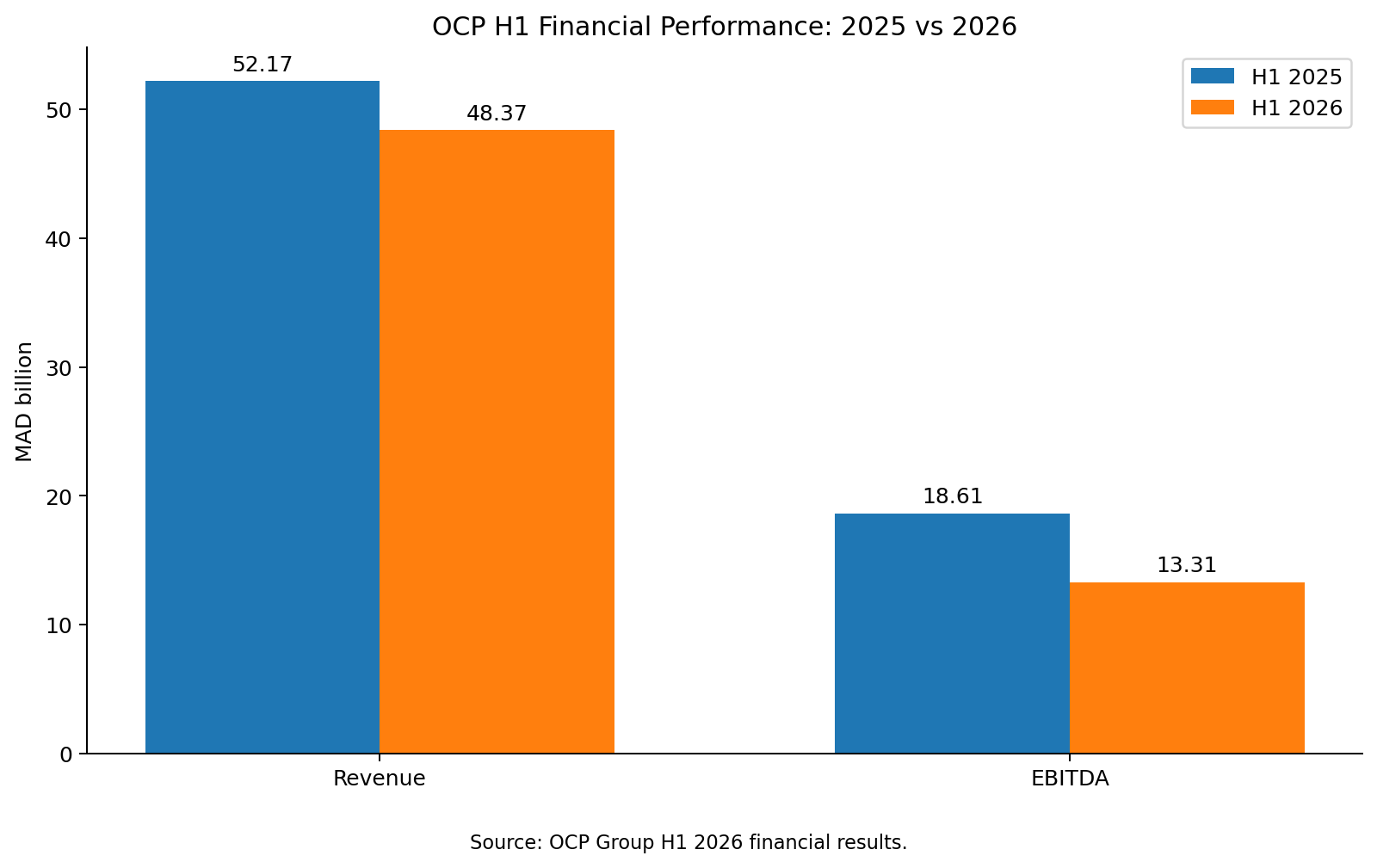
OCP Group reported a sharp decline in first-half 2026 earnings as the global phosphate market absorbed an exceptional sulfur shock, weaker fertilizer demand and tighter raw-material flows. Revenue fell 7.3% year on year to MAD 48.37 billion, while EBITDA declined 28.5% to MAD 13.31 billion.
The Moroccan phosphate producer nevertheless maintained an EBITDA margin of 28% for the first six months of the year, compared with 36% in the first half of 2025. The group said sulfur prices roughly tripled during the period, while phosphate fertilizer prices increased by only about 20%, creating one of the most difficult cost environments the industry has faced in years.
OCP responded by securing sulfur supplies early, diversifying procurement, adjusting maintenance schedules and shifting more fertilizer production toward triple superphosphate (TSP), which requires less sulfur and no ammonia. TSP accounted for 35% of OCP’s fertilizer export volumes in H1 2026, up from 26% a year earlier.
OCP revenue falls 7.3% as EBITDA drops 28.5%
OCP’s first-half results show the difference between maintaining sales and protecting margins during an input-cost shock.
| Financial indicator | H1 2025 | H1 2026 | Change |
|---|---|---|---|
| Revenue | MAD 52.17bn | MAD 48.37bn | -7.3% |
| EBITDA | MAD 18.61bn | MAD 13.31bn | -28.5% |
| EBITDA margin | 36% | 28% | -8 percentage points |
| Capital expenditure | MAD 15.16bn | MAD 16.07bn | +6.0% |
Second-quarter margin was slightly lower at approximately 27%, reflecting the period when sulfur-market disruption became most severe.
The group’s consolidated net result also moved into the red. OCP reported a MAD 2.84 billion net loss attributable to the group for H1 2026, compared with a MAD 8.25 billion profit a year earlier. The decline reflected not only weaker operating performance but also higher depreciation, financing costs and adverse foreign-exchange effects.
Sulfur became the critical pressure point for phosphate fertilizer
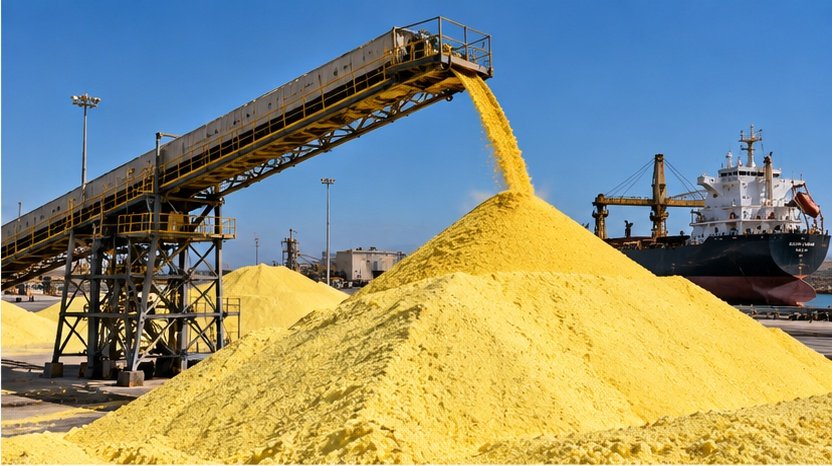
Sulfur is essential to phosphate fertilizer production because it is converted into sulfuric acid, which is then used to process phosphate rock into phosphoric acid and finished fertilizers such as DAP, MAP and TSP.
The global sulfur market tightened sharply during the first half of 2026 as Middle Eastern exports were disrupted and additional restrictions reduced alternative supply. IFPRI reported that elemental sulfur exports fell by roughly one-third year on year during the first half, with the Gulf region accounting for most of the reduction.
OCP said sulfur prices roughly tripled during the first half. Fertilizer prices increased by only around 20%, meaning finished-product prices did not rise fast enough to fully compensate for the increase in raw-material costs.
Fertilizer Daily previously reported that sulfur shortages were becoming one of the main risks to global phosphate supply as disruptions affected several of the world’s largest traded sulfur sources.
By September, spot sulfur prices in some markets had exceeded $1,000 per tonne, fundamentally changing phosphate-production economics. A Fertilizer Daily analysis of the sulfur shock showed how rapidly higher sulfur prices were feeding into phosphate fertilizer costs.
OCP shifts fertilizer exports toward TSP
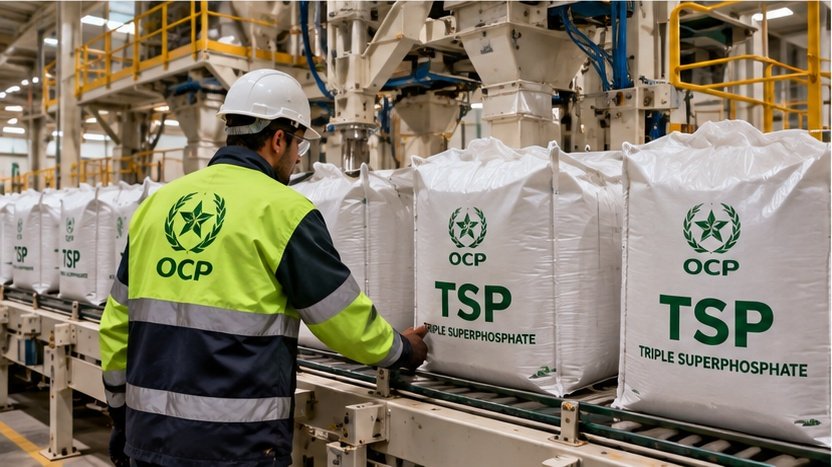
One of the clearest strategic responses in OCP’s first-half results was the change in fertilizer product mix.
TSP represented 35% of fertilizer export volumes in H1 2026, compared with 26% in H1 2025.
| OCP fertilizer mix indicator | H1 2025 | H1 2026 |
|---|---|---|
| TSP share of fertilizer exports | 26% | 35% |
| Change | +9 percentage points | |
The shift matters because TSP uses less sulfur than some ammoniated phosphate fertilizers and does not require ammonia. In a market where both sulfur and ammonia have been expensive or constrained, that gives OCP greater flexibility in how it allocates raw materials.
OCP has also been expanding physical TSP capacity. A third TSP production line at Jorf Lasfar, with annual capacity of approximately 1 million tonnes, entered service in July 2026.
Fertilizer Daily reported in August that OCP is targeting roughly 4.5 million tonnes of new phosphate fertilizer capacity by the end of 2026 under the first phase of its SP2M expansion program.
Global phosphate fertilizer trade fell about 22%
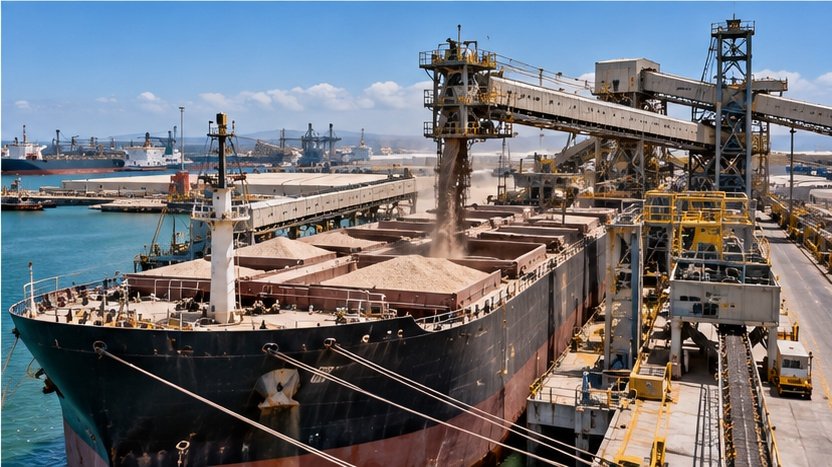
The weakness in OCP’s first-half volumes was part of a wider contraction in international phosphate fertilizer trade.
OCP estimated that global phosphate fertilizer trade declined by approximately 22% during the first half of 2026 as affordability deteriorated and buyers in several major markets reduced or delayed purchases.
India entered the year with elevated inventories and went through a period of destocking. European demand was affected by weaker affordability and purchases that had been brought forward into late 2025, while several African markets also imported less.
Brazil proved more resilient than some other regions, although phosphate availability remained tight because of sulfur costs and constrained domestic production.
OCP’s own Moroccan phosphate fertilizer shipments declined approximately 16%, less than the estimated contraction in global trade. As a result, the company said Morocco’s share of global phosphate fertilizer trade increased from around 28% to 30%.
Fertilizer revenue fell 7%, while specialty products expanded
OCP’s segment performance also shows how the group is becoming less dependent on conventional fertilizer volumes alone.
Fertilizer revenue declined approximately 7% year on year in local currency, mainly because of lower export volumes.
Revenue from phosphate rock fell roughly 28%, while phosphoric acid revenue declined about 9%. OCP said part of the phosphoric acid decline reflected a deliberate decision to retain more acid internally for fertilizer and granulation production instead of selling it externally.
In contrast, revenue from OCP’s Specialty Products & Solutions business increased approximately 26% to MAD 4.76 billion.
| Business line | H1 2026 change |
|---|---|
| Fertilizer revenue | -7% |
| Phosphate rock revenue | -28% |
| Phosphoric acid revenue | -9% |
| Specialty Products & Solutions revenue | +26% |
The specialty-products business includes higher-value applications outside conventional bulk fertilizer markets, including food, industrial and animal-nutrition uses.
OCP moved maintenance forward to preserve second-half flexibility
OCP also adjusted its operating schedule during the most difficult part of the sulfur disruption.
The company brought forward part of its planned maintenance program into the second quarter. This allowed production outages that had originally been expected later in the year to be completed during a period of weaker phosphate demand and unusually high raw-material costs.
The strategy reduced production exposure during an unfavorable margin environment while preserving more operating flexibility for the second half.
This follows OCP’s earlier response to the supply shock. In May, Fertilizer Daily reported that OCP had secured sulfur inventory before the largest price increase and was shifting toward products that required less sulfur.
OCP resumes U.S. shipments after temporary duty suspension
One of the more important changes for OCP after the end of the first half was renewed access to the U.S. phosphate fertilizer market.
The United States temporarily suspended countervailing duties on Moroccan phosphate fertilizer in late June, opening an eight-month duty-free window as domestic phosphate supply tightened.
OCP resumed preparations for U.S. phosphate shipments in July, providing the group with an additional market for second-half volumes.
The reopening came at a time when U.S. phosphate producers were also reducing output because of sulfur shortages, making imported Moroccan supply strategically more important.
Capital spending rises despite weaker earnings
OCP continued to invest heavily even as operating earnings declined.
Capital expenditure reached approximately MAD 16.07 billion in the first half, compared with MAD 15.16 billion a year earlier.
The company’s investment program includes new fertilizer capacity, water infrastructure, renewable energy, industrial expansion and the Mzinda-Meskala phosphate development.
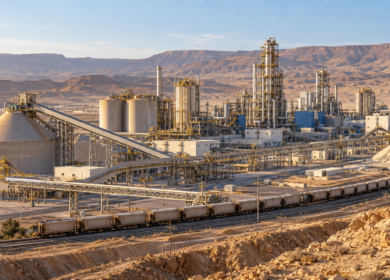
OCP’s integrated industrial system remains centered on sites such as Jorf Lasfar, where phosphate rock, phosphoric acid, sulfuric acid and finished plant-nutrition products are produced within a single industrial platform.
At the end of June, cash and cash equivalents stood at approximately MAD 32.69 billion, up sharply from the end of 2025.
Net financial debt declined to approximately MAD 115.47 billion from MAD 119.12 billion at the end of 2025, although the net-debt-to-EBITDA ratio increased to 3.05 times as earnings declined.
The sulfur shock changes the economics of phosphate production
OCP’s first-half results illustrate an important change in the global phosphate market: access to phosphate rock alone is no longer enough to guarantee low-cost fertilizer production when sulfur supply is constrained.
Integrated producers traditionally benefit from control over phosphate ore and processing assets. In 2026, however, sulfur became the marginal input determining how much phosphate fertilizer producers could economically manufacture.
That dynamic has encouraged producers to:
- secure sulfur inventories further in advance;
- diversify sulfur suppliers;
- shift toward lower-sulfur fertilizer products;
- reduce production when raw-material economics become unfavorable;
- prioritize higher-value or strategically important markets;
- increase investment in supply-chain resilience.
OCP’s increase in TSP exports is therefore not simply a product-marketing decision. It is an operational response to a major change in raw-material economics.
What to watch in H2 2026
The second half will depend on whether the global sulfur market begins to normalize and whether phosphate fertilizer demand recovers in major importing regions.
Key indicators include:
- the direction of sulfur prices and export availability;
- OCP’s ability to maintain higher TSP production;
- the ramp-up of the new 1 million t/y TSP line at Jorf Lasfar;
- additional phosphate fertilizer shipments to the United States;
- Brazilian fertilizer demand ahead of the next crop cycle;
- India’s phosphate inventories and import activity;
- the return, or continued absence, of Chinese phosphate exports;
- progress on OCP’s wider capacity-expansion program.
If sulfur costs ease while fertilizer prices remain elevated, phosphate producer margins could recover quickly. If sulfur remains scarce, however, the product-mix changes seen in the first half may become a more permanent feature of the global phosphate market.
Frequently asked questions
OCP reported first-half 2026 revenue of approximately MAD 48.37 billion, down 7.3% from MAD 52.17 billion a year earlier.
EBITDA declined approximately 28.5% to MAD 13.31 billion from MAD 18.61 billion in H1 2025.
The main pressures included sharply higher sulfur and ammonia costs, weaker global phosphate fertilizer demand, lower sales volumes and unfavorable financial and foreign-exchange effects.
TSP requires less sulfur than several other phosphate fertilizers and does not require ammonia. This made it more attractive during the 2026 sulfur and ammonia cost shock.
TSP accounted for approximately 35% of OCP’s fertilizer export volumes in H1 2026, compared with 26% in the same period of 2025.
OCP estimated that global phosphate fertilizer trade contracted by approximately 22% during the first half of 2026.
Yes. OCP continued to invest during the first half and is adding new TSP and broader phosphate fertilizer capacity as part of its multi-year industrial expansion program.
Sources: OCP Group Financial Results, OCP Group Industrial Operations, IFPRI, Morocco World News

Enjoyed this story?
Every Monday, our subscribers get their hands on a digest of the most trending agriculture news. You can join them too!




Discussion0 comments