Skip to content
  • Professionals
  • Gardeners
 
Search
Log in
EN
RU
  • Trade & Policy
  • Markets
  • AgTech & Research
  • Corporate
  • Sustainability
  • Interviews
  • Rankings
  • Events
  • Stock Quotes
  • Business Directory
Trending topic:

fertilizer prices

Featured company:
 
RU
  • Professionals
  • Gardeners
Sections
    Events
    Stock Quotes
    Business Directory
    Trending topic:

    fertilizer prices

    Featured company:
    Follow us...
    Helpful information
    • About
    • Team
    • Advertise
    • Contacts
    • Submit a Tip
    • Privacy Policy
    • Terms of Service
    • Site Map
    Sections
      Seasonal tips
      • Spring
      • Summer
      • Autumn
      • Winter
      Trending topics
      • compost
        31
      • garlic
        2
      • lemon
        1
      • potato
        16
      Follow us...
      Helpful information
      • About
      • Team
      • Advertise
      • Contacts
      • Submit a Tip
      • Privacy Policy
      • Terms of Service
      • Site Map
      Copyright © 2014-2026 DigitalTree LLC. All rights reserved.
      We deliver content lightning-fast thanks to the managed cloud WordPress hosting with CDN.
      16+

      Home / AgTech & Research

      Microbial nitrogen fertilizer could replace up to 50% of synthetic N

      Kim Clarksen avatar Kim Clarksen
      November 18, 2026, 5:00 pm
      November 18, 2026, 5:00 pm
      Views: 2
      AgTech & Research
      Markets
      Nitrogen
      Startups
      Microbial nitrogen fertilizer could replace up to 50% of synthetic N
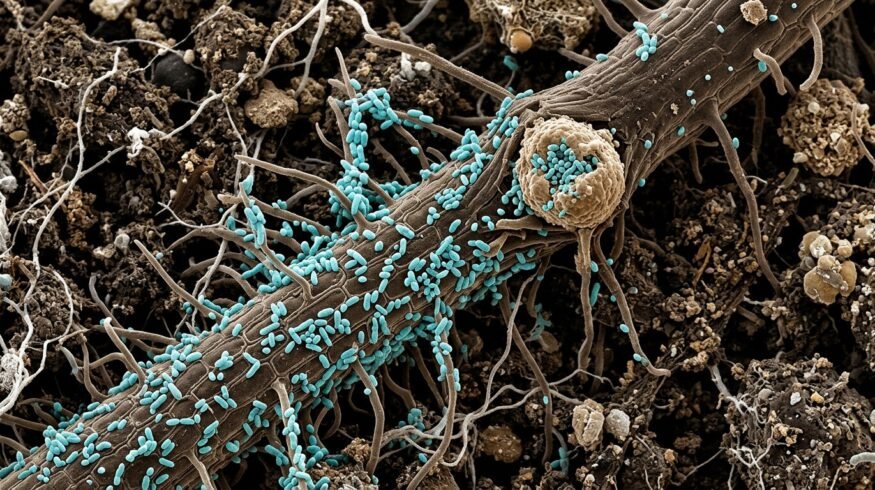
      Image Credits: AI Generated
      Save for later
      Share
      Never miss important fertilizer news

      Microbial nitrogen fertilizer could eventually replace as much as half of synthetic nitrogen use, according to a November 10 commentary in Nature Biotechnology. The figure is a long-term ceiling proposed by researchers, not a result demonstrated in commercial fields; Switch Bioworks is testing its engineered microbes while Pivot Bio’s products are further along in market use.

      The 50% estimate puts a potential scale on biological nitrogen fixation, but the gap between a technical target and a dependable fertilizer replacement remains substantial. The same commentary discussed environmental gains from partial replacement, while earlier Fertilizer Daily coverage of the Switch Bioworks paper focused on the research priorities needed to improve microbial performance.

      Switch founder and CEO Tim Schnabel told AgFunderNews that replacing about 25% of nitrogen fertilizer while maintaining yields would be a meaningful commercial outcome. He described roughly 50% as the likely upper limit for biological systems. Switch’s current field trials are designed to test whether its microbes colonize corn roots and activate nitrogen production, not to establish a statistically reliable fertilizer-replacement or yield result in their first season.

      Microbial nitrogen fertilizer remains at different commercial stages

      Switch and Pivot are pursuing different engineering routes. Pivot Bio edits genes within its bacterial strains to keep nitrogen fixation active when other nitrogen is present. Its chief technology officer, Travis Frey, told Nature that the company has applied its products across tens of millions of hectares over the past decade. Pivot has reported field-test replacement of roughly 20% to 25% of conventional nitrogen rates, a company figure that should not be treated as an independently established result across all crops and farms.

      ADVERTISEMENT

      Switch, which expanded its Midwest corn trials this year, aims to delay nitrogen production until microbes have established themselves on plant roots. Nitrogen fixation consumes energy, and microbes that produce ammonia too early may lose the ability to compete with native soil organisms. Switch says a genetic switch lets its strains first grow and colonize, then activate ammonia production after conditions change.

      The distinction also affects regulatory status. Nature reported that Switch’s product uses genetic material from other organisms and is transgenic, while Pivot’s products rely on edits to the bacteria’s own genes. Switch has received authorization for field trials in the U.S. and Brazil, according to reporting on the company’s program; the trials are testing microbial establishment and switch behavior rather than proving commercial nitrogen delivery.

      Field evidence and yield parity will determine the ceiling

      For growers, the relevant measure is not the percentage a microbe can theoretically replace, but whether it supplies usable nitrogen without reducing yield or adding application risk. Switch’s trials are measuring root colonization, activation timing, plant nitrogen-response indicators, and yield. Schnabel said the current trials are not statistically powered to show fertilizer replacement or yield gains in their first year.

      That limitation matters because microbial products are exposed to variable soils, weather, and native microbial communities. Other companies, including BioConsortia with its nitrogen-fixing seed treatment, face the same hurdle. Nature Biotechnology’s commentary identifies better testing and improved microbial establishment as continuing challenges. A broad upper-bound estimate does not establish performance across crops or growing conditions, and no commercial-scale result in the material reviewed here demonstrates a 50% reduction in synthetic nitrogen use.

      The economic case will also depend on cost per acre, consistency, and yield parity. Schnabel told AgFunderNews that even savings of $20 to $30 per acre could matter to growers, but that is a company executive’s assessment, not a disclosed product price or independently validated farm-level return. Neither company has shown that the 50% ceiling is commercially attainable across broad acreage.

      Commercialization depends on repeatable field performance

      Pivot’s reported acreage and field-use history give it a commercial head start, while Switch is still testing a newer system that must prove it can establish reliably before producing nitrogen. The approaches are not yet directly comparable: the published 20% to 25% figure is a Pivot-reported field replacement claim, while the 50% figure is a projected biological upper limit discussed by researchers and Switch’s CEO.

      The researchers’ affiliations also warrant context. Several authors of the Nature Biotechnology commentary work for and hold equity in Switch, while two are scientific advisers to Pivot, and the paper discloses those interests. Wider, longer field trials that measure nitrogen transfer and yield will determine whether the proposed ceiling can translate into dependable savings for farmers.

      Source: BigGo Finance

      agricultural research
      BioConsortia
      Brazil
      corn
      gene editing
      microbes
      microbial fertilizers
      nitrogen fertilizer
      nitrogen fixation
      nitrogen-fixing
      North America
      Pivot Bio
      research
      startup
      study
      Switch Bioworks
      United States

      Enjoyed this story?

      Every Monday, our subscribers get their hands on a digest of the most trending agriculture news. You can join them too!
      Sign me up
      Check the example

      Discussion0 comments

      Спасибо за комментарий, он будет опубликован на сайте после проверки модератором. Хотите, чтобы ваши комментарии появлялись на сайте мгновенно? Достаточно пройти регистрацию.
      Congratulations, you can be the first to start the conversation.
      Do you have a question or suggestion? Please leave your comment to ignite conversation.
      What’s on your mind?
      Cancel Log in and comment
      Or continue without registration
      Get notified about new comments by email.
      Advertisement
      In focus
      How to get here?
      Stock quotes
      Bayer
      15.44
      1.03
      Bayer Crop Science
      56.14
      1.51
      CF Industries
      119.34
      0.43
      Corteva Agriscience
      8.82
      2.43
      ICL Group
      4.33
      1.81
      Intrepid Potash
      30.96
      2.18
      Mosaic
      20.74
      2.31
      Nutrien
      69.22
      0.41
      Yara International
      20.64
      1.57
      See all
      Most read
      Uralchem expands branded fertilizer sales in Thailand
      Uralchem expands branded fertilizer sales in Thailand
      Fertiglobe weighs $1.5 billion phosphate fertilizer project in Egypt
      Fertiglobe weighs $1.5 billion phosphate fertilizer project in Egypt
      Coastal Roots Farm turns regenerative agriculture into a community operating model
      Coastal Roots Farm turns regenerative agriculture into a community operating model
      Global phosphate production to hit just 45 Mt vs 75 Mt demand, Mosaic warns of critical shortage
      Global phosphate production to hit just 45 Mt vs 75 Mt demand, Mosaic warns of critical shortage
      Hormuz fertilizer shipments stay at zero for 2nd month as critical sulfur squeeze bites
      Hormuz fertilizer shipments stay at zero for 2nd month as critical sulfur squeeze bites
      Events
      YugAgro
      Krasnodar, Russia
      Nov 17 — 20, 2026
      The Fertilizer Show
      Tampa (FL), USA
      Nov 18 — 19, 2026
      Syngas Nitrogen Uzbekistan and CIS
      Tashkent, Uzbekistan
      Nov 18 — 19, 2026
      Argus Clean Ammonia Europe
      Rotterdam, Netherlands
      Dec 1 — 3, 2026
      Organic Grower Summit
      Monterey (CA), USA
      Dec 2 — 3, 2026
      See all
      Live
      Stefan Petko
      May 6, 06:48 pm
      It is alarming to see these developments in California. As a vineyard grower, I have faced significant challenges this year, with fertilizer costs rising sharply while market conditions have made it difficult to sell the harvest.
      California peach growers forced to remove 420,000 trees after bankruptcy of Del Monte Foods canneries
      Estebel
      April 23, 10:26 pm
      Sounds like magic ))
      MIT study: rice seeds germinate faster when exposed to rainfall sounds
      Isabelita Barreiro
      December 11, 2025, 01:54 am
      Excellent management of water resources and effective use of water-soluble fertilizers!
      Argentine nano-fertilizer firm AKO Agro expands to Brazil
      Meripa Corson
      August 4, 2025, 01:18 pm
      Where does the money actually go? As a timber land owner, how do I benefit from the legislation?
      USDA commits $80 million to expand timber markets and improve forest resilience
      Patonkas Luksompulus
      January 21, 2025, 12:36 pm
      Greece meeds biological fertilizers! Great news about De sangosse.
      DE SANGOSSE expands operations with Greek subsidiary
      About
      Sections
      Trade & Policy  ·  Markets  ·  AgTech & Research  ·  Corporate  ·  Sustainability  ·  Interviews  ·  Rankings
      Support
      About  ·  Team  ·  Advertise  ·  Contacts  ·  Submit a Tip  ·  Privacy Policy  ·  Terms of Service  ·  Site Map
      Copyright © 2014-2026 DigitalTree LLC. All rights reserved.
      We deliver content lightning-fast thanks to the managed cloud WordPress hosting with CDN.
      16+
      More to read
      16-Year Nebraska Study Finds More Phosphorus Does Not Always Increase Corn Profits
      16-Year Nebraska Study Finds More Phosphorus Does Not Always Increase Corn Profits
      Recycled Fertilizers From Human Waste Can Match Conventional Fertilizers, Meta-Analysis Finds
      Recycled Fertilizers From Human Waste Can Match Conventional Fertilizers, Meta-Analysis Finds
      USDA Selects 8 Fertilizer Projects for $573M, Adding 1.08M Tons of U.S. Capacity
      USDA Selects 8 Fertilizer Projects for $573M, Adding 1.08M Tons of U.S. Capacity
      Advertising that helps us do quality reporting