Skip to content
  • Professionals
  • Gardeners
 
Search
Log in
EN
RU
  • Trade & Policy
  • Markets
  • AgTech & Research
  • Corporate
  • Sustainability
  • Interviews
  • Rankings
  • Events
  • Stock Quotes
  • Business Directory
Trending topic:

groundwater

Featured company:
 
RU
  • Professionals
  • Gardeners
Sections
    Events
    Stock Quotes
    Business Directory
    Trending topic:

    groundwater

    Featured company:
    Follow us...
    Helpful information
    • About
    • Team
    • Advertise
    • Contacts
    • Submit a Tip
    • Privacy Policy
    • Terms of Service
    • Site Map
    Sections
      Seasonal tips
      • Spring
      • Summer
      • Autumn
      • Winter
      Trending topics
      • compost
        34
      • garlic
        2
      • lemon
        1
      • potato
        18
      Follow us...
      Helpful information
      • About
      • Team
      • Advertise
      • Contacts
      • Submit a Tip
      • Privacy Policy
      • Terms of Service
      • Site Map
      Copyright © 2014-2026 DigitalTree LLC. All rights reserved.
      We deliver content lightning-fast thanks to the managed cloud WordPress hosting with CDN.
      16+

      Home / Markets

      Zinc cuts Fusarium crown rot symptoms 9 percentage points in OSU field trials

      Timothy Bueno avatar Timothy Bueno
      November 24, 2026, 5:00 pm
      November 24, 2026, 5:00 pm
      Views: 2
      Markets
      AgTech & Research
      Crop Protection
      Specialty
      Zinc cuts Fusarium crown rot symptoms 9 percentage points in OSU field trials
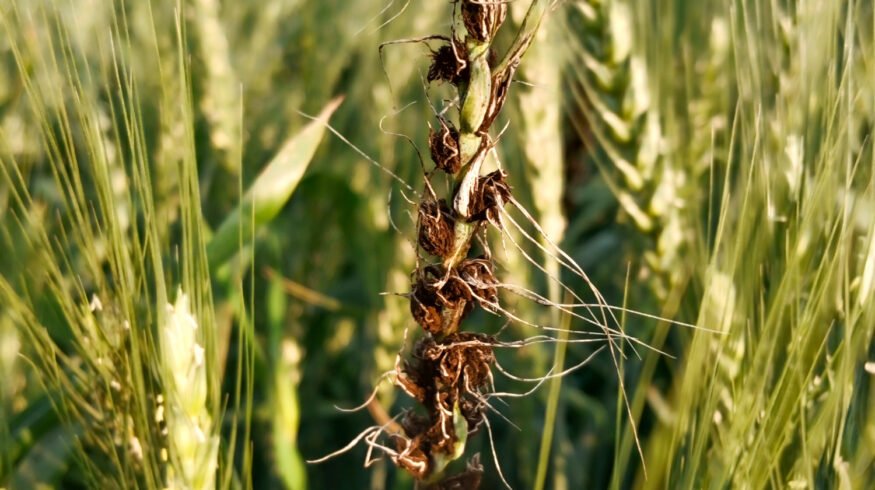
      Image Credits: iStock Photo
      Save for later
      Share
      Never miss important fertilizer news

      Oregon State University field trials found that zinc fertilizer reduced the share of wheat plants showing Fusarium crown rot symptoms from 56% to 47% across two farms in Eastern Oregon. The four site-year experiment tested 5 pounds of zinc per acre placed with seed at planting, according to research published in August in Crop, Forage & Turfgrass Management.

      The result offers a possible nutrient-management tool against a soilborne disease that can damage roots, crowns and stems, disrupting water and nutrient movement to grain. It does not establish zinc as a substitute for resistant varieties or fungicide programs, and the researchers did not confirm a yield or profit benefit from the treatment.

      Zinc Fusarium crown rot results varied by field conditions

      The experiments ran over two growing seasons on cooperating farms near Lexington in Morrow County, a major wheat-producing area. Researchers compared untreated plots with plots receiving 5 pounds of zinc per acre at planting, deliberately inoculating the wheat with the fungus Fusarium pseudograminearum. The team measured zinc uptake, plant growth, grain yield and disease symptoms after harvest, while also assessing how soil characteristics affected the response.

      Across the two farms, zinc-treated plots had a lower proportion of plants showing crown rot symptoms: 47%, compared with 56% in untreated plots. The nine-percentage-point difference describes the share of symptomatic plants, not a nine-point increase in yield or a guaranteed reduction in disease for every field. The researchers also found that wheat in treated plots absorbed more zinc.

      ADVERTISEMENT

      Responses were not uniform. At the farm with shallower soil, the treatment appeared to provide greater protection, particularly in the year when crown rot was more widespread. In that setting, the study’s model predicted that increasing tissue zinc concentration from 7 to 12 parts per million would reduce crown rot by 13.7%. That modeled estimate is specific to the disease-prevalent year and is a different measure from the overall 56%-to-47% comparison.

      Researchers found a small grain-yield increase in zinc-treated wheat, but it was too small to establish that the fertilizer improved yields. The study also did not determine whether the treatment’s cost would be offset by economic returns. The results therefore support further evaluation of zinc and disease severity, not a blanket recommendation to apply zinc to all wheat fields.

      Crown rot creates a risk in dryland wheat regions

      Fusarium crown rot affects roots, crown tissue and stems, weakening the plant’s vascular system and limiting movement of water and nutrients to grain-producing parts. Oregon State’s account says previous research has documented yield losses of 10% to 50% in infected fields. The risk is especially relevant to dryland wheat areas in Eastern Oregon and south-central Washington, where limited water can intensify crop stress.

      Management options are constrained because wheat varieties currently grown in the region lack established genetic resistance to the disease, according to Oregon State. Zinc nutrition could influence disease development, but the experiments do not show why the response differed between farms or whether it would persist across soil types, seasons and commercial production conditions. The findings add a disease-management dimension to the discussion of zinc and other micronutrient deficiencies.

      Field validation and economics remain open questions

      The study provides field evidence that zinc application can coincide with lower crown rot symptoms under the conditions tested. Its scope remains limited to four site-years on two farms in one Oregon county, with the fungus introduced into the plots. The results do not establish performance across the broader Pacific Northwest, under natural disease pressure alone, or in other wheat-growing regions.

      For growers, the next decision point is whether local soil and plant-tissue tests indicate a zinc need and whether a treatment can reduce disease enough to justify its cost. The study did not report a fertilizer cost analysis, a validated economic threshold or a recommended application rate beyond the tested 5 pounds per acre. Further trials would need to measure yield response and economics across more fields and seasons before zinc can be treated as a routine crown rot control measure.

      For now, zinc is a research-backed candidate for integrated disease management, not a proven stand-alone solution. The study’s strongest practical signal is that soil and disease conditions may shape the response, making field-specific evaluation central to any use.

      Source: Oregon State University

      agricultural research
      crop disease
      crop nutrition
      field trial
      fungal disease
      micronutrients
      North America
      Oregon
      research
      soil health
      study
      United States
      Washington
      wheat
      zinc

      Enjoyed this story?

      Every Monday, our subscribers get their hands on a digest of the most trending agriculture news. You can join them too!

      Sign me up
      Check the example

      Discussion0 comments

      Спасибо за комментарий, он будет опубликован на сайте после проверки модератором. Хотите, чтобы ваши комментарии появлялись на сайте мгновенно? Достаточно пройти регистрацию.
      Congratulations, you can be the first to start the conversation.
      Do you have a question or suggestion? Please leave your comment to ignite conversation.
      What’s on your mind?
      Cancel Log in and comment
      Or continue without registration
      Get notified about new comments by email.
      Advertisement
      In focus
      How to get here?
      Stock quotes
      Bayer
      14.44
      3.86
      Bayer Crop Science
      52.98
      0.71
      CF Industries
      115.96
      0.37
      Corteva Agriscience
      8.1
      2.66
      ICL Group
      4.16
      1.96
      Intrepid Potash
      30.31
      3.48
      Mosaic
      20.09
      7.66
      Nutrien
      64.77
      1.46
      Yara International
      19.12
      1.85
      See all
      Most read
      Global phosphate production to hit just 45 Mt vs 75 Mt demand, Mosaic warns of critical shortage
      Global phosphate production to hit just 45 Mt vs 75 Mt demand, Mosaic warns of critical shortage
      Hormuz fertilizer shipments stay at zero for 2nd month as critical sulfur squeeze bites
      Hormuz fertilizer shipments stay at zero for 2nd month as critical sulfur squeeze bites
      PFAS levels vary in farm soils treated with biosolids
      PFAS levels vary in farm soils treated with biosolids
      Sulfur Above $1,000/t Keeps Mosaic Phosphate Plants Curtailed Ahead of Q3 Results
      Sulfur Above $1,000/t Keeps Mosaic Phosphate Plants Curtailed Ahead of Q3 Results
      USDA fertilizer funding unlocks $1.34B investment across 8 projects
      USDA fertilizer funding unlocks $1.34B investment across 8 projects
      Events
      Argus Clean Ammonia Europe
      Rotterdam, Netherlands
      Dec 1 — 3, 2026
      Organic Grower Summit
      Monterey (CA), USA
      Dec 2 — 3, 2026
      Fertilizer Latino Americano
      Rio de Janeiro, Brazil
      Jan 17 — 20, 2027
      International Crop-Science Conference & Expo
      Dubai, UAE
      Jan 18 — 19, 2027
      Argus Fertilizer Africa
      Cape Town, South Africa
      Jan 25 — 27, 2027
      See all
      Live
      Stefan Petko
      May 6, 06:48 pm
      It is alarming to see these developments in California. As a vineyard grower, I have faced significant challenges this year, with fertilizer costs rising sharply while market conditions have made it difficult to sell the harvest.
      California peach growers forced to remove 420,000 trees after bankruptcy of Del Monte Foods canneries
      Estebel
      April 23, 10:26 pm
      Sounds like magic ))
      MIT study: rice seeds germinate faster when exposed to rainfall sounds
      Isabelita Barreiro
      December 11, 2025, 01:54 am
      Excellent management of water resources and effective use of water-soluble fertilizers!
      Argentine nano-fertilizer firm AKO Agro expands to Brazil
      Meripa Corson
      August 4, 2025, 01:18 pm
      Where does the money actually go? As a timber land owner, how do I benefit from the legislation?
      USDA commits $80 million to expand timber markets and improve forest resilience
      Patonkas Luksompulus
      January 21, 2025, 12:36 pm
      Greece meeds biological fertilizers! Great news about De sangosse.
      DE SANGOSSE expands operations with Greek subsidiary
      About
      Sections
      Trade & Policy  ·  Markets  ·  AgTech & Research  ·  Corporate  ·  Sustainability  ·  Interviews  ·  Rankings
      Support
      About  ·  Team  ·  Advertise  ·  Contacts  ·  Submit a Tip  ·  Privacy Policy  ·  Terms of Service  ·  Site Map
      Copyright © 2014-2026 DigitalTree LLC. All rights reserved.
      We deliver content lightning-fast thanks to the managed cloud WordPress hosting with CDN.
      16+
      More to read
      16-Year Nebraska Study Finds More Phosphorus Does Not Always Increase Corn Profits
      16-Year Nebraska Study Finds More Phosphorus Does Not Always Increase Corn Profits
      Incurable crop diseases threaten Missouri’s $5 billion corn and soybean industry
      Incurable crop diseases threaten Missouri’s $5 billion corn and soybean industry
      InnerPlant’s CropVoice turns soybean plants into an early-warning network
      InnerPlant’s CropVoice turns soybean plants into an early-warning network
      Advertising that helps us do quality reporting