

Hydrogel beads deliver nitrogen-fixing bacteria to cereal crop roots in new SDSU proof of concept



Researchers at South Dakota State University have developed hydrogel beads that encapsulate nitrogen-fixing bacteria and deliver them directly to cereal crop roots, offering a potential biological alternative to synthetic nitrogen fertilizer. The study, published in the journal Plant and Soil in August 2026, demonstrates how alginate-based beads can protect the oxygen-sensitive nitrogenase enzyme inside bacteria while keeping the microbes active at levels comparable to ideal laboratory conditions.
How the hydrogel nitrogen fixation system works
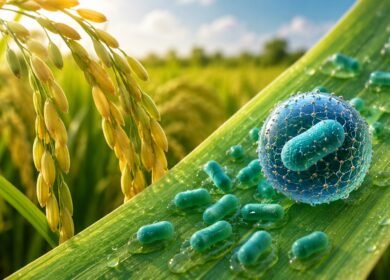
The concept draws inspiration from Sierra Mixe corn, an ancient Mexican variety that produces aerial roots coated in a mucus-like gel harboring nitrogen-fixing bacteria. The SDSU team adapted this natural model into a manufactured system: a solution of alginate is dropped into a bath of dissolved metal salts and nitrogen-fixing bacteria, and the alginate instantly crosslinks into small, gel-like beads. These beads create a low-oxygen microenvironment that protects nitrogenase — the enzyme responsible for converting atmospheric nitrogen into ammonia — from being inactivated by oxygen exposure, which is the central obstacle to using free-living diazotrophs in agriculture.
The researchers tested multiple formulations and found that beads enriched with a carbon source supported sustained bacterial activity. The beads biodegrade naturally in soil over approximately 120 days, releasing the encapsulated bacteria gradually into the root zone. Unlike previous approaches to biological nitrogen fixation that relied on genetic engineering, the hydrogel system uses naturally occurring bacteria in a physical delivery mechanism.
Why hydrogel nitrogen fixation matters for fertilizer markets
Nitrogen fertilizer is the single largest input cost for corn and wheat growers. With U.S. anhydrous ammonia averaging $963 per ton and urea at $678 per ton in mid-August 2026, according to DTN data, any technology that can supplement even a fraction of a crop’s nitrogen requirement translates into meaningful per-acre savings. A previous Purdue University study estimated that improving nitrogen fixation efficiency in soybeans alone could reduce input costs across millions of acres.
The SDSU research is a proof of concept, not a commercial product. The team demonstrated activity in controlled conditions and has not yet published multi-season field trial data showing yield effects in real farming environments. Scaling production of uniform hydrogel beads and ensuring consistent bacterial viability during storage and distribution remain open engineering challenges. The researchers noted that further work is needed to optimize bead formulations for different soil types, climate conditions and crop species.
A growing pipeline of biological nitrogen alternatives
The hydrogel approach joins a broader wave of biological nitrogen fixation research. Pivot Bio has commercialized gene-edited microbes for corn that earned EPA registration. Washington State University researchers published a breakthrough in May 2026 showing that nitrogen-fixing gene clusters can be transferred into new bacterial strains. And a Nagoya University team demonstrated in July 2026 that low-temperature plasma can convert air into ammonia using electricity, advancing a physics-based alternative to the Haber-Bosch process.
The SDSU team’s hydrogel system occupies a middle ground — it avoids the regulatory complexity of genetic modification while offering a more controlled delivery mechanism than simply inoculating seeds or soil with free-living bacteria. If field trials confirm the laboratory results, biodegradable nitrogen-fixing beads could eventually offer farmers a supplemental nitrogen source that reduces, though would not replace, synthetic fertilizer applications.
Source: Phys.org

Enjoyed this story?
Every Monday, our subscribers get their hands on a digest of the most trending agriculture news. You can join them too!





Discussion0 comments