Skip to content
  • Professionals
  • Gardeners
 
Search
Log in
EN
RU
  • Trade & Policy
  • Markets
  • AgTech & Research
  • Corporate
  • Sustainability
  • Interviews
  • Rankings
  • Events
  • Stock Quotes
  • Business Directory
Trending topic:

sulfur

Featured company:
 
RU
  • Professionals
  • Gardeners
Sections
    Events
    Stock Quotes
    Business Directory
    Trending topic:

    sulfur

    Featured company:
    Follow us...
    Helpful information
    • About
    • Team
    • Advertise
    • Contacts
    • Submit a Tip
    • Privacy Policy
    • Terms of Service
    • Site Map
    Sections
      Seasonal tips
      • Spring
      • Summer
      • Autumn
      • Winter
      Trending topics
      • compost
        26
      • garlic
        2
      • lemon
        1
      • potato
        16
      Follow us...
      Helpful information
      • About
      • Team
      • Advertise
      • Contacts
      • Submit a Tip
      • Privacy Policy
      • Terms of Service
      • Site Map
      Copyright © 2014-2026 DigitalTree LLC. All rights reserved.
      We deliver content lightning-fast thanks to the managed cloud WordPress hosting with CDN.
      16+

      Home / AgTech & Research

      Minnesota green ammonia pilot scales to 1 tonne per day, proving wind-powered fertilizer production works


      Timothy Bueno avatar Timothy Bueno
      September 8, 2026, 3:00 pm
      September 8, 2026, 3:00 pm
      [esi post-views ttl=0]
      AgTech & Research
      Green & Low-Carbon
      Sustainability
      Minnesota green ammonia pilot scales to 1 tonne per day, proving wind-powered fertilizer production works
      Image Credits: iStock Photo
      Save for later
      Share
      Never miss important fertilizer news

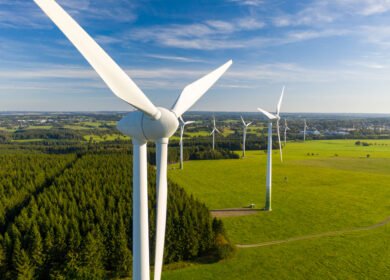
      A green ammonia pilot at the University of Minnesota’s West Central Research and Outreach Center in Morris is scaling toward a target of approximately one metric ton of zero-carbon ammonia per day, making it one of the most advanced small-scale renewable fertilizer projects in the United States. The facility uses on-site electrolyzers to split water into hydrogen and oxygen, then combines the hydrogen with nitrogen separated from ambient air using the century-old Haber-Bosch process — powered entirely by Minnesota wind energy.

      How the Morris green ammonia facility works

      The plant eliminates fossil fuels from the ammonia synthesis chain. Conventional ammonia production uses natural gas both as a feedstock (for hydrogen) and as an energy source, generating roughly 1.6 tonnes of CO₂ per tonne of ammonia. At Morris, the hydrogen comes from water electrolysis and the energy comes from the local wind resource, producing ammonia with no direct carbon emissions.

      The core engineering challenge is operating the Haber-Bosch reactor under fluctuating renewable power. Wind output varies by the hour, and the electrolyzers must ramp up and down accordingly. The ability to run reliably under these conditions is the innovation the research team hopes to commercialize — not the chemistry itself, which is well understood, but the integration with variable renewable supply.

      The economic case for decentralized green ammonia production

      For Minnesota, the opportunity may be more economic than environmental. The state’s farmers spend hundreds of millions of dollars annually on anhydrous ammonia, virtually all of it produced from natural gas at large centralized plants and shipped in by rail and truck. A network of small wind-powered ammonia plants could keep a portion of those dollars circulating in rural communities, the university argues.

      ADVERTISEMENT

      At current natural gas prices, conventional ammonia costs roughly $400–500 per tonne at the plant gate. Green ammonia remains more expensive, with most pilot-scale projects reporting costs above $700 per tonne. Closing that gap depends on continued declines in electrolyzer capital costs, access to cheap wind power and potential revenue from federal tax credits under the Inflation Reduction Act.

      Where Minnesota fits in the green ammonia landscape

      The Morris project sits at the small, decentralized end of a rapidly growing global green ammonia sector. At the industrial scale, Envision Energy’s Chifeng facility in China has reached 300,000 tonnes per year of capacity and shipped the world’s first commercial green ammonia cargo in February 2026. Chile’s $11 billion HNH Energy project and a $1 billion green ammonia hub in Jordan represent the utility-scale end of the market.

      Minnesota’s approach targets a different niche: community-scale production for local agricultural use, bypassing long supply chains and reducing exposure to global shipping disruptions like the Strait of Hormuz crisis that has roiled fertilizer markets throughout 2026.

      Outlook for wind-powered fertilizer production

      The research team expects to publish performance data from the scaling phase later this year. If the economics prove viable at the 1-tonne-per-day level, the model could be replicated across the Upper Midwest’s wind corridor, where strong wind resources and concentrated fertilizer demand create favorable conditions for decentralized green ammonia production.

      Source: University of Minnesota


      Key facts about the Minnesota green ammonia project

      The green ammonia pilot is located at the University of Minnesota’s West Central Research and Outreach Center in Morris, Minnesota. It is operated by university researchers and is part of a broader initiative to develop renewable-energy-based agricultural production in the Upper Midwest.

      The project is scaling toward approximately one metric ton of ammonia per day. At that rate, the facility would produce roughly 365 tonnes per year — enough to supply nitrogen to several thousand acres of corn, depending on application rates. The university has not disclosed the total project budget.

      Conventional ammonia produced from natural gas costs roughly $400–500 per tonne at the plant gate under current U.S. gas prices. Green ammonia at pilot scale typically exceeds $700 per tonne. Closing the gap depends on further electrolyzer cost reductions, cheap wind power and eligibility for federal production tax credits under the Inflation Reduction Act.

      Industrial-scale green ammonia projects, such as Envision’s 300,000-tonne-per-year Chifeng plant in China, are designed for export markets and large offtakers. The Morris pilot targets community-scale, decentralized production for local farm use, bypassing long-distance shipping and reducing vulnerability to global supply chain disruptions.

      The Upper Midwest’s combination of strong wind resources and concentrated fertilizer demand makes it a natural corridor for decentralized green ammonia. If the Morris project demonstrates viable economics at 1 tonne per day, similar facilities could be deployed across wind-rich agricultural regions in Iowa, the Dakotas, Kansas and Nebraska. Performance data from the current scaling phase is expected later in 2026.

      0
      agriscience
      decarbonization
      electrolysis
      green ammonia
      Haber-Bosch
      Minnesota
      nitrogen
      renewable energy
      research
      sustainability
      United States
      University of Minnesota

      Enjoyed this story?

      Every Monday, our subscribers get their hands on a digest of the most trending agriculture news. You can join them too!

      Sign me up
      Check the example

      Discussion0 comments

      Спасибо за комментарий, он будет опубликован на сайте после проверки модератором. Хотите, чтобы ваши комментарии появлялись на сайте мгновенно? Достаточно пройти регистрацию.
      Congratulations, you can be the first to start the conversation.
      Do you have a question or suggestion? Please leave your comment to ignite conversation.
      What’s on your mind?
      Cancel Log in and comment
      Or continue without registration
      Get notified about new comments by email.
      Advertisement
      In focus
      How to get here?
      Stock quotes
      Bayer
      14.19
      1.11
      Bayer Crop Science
      48.71
      0.29
      CF Industries
      133.35
      3.24
      Corteva Agriscience
      87.86
      0.86
      ICL Group
      5.87
      0.69
      Intrepid Potash
      40.51
      0.98
      Mosaic
      25.85
      1.41
      Nutrien
      79.47
      1.56
      Yara International
      24.63
      0.85
      See all
      Most read
      Sulfur shortage threatens global phosphate supply as Hormuz blockade and Russia ban cut 2 of 3 top sources
      Sulfur shortage threatens global phosphate supply as Hormuz blockade and Russia ban cut 2 of 3 top sources
      Nutrien weighs phosphate future as sulfur costs push Q2 margins negative
      Nutrien weighs phosphate future as sulfur costs push Q2 margins negative
      USDA fertilizer investigation nears completion as farm groups push for pricing transparency
      USDA fertilizer investigation nears completion as farm groups push for pricing transparency
      Urea price decline accelerates to $386/t as China quota releases and Hormuz talks ease supply fears
      Urea price decline accelerates to $386/t as China quota releases and Hormuz talks ease supply fears
      Bangladesh tenders 950,000 tonnes of DAP, TSP and MOP for FY 2026-27
      Bangladesh tenders 950,000 tonnes of DAP, TSP and MOP for FY 2026-27
      Events
      Fertilizer Canada Annual Conference
      Charlottetown, Canada
      Sep 14 — 16, 2026
      Argus Methanol & Ammonia Conference
      Houston (TX), USA
      Sep 21 — 23, 2026
      Argus Fertilizer Europe
      Prague, Czechia
      Oct 20 — 22, 2026
      CEAg World Conference and Expo
      Charlotte–Concord (NC), USA
      Nov 10 — 11, 2026
      BioAg Congress
      Anaheim (CA), USA
      Nov 11 — 12, 2026
      See all
      Live
      Trader
      July 29, 06:28 pm
      100 percent AI generated, from a company with a 100 percent AI generated website. I’m sure they have good data, but it’s hard to take it seriously wen it’s just AI church
      Green ammonia is easier to make than to sell
      Stefan Petko
      May 6, 06:48 pm
      It is alarming to see these developments in California. As a vineyard grower, I have faced significant challenges this year, with fertilizer costs rising sharply while market conditions have made it difficult to sell the harvest.
      California peach growers forced to remove 420,000 trees after bankruptcy of Del Monte Foods canneries
      Estebel
      April 23, 10:26 pm
      Sounds like magic ))
      MIT study: rice seeds germinate faster when exposed to rainfall sounds
      Isabelita Barreiro
      December 11, 2025, 01:54 am
      Excellent management of water resources and effective use of water-soluble fertilizers!
      Argentine nano-fertilizer firm AKO Agro expands to Brazil
      Meripa Corson
      August 4, 2025, 01:18 pm
      Where does the money actually go? As a timber land owner, how do I benefit from the legislation?
      USDA commits $80 million to expand timber markets and improve forest resilience
      About
      Sections
      Trade & Policy  ·  Markets  ·  AgTech & Research  ·  Corporate  ·  Sustainability  ·  Interviews  ·  Rankings
      Support
      About  ·  Team  ·  Advertise  ·  Contacts  ·  Submit a Tip  ·  Privacy Policy  ·  Terms of Service  ·  Site Map
      Copyright © 2014-2026 DigitalTree LLC. All rights reserved.
      We deliver content lightning-fast thanks to the managed cloud WordPress hosting with CDN.
      16+
      More to read
      Minnesota wind-to-ammonia plant aims to supply local farmers with more affordable fertilizer
      Minnesota wind-to-ammonia plant aims to supply local farmers with more affordable fertilizer
      India locks in 670,000t of green ammonia annually for fertilizer plants at half the global benchmark price
      India locks in 670,000t of green ammonia annually for fertilizer plants at half the global benchmark price
      On-farm green ammonia gains traction in Canada as fertilizer market turmoil revives interest in local nitrogen production
      On-farm green ammonia gains traction in Canada as fertilizer market turmoil revives interest in local nitrogen production
      Advertising that helps us do quality reporting