

New research advances understanding of crop nutrition, soil nutrient cycling and plant growth in lunar and Martian soils


Researchers from Texas A&M University and international institutions have compiled a global database of plant elemental composition, bringing together measurements from 5,474 samples collected across 73 countries. The study, published in ACS Environmental Au, covers 52 elements and could help scientists better understand how plants accumulate elements from their environments.
The analysis found that 20 elements not considered essential for plant growth had higher average concentrations in plant tissues than molybdenum, the essential element with the lowest average concentration in the dataset. The findings highlight how much plant chemistry extends beyond the nutrients most commonly considered in crop production.
A broad picture of plant chemistry
The database spans 21 climate classes and 26 soil groups, assembling measurements that had previously been reported across separate studies. The researchers also found that closely related plant species tended to share similar elemental profiles, indicating that evolutionary relationships may help explain patterns in the elements plants accumulate.
The work does not establish biological functions for the lesser-studied elements, and higher concentrations alone do not demonstrate that an element benefits plant growth. Instead, the dataset offers a reference for further investigation into how plant composition varies across species and environmental conditions.
Potential applications in agriculture
The database could help researchers study how crops take up elements from soils and how those elements move through agricultural systems. A more complete picture of plant composition may also support analysis of the elements removed from fields at harvest and their role in broader ecosystem nutrient cycles.
The researchers said the data could contribute to global ecosystem models and provide training material for machine-learning systems examining relationships between plant chemistry and environmental conditions. These are potential research applications rather than validated tools or direct recommendations for fertilizer management.
Research prompted by space agriculture
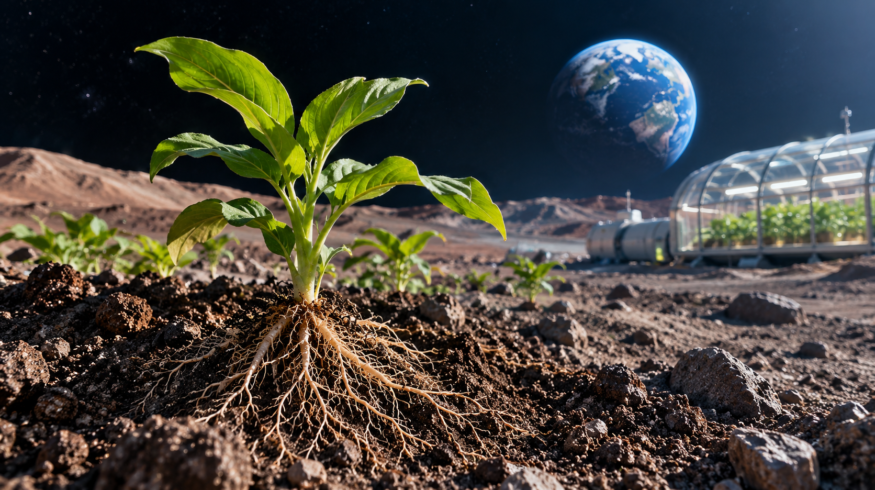
The project began when the team looked for information about plants grown in simulated lunar and Martian regolith — the loose rocky material covering the Moon and Mars. Researchers found limited data and broadened the work to include published measurements from plants grown on Earth.
Harrison Coker, a doctoral researcher in Texas A&M’s Department of Soil and Crop Sciences and a NASA Space Technology Graduate Research Opportunity fellow, worked with an international team on the project. The resulting database could provide a baseline for future studies of plant growth in extraterrestrial soil-like materials, where the availability and balance of elements will be important questions for research.
A foundation for further study
By combining measurements from diverse plants, climates and soils, the database gives researchers a wider basis for comparing elemental composition across the plant kingdom. Further work will be needed to determine what less-studied elements do in plants and how the findings might translate into crop management or space-based food production.
Source: ACS Environmental Au

Enjoyed this story?
Every Monday, our subscribers get their hands on a digest of the most trending agriculture news. You can join them too!



Discussion0 comments