

Winter canola lifts corn-soy productivity 18% in Illinois simulation, study finds

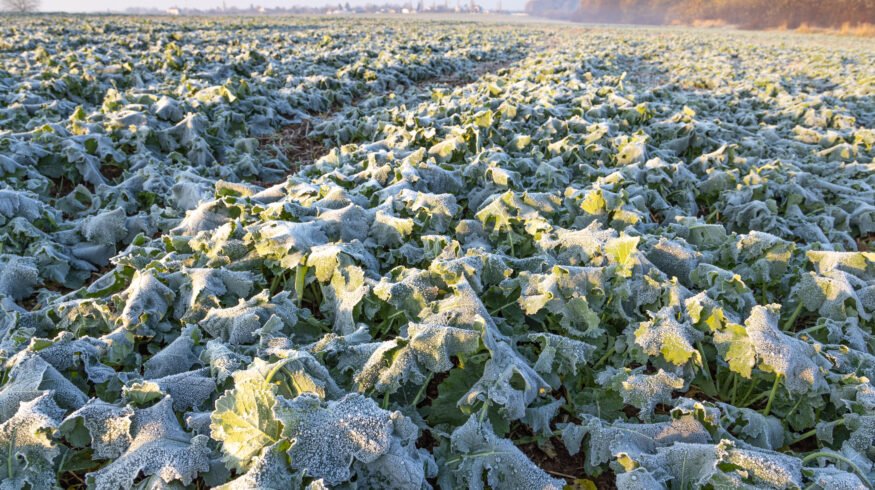

Adding winter canola to a conventional Illinois corn-soybean rotation could raise total productivity by 18% while keeping greenhouse gas intensity stable, according to a University of Illinois Urbana-Champaign simulation study reported by the Herald-Whig on October 12.
The team used the DayCent model to simulate a double-cropping system under real environmental conditions measured between 2019 and 2024. Winter canola would grow in the roughly six months between fall harvest and spring planting, when fields usually sit bare or under non-revenue cover crops.
Across all diversified scenarios, net ecosystem carbon balance, a measure of whether a field gains or loses carbon overall, improved by about 21% to 27%, and the benefit grew over time. Senior author D.K. Lee, a professor in the Department of Crop Sciences, attributed this to more continuous plant cover and carbon added through canola roots and residues.
Co-author Chunhway Jang said the extra production more than offset the associated rise in emissions. The canola would serve as a feedstock for sustainable fuels.
The results still need validation in field trials. For fertilizer planners, a third crop in the rotation would add a winter nutrient program to Midwest fields, and Illinois researchers are separately measuring how enhanced-efficiency fertilizers perform under FFAR-funded trials.
Source: Herald-Whig
Winter canola in the Corn Belt: five things to know
DayCent is a widely used ecosystem model that simulates crop growth, soil carbon and nitrogen cycling, and greenhouse gas fluxes on a daily time step. The Illinois team ran it with environmental conditions measured from 2019 to 2024 rather than with hypothetical weather.
It would be double-cropped, planted after the fall harvest and harvested before the next spring crop. That uses the roughly six-month winter gap that normally produces no revenue, while giving the soil the protection a cover crop would provide.
Total emissions rise, but according to the researchers the extra output more than offsets them, so greenhouse gas intensity per unit of production stayed stable. At the same time, more carbon was stored in the soil than in the rotation without canola.
Lee noted that the Regenerative Feedstock Rule currently applies to spring canola. He said that if winter canola proves just as beneficial for Midwestern farmers, the rule could potentially be expanded to cover it.
The researchers plan field trials to validate the simulation. Yields, fertilizer requirements and economics for an Illinois winter canola crop were not detailed in the Herald-Whig report, and the publishing journal was not named.

Enjoyed this story?
Every Monday, our subscribers get their hands on a digest of the most trending agriculture news. You can join them too!






Discussion0 comments